Conserving the Library’s tract volume collection

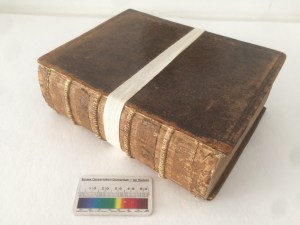
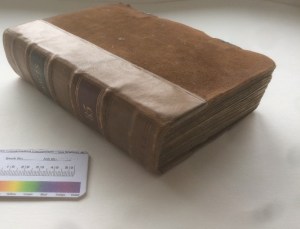
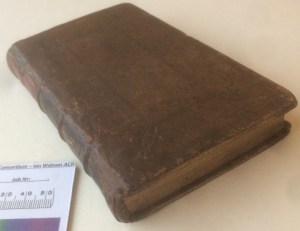
Our first Quaker Strongrooms blogpost of 2018 is from Ian Watson of Sussex Conservation Consortium, who’s been conserving some of the Library’s “tract volumes”. These are 650 bound volumes of 17th-19th century pamphlets (sometimes grandly described as Sammelbands) – one of the jewels of the Library’s collections. Ian writes about the first stages of his approach to conserving this diverse and challenging material.


Assessing the tract volumes collection

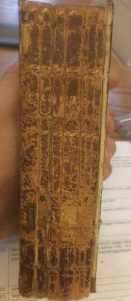
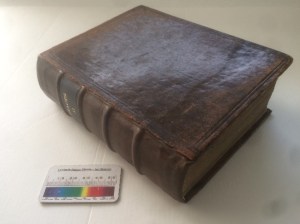
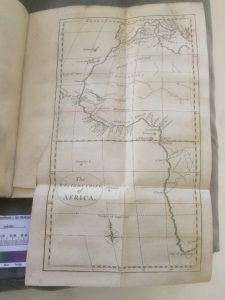
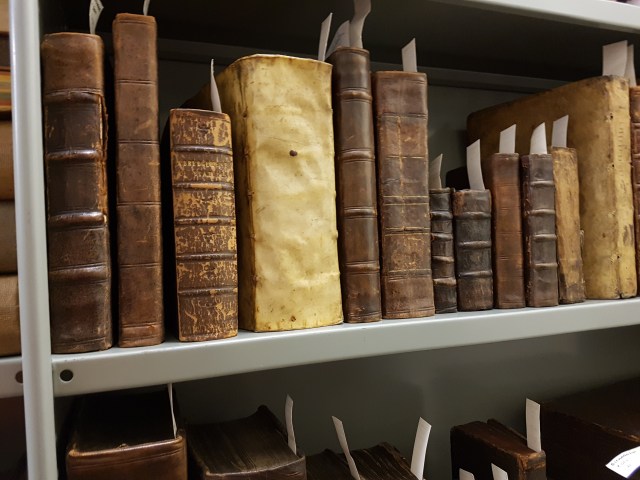
Perhaps the most important stage of conservation occurs before any item arrives at the conservation studio, when we first start to consider its character, importance and condition. So it is with volumes from this collection. The collection as a whole is of high cultural value; the texts are rare; provenance evidence, annotations and marginalia make many of them unique. On top of this, the collection grew in the context of this historic Quaker library. The volumes are important as objects in themselves too – many are early printed works on handmade paper, in contemporary bindings, often in original condition. Overall it is the very definition of a special collection.

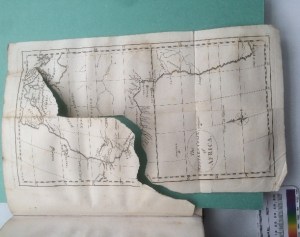
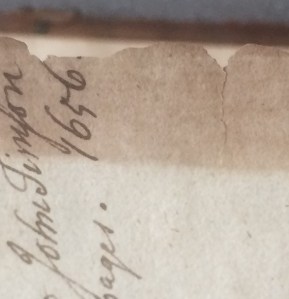
As well as being historically important, the collection is in demand. Yet, as the old bindings become fragile, through handling and environmental pressures, original features crumble. And when they fail outright, text, notes, faint pencil annotations by early readers – those little pieces of history – are all at risk of permanent loss. Thus, the conundrum: the books must be conserved as stable, working objects, repairs need to be made, new material added, originality reduced, but this must be balanced against preserving the collection in as historically original a condition as possible.

Cultural value and future use

Before a conservator can really assess an object, they need to understand its place in the world. Is it rare, unique? Does it get used heavily? What are the plans for its future, exhibitions, digitisation? Who can read it? How is it read – under supervision? With book supports? Where is it stored? What are the conditions there throughout the year? For all this information we conservators rely upon the librarians, archivists, and curators. Without it any treatment proposal is invalid.

What is it made of?

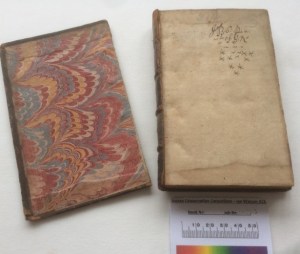
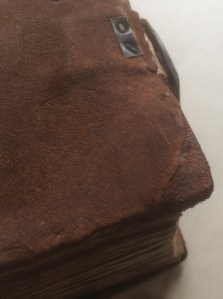
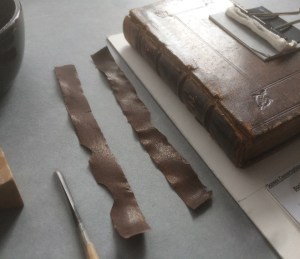
Libraries contain an enormously wide range of materials, from Anglo-Saxon parchment manuscripts to yesterday’s machine pulped, laser printed magazine paper. Just the different types of leather used within this particular collection have required several different approaches to conserve – from fantastically tough Dutch parchment, to extremely fragile English sheepskin, and – perhaps the most challenging to reproduce – suede-like reverse calf.

In addition, the volumes cross one of the most important barriers in materials terms: as a collection they date from the 17th to the 19th century: the changes in paper and leather production over this period has profound implications for the collection.

Traditional handmade rag paper, even of poor quality, is a wonderful material – strong, supple and stable; but later wood-pulp paper, which began to be produced in the 19th century, can be acidic, discoloured, brittle, unstable and often unsafe to use without risk of damage.

Vegetable tanned leathers of the pre-industrial period can last for centuries in good condition, whereas some industrial tanned leathers of the late 19th century onwards might only last 50 years before turning to dust due to the chemicals used in the tanning process.

That said, it is never a case of disregarding an object because the materials are of poorer quality, it just means it may be more difficult to preserve it in a stable condition.

How is it made?

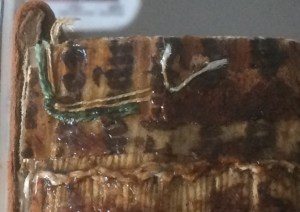
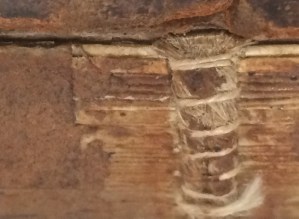
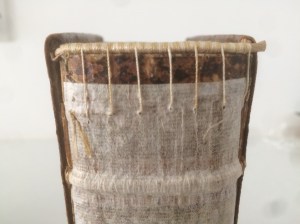
Often this can simply mean what type of binding are we dealing with? However, to that must be added – who made it, a master or an apprentice? What was the budget? Was it cheap or built to last? This part of the assessment can often be the most rewarding, especially where the character of the workshop or even the binder themselves can be detected through little tricks of the trade, corrected errors or cost saving methods. As with the materials, it is not the conservator’s place to judge only superior bindings fit for preservation. In my experience, the book historian is just as excited by the little short cuts and developments in style of the low and mid-range bindings as they are by an obviously fine binding.

What is its condition?

Two copies of the same book printed and bound centuries ago may have had very different lives, and often age and binding style will not be the only indicator of the book’s actual condition. Where has it spent its life? In London during the smog of the industrial revolution? Shelved near a window suffering light damage for a hundred years, or stored in a damp basement, prone to attacks of mould? Has it even been read? Or used to the point of destruction?

What is important?

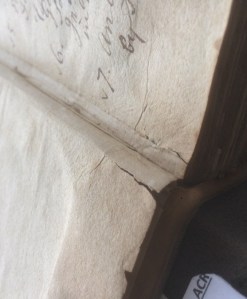
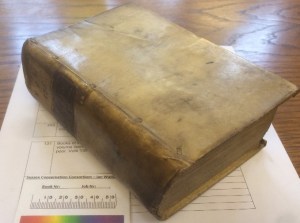
In the tract volumes collection, the simpler items to assess are often the well-made bindings in original condition, such as the vellum bound volumes from the personal collection of Anglo-Dutch Quaker William Sewel (tract volumes 131-136). It gets harder where, for example, the book was cheaply made in the 18th century, partly re-bound in the 19th, and then had some paper repairs in the 20th century. Perhaps an original binding isn’t opening properly simply because of a thick layer of poor quality glue on the spine (a common problem). This is where real care needs to be taken when assessing the book and planning the treatment. Decisions will need to be made in conjunction with librarians as to the importance of the item as part of a working collection, and that can often mean the binding must be able to store the information safely, allowing access to text and all the annotations and marginalia in a normal and useful way. However, behind that general rule, all the subtleties of preserving the item’s originality and evidence of its life will have been accounted for and laid out in the treatment proposal. Only when all of that is agreed will the conservator be able to pick up their paste-brush, sharpen their paring knife and begin to treat the object.

Some solutions

So far we have had 129 of the volumes conserved (one fifth of the total collection); assessment and treatment of the remainder is continuing. Library users can now read and handle (with care!) volumes that were previously too damaged for use. This work is generously supported by donors to the Library’s BeFriend A Book fund. To find out more or make a donation, please contact the Library library@quaker.org.uk.

Posted in Collection care, Guest posts | Tagged , , , | 5 Comments

A year in view: Quaker Strongrooms blog 2017

As the New Year approaches, here’s a quick look back at some Quaker Strongrooms blog highlights of 2017.

The most popular post was Quaker women: resources for women’s history in the Library of the Society of Friends, published in March – women’s history month. It offered a broad overview of the great women’s history resources that the Library has to offer. In it we described some selected primary sources here, both printed and archival, and a range of biographical and historical works invaluable for anyone interested in the subject.

Quaker meeting attributed to Heemskerk F070

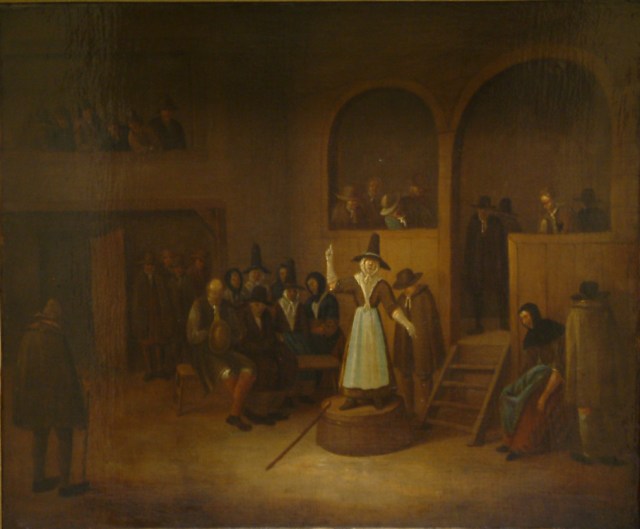
The Quaker Meeting, oil painting attributed to Egbert van Heemskerk, late 17th century (Library reference: F070)


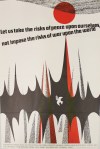
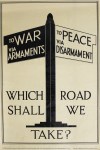
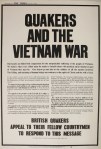
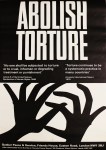
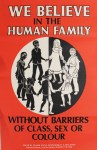
Posters are a powerful way to convey a strong, succinct message. Quakers say it loud was published to coincide with our reading room display on Quaker posters early in the year. In the display, reduced size facsimile posters were hung in the limited space available, to give an overview of the fascinating range of (mainly 20th century) posters that have been produced by British Quakers. A different selection was displayed in the autumn. The blogpost proved interesting to lots of people, with requests for reproductions and full scale displays elsewhere.


The first post of 2017 highlighted some Library material relating to the origins and development of the “Eight Foundations of a True Social Order”, inspired by Reimagining a True Social Order, a rich  new resource produced by academics at Leeds in collaboration with Quakers in Britain, Woodbrooke and others.

At the other end of the year, in December, the blog carried a post on Quakers and the Nobel Peace Prize, to celebrate the 2017 award (to International Campaign to Abolish Nuclear Weapons) and mark the 70th anniversary of the joint award of the prize to British and American Quakers in 1947. Read the blogpost to learn about some of the reasons for the award, and contemporary reactions of Friends drawn from personal papers held in the Library’s manuscript collections.


As always, we aim to cover a variety of topics in the blog, highlighting the different parts of the Library’s printed, archival and visual collections, and spanning a wide range of topics and historical periods. A collection of early printed books and their provenance were the subject of A 17th century Recording Clerk’s library: Richard Richardson’s books. The books were catalogued as one of the final parts of our printed materials “Retrospective Cataloguing Project” which has yielded some fascinating insights into Quaker publishing over the centuries, recounted on the blog and elsewhere, alongside successfully achieving its goal of making full information about the collection widely available.

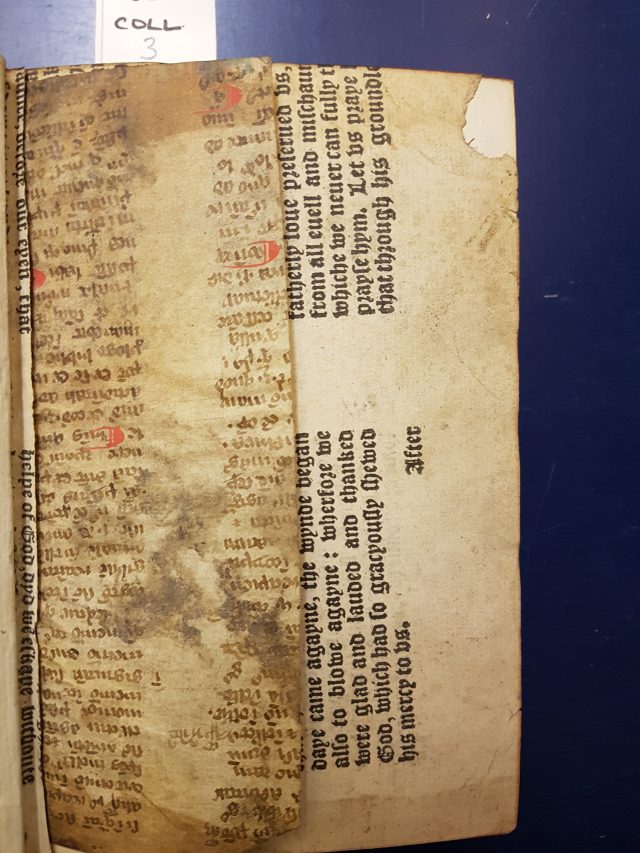
Fragments of mediaeval printed and manuscript waste used in the binding of Richardson Collection 3

Fragments of mediaeval printed and manuscript waste used in the binding of Richardson Collection 3

Other posts included:


Whatever your interests, we hope you’ve found something good to read on Quaker Strongrooms over 2017. And we wish you all the best for a happy 2018!


Posted in News | 2 Comments
“In turbulent times”: sources on local Quakers and their meetings over the centuries

For Quaker Week 2017, our head of Library & Archives, Libby Adams, travelled to Penrith Meeting to give a talk on local Quakers living through “turbulent times” (this year’s Quaker Week theme). This blog post concentrates on Quaker stories from Cumbria, but highlights some of the sources the Library holds for studying the history of any local area.

While local Quaker records (mostly deposited in county record offices) are the primary record of local corporate Quaker activity, the Library here at Friends House holds archives of national Quaker bodies (with which local meetings corresponded), as well as personal papers of individuals (which shed light on local Quaker activity). Together these can provide a richer contextual picture. We’ve picked out some sources relating to Cumbria at three key historical moments – the 17th century, the end of the 18th century, and the First World War.

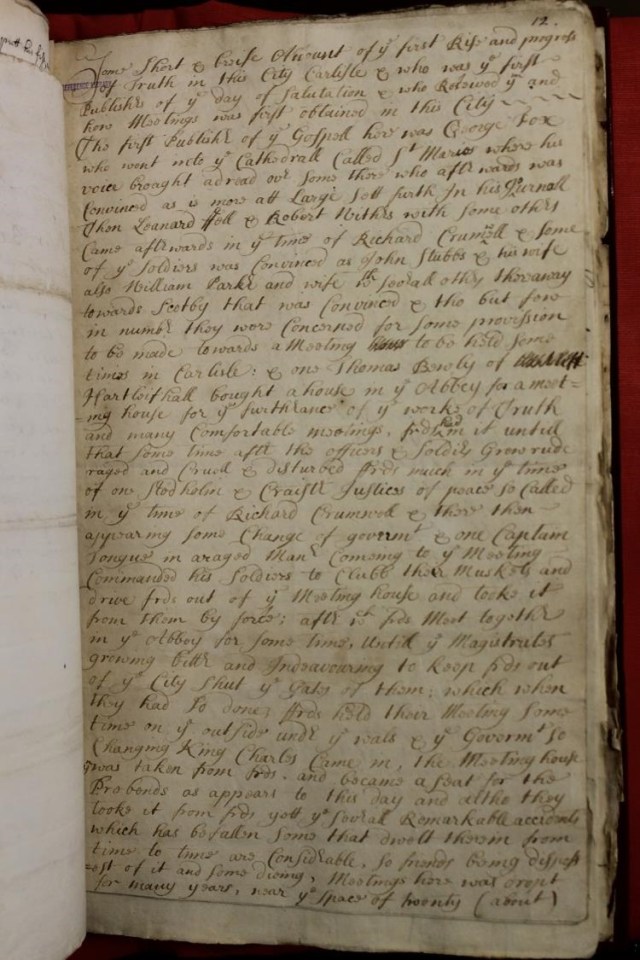
The first source is a collection of manuscript returns from meetings all over England and Wales describing how Quaker faith was first introduced, took root, and developed in each area, which were sent in to Yearly Meeting (later transcribed by Norman Penney, our first Librarian, and published by Friends Historical Society in 1907 as First publishers of truth).

First publishers of truth, Carlisle (MS Port. 7/12)

‘Some short and breife account of the first rise and progress of truth in this City Carlisle and who was the first publishers of the day of salutation and who received them and how meetings was first obtained in this City’ (Library reference: MS Port. 7/12)

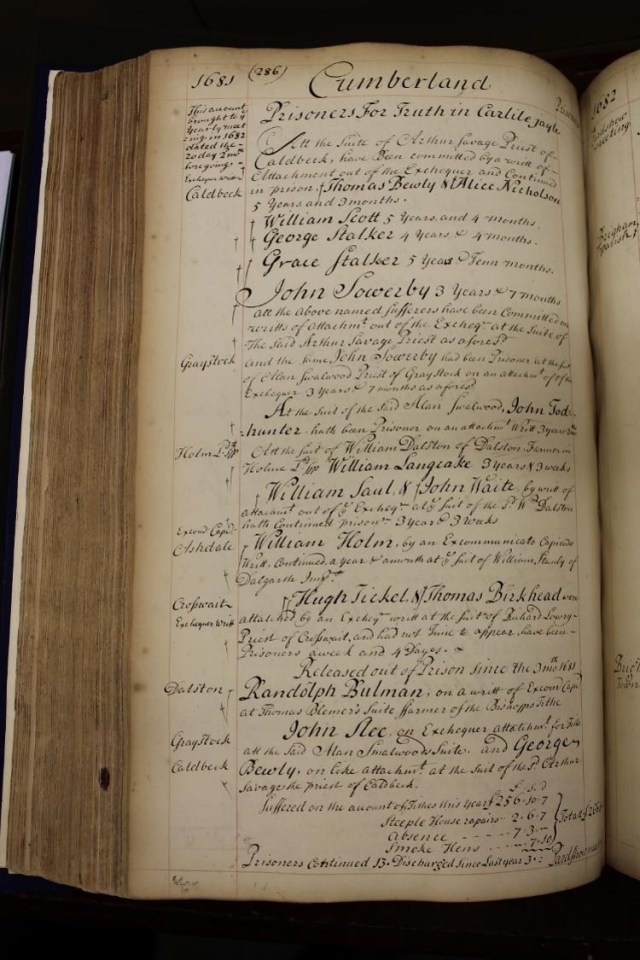
Following the leadings of the spirit, early Friends broke the law by holding illegal meetings for worship, traveling around preaching and prophesying, and refusing to pay tithes (church taxes to support the established national church). They were fined, imprisoned and suffered for their beliefs. In 1675 Friends set up a “constant meeting about sufferings”, appointing a “Recording Clerk” to gather and record reports of sufferings sent up to London by a network of correspondents in every county, as evidence of the unfair persecution of Quakers.  You can read more about records of Quaker sufferings in an earlier blogpost.

Great Book of Sufferings entry for Carlisle 1682

Great Book of Sufferings entry for Carlisle 1682 (Library reference: YM/MFS/GBS/3/1)


The 18th century was a turbulent time both nationally and internationally, with the rise of Enlightenment ideas about liberty and rights, the industrial revolution, American Independence, and the French Revolution. There was a growing campaign against the slave trade, in which Friends were prominent. This is a theme which emerges from the personal papers of three Cumbrian Quakers now held by the Library, alongside other general, religious and personal matters.

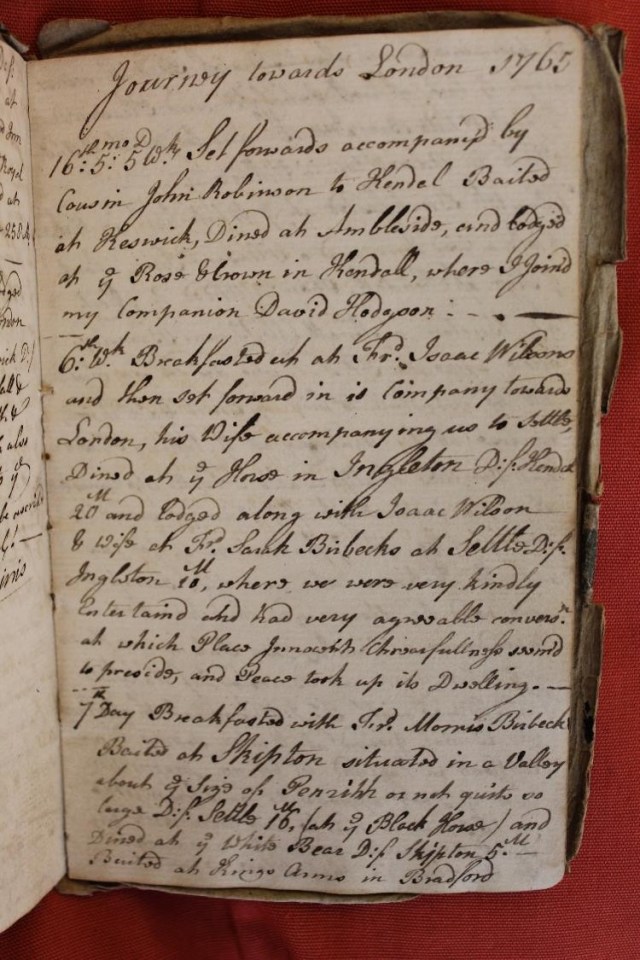
Elihu Robinson (1734–1809), of Eaglesfield, Cumbria, kept detailed diaries and memoranda recording his journeys to London for Yearly Meeting, as well as a visit by Thomas Clarkson, the antislavery campaigner, and records of his weather observations (of particular interest to contemporary researchers).

Elihu Robinson's diary 1765

Account of travelling to London for Yearly Meeting 1765. Elihu Robinson’s diary (Library reference: MS Box R3/1)

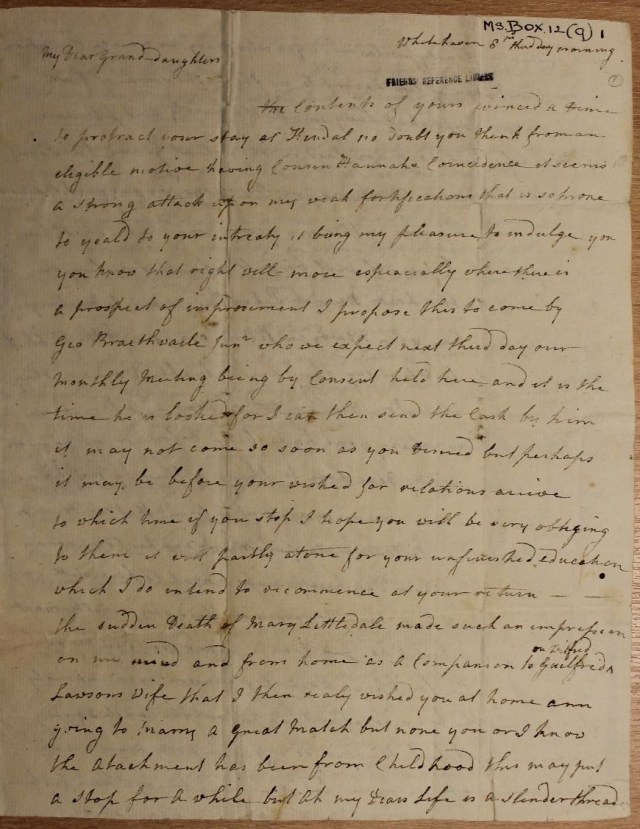
Jane Pearson (c1735–1816) was from Newtown near Carlisle, married John Pearson, and had 7 children, moving to Whitehaven. She was a “recorded minister”, which meant that her gift of spoken ministry was acknowledged. The Library holds a collection of correspondence, 1784-1821, between her, Thomas Wilkinson and others, including ministers Rebecca Jones, Deborah Darby, and Esther Tuke.

Letter from Jane Pearson to Hannah Tipping

‘Ah my Dears life is a slender thread’. Letter from Jane Pearson to her granddaughter Hannah Tipping. Library reference: MS Box 12/9/1

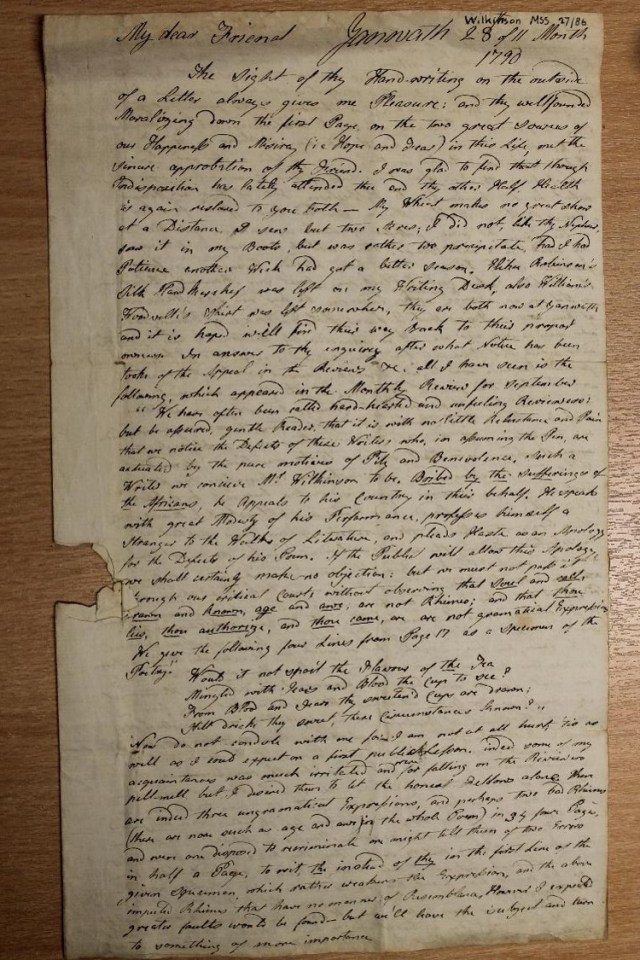
Thomas Wilkinson (1751–1836) was another Cumberland Quaker, with a wide circle of friends including William Wordsworth, and Thomas Clarkson – and of course local Friends Jane Pearson and Elihu Robinson. His papers held by the Library include accounts of visits to Scotland, Wales and the Yorkshire Dales, as well as Yearly Meeting in London, poetry and correspondence.


Thomas Wilkinson letter to Elihu Robinson 28 Nov 1790

Thomas Wilkinson reports a critical review of his poem, An Appeal to England (1789), in a letter to Elihu Robinson 28 Nov 1790 (Library reference: Temp Mss 128/27/86)

Moving forward a century, to another time of great upheaval, we can see another example of how national records held by the Library can help us explore important themes at local level.

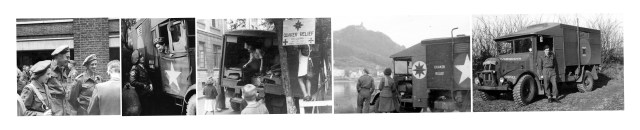
Quakers were instrumental in introducing legal provision for conscientious objection during World War I, as the Quaker Week poster timeline shows. But Quakers, in common with the rest of the country, made a range of personal decisions in response to the challenge of war: some signed up, others were absolutist “conchies” who endured lengthy prison sentences rather than cooperate in any way with the war effort, and yet others organised relief for war victims in England, Europe and Russia.

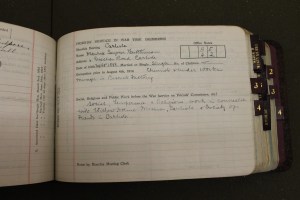
The Society of Friends’ Wartime Statistics Committee was set up in 1917 to obtain an accurate picture of what members, attenders, and “associates” of military age were doing. Monthly meetings were asked to send in “Returns of service during wartime” – record sheets for named individuals – which are now part of the official records for Britain Yearly Meeting (you can read more about these fascinating records in an earlier blogpost).

Complementing these are the personnel records of the Friends Ambulance Unit (FAU), an independent organisation set up by Friends in 1914, now digitised and available at http://fau.quaker.org.uk/.

The two sets of records were created for quite different purposes (data to report to a central committee or a relief worker’s service record) but when used together can provide a fuller picture of individuals in a local area than is often available from other official records kept at the time.

The Library holds varying sources for different local areas, and what you may find here depends to a great extent on the nature of the Quaker presence in your area. Local Friends also wrote and published books, pamphlets and articles (ranging from theological and devotional writings to social research, campaigning material and poetry). The Library has a comprehensive collection of publications by Friends, and useful secondary sources on Quakers and Quakerism, as well as some invaluable indexes to a wide range of sources, such as The Friend, reports to Yearly Meeting, testimonies, etc. There is also a rich collection of paintings, drawings, and photographs.

If you have been on one of the meeting visits to Friends House you’ve probably visited the Library and seen a display of items of local interest from the collections. If not, and your meeting would like to arrange a visit, contact details are here.

The Library is free and open to all. Find out opening hours, how to register, and practical information for planning a visit here, and search our online catalogue here.

Posted in Guides, Visits | Tagged , , , , | 2 Comments

From cupola, portico or archway: Quaker school magazines

We’ve touched on children’s magazines in a previous blog post about Quaker missionary periodicals. Another kind of publication concerning young people is the school magazine. Quaker schools generated a variety of these, some written by teachers, others by pupils, some aimed at the current school community, others produced by and for former scholars. This blogpost provides a brief introduction to the Library’s collection.

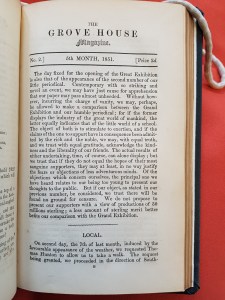
School magazines began to appear in the mid-19th century, as periodical publishing gained popularity. The earliest Quaker school magazines chiefly carried literary and scientific articles. By the twentieth century more content was contributed by current and former pupils, photography and illustration were highly important, and school news was a regular feature. One of the oldest school magazines held by the Library is Grove House Magazine for 1851- 1852, written for pupils of Grove House School, Tottenham, in existence from 1828 to 1877.

Grove House magazine no. 2 (May 1851)

News of the Great Exhibition in Grove House Magazine no. 2 (May 1851)

Not surprisingly we hold several school magazines for Ackworth School, the second oldest of the Quaker schools still open. The longest running of these is The Cupola, published from 1925 to 1973, named after the school’s octagonal clock tower.

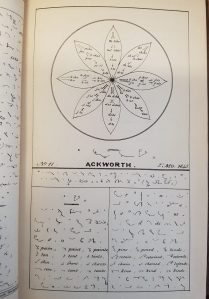
One of the more unusual “school magazines” in the Library’s collections is the Phonographic star, written in Pitman shorthand and first produced by John Newby at Ackworth School in 1844.

The Phonographic Star no. 11 (February 1845)

The Phonographic Star no. 11 (February 1845). Magazine in Pitman shorthand, edited by James Newby, a master at Ackworth School.

Further Ackworth school magazines include Ackworth School review (1888), Ackworth Recorder No. 1-5 (March 1st – June 24th 1890), and Ackworthian (1919-1920). There are also two magazines produced by pupils called Eye and Feet!

Bootham School first published its long running official magazine Bootham in 1902; Ayton school had The Beckside  (1919-1969) and Beckside Broadside (1974-1979), while Leighton Park School had The Leightonian (1895-1969/70).

Croydon School published a monthly magazine – The Croydon School monthly magazine, No. 1-12 (1846-1847). In 1880 the school moved to Saffron Walden, where it remained until closing this summer. Over the years it has produced The Waldonian, No.1- 10 (1906-1908) and The Avenue (1910-1968). Sibford School produced The Archway (1947-1965), and Sidcot School The Island (1907-1983).

These school magazines are a useful source of information such as news of former students, staff news, and obituaries, along with reports of the activities of various school clubs, school trips and lectures. They are also interesting as a visual record of the schools, as they include class photographs, staff portraits and photographs of events and school buildings. The magazines also regularly feature art works by students, creative writing and poetry.

Saffron Walden Friends School, The Avenue (July 1919)

Saffron Walden Friends School, The Avenue (July 1919). Report of the flu epidemic, opposite an illustration of the Boys Fifth Form Room, from a drawing by Edward Bawden, then a pupil at the school.

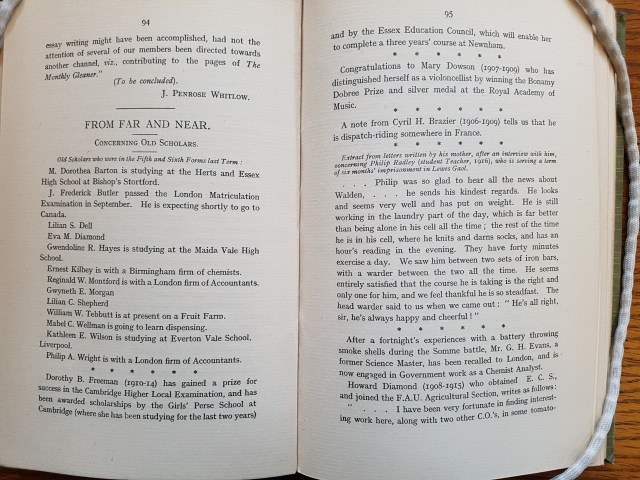
During the First World War, these magazines record the service of former pupils, both those who upheld the Quaker peace testimony and those who served in the armed forces. There are also first-hand accounts by former students of their service (including with the Friends Ambulance Unit), particularly in The Island and Bootham. Two recent publications have drawn heavily on these resources in their accounts of choices and actions taken by young boys and men during the conflict – Great ideals: Leighton Park School and the First World War, by John Allinson and Charlotte Smith (2014), and Still, small voice: Sidcot in the Great War, by Christine Gladwin (2014).

The Avenue (Dec. 1916)

News of former pupils and staff after the introduction of conscription in 1916, The Avenue (Dec. 1916)

Some school magazines were produced by school clubs, reflecting the extra-curricular interests of the students. For example, Mount School Literary Society produced a magazine, White Cow (1928-1938), and Sibford School Science Society produced a journal called The Owl (1937-1945).

Sibford School Science Society, The Owl, no. 5 (Autumn 1939)

Sibford School Science Society, The Owl, no. 5 (Autumn 1939)

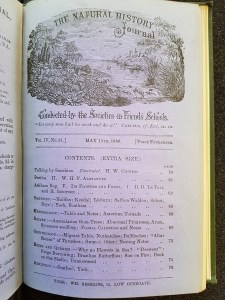
Some periodicals were produced jointly by several schools, most notably the Natural History Journal (1877-1898), a collaboration between the various Quaker schools’ natural history societies (Bootham had founded a pioneering Natural History Society in 1834 which still exists). This was succeeded by Past and present: a journal for scholars (old and young) of Friends schools (1900-1909).

The Natural History Journal, vol. IV, no. 31 (15 May 1880)

Contents page of The Natural History Journal, vol. IV, no. 31 (15 May 1880), magazine of the Friends Schools’ natural history societies

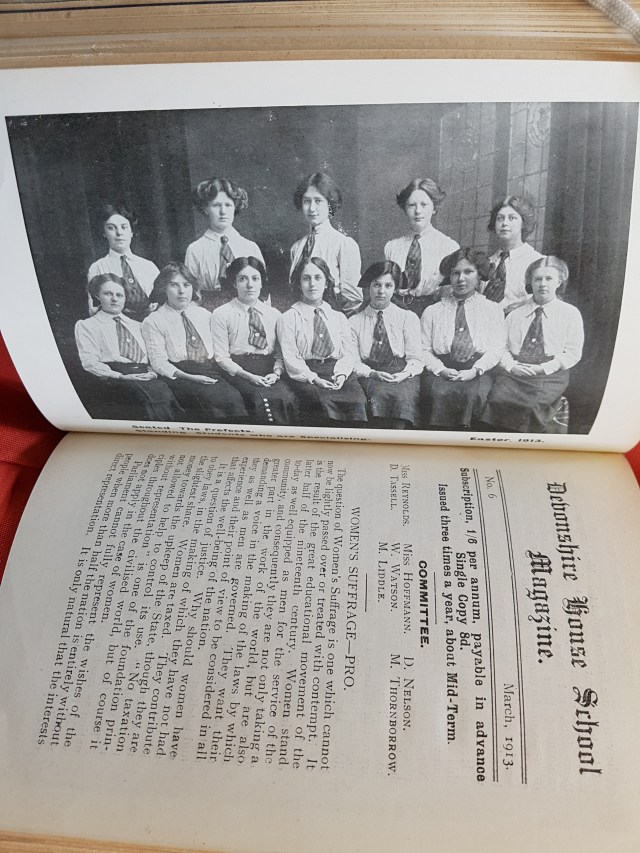
A few of the smaller, less well known schools are also represented in our collections, such as the short-lived Carlisle school for girls run by Lucy Marianne Reynolds, which produced Devonshire House School magazine (1911-1915).

Devonshire House School Magazine no. 6 (1913)

A portrait of the prefects and a debate on women’s suffrage from Devonshire House School Magazine no. 6 (1913)

Some other school magazines held by the Library include Stramongate School magazine, vol. 1-9 (1900-1932), The Brook: magazine of the Friends’ School, Brookfield, Wigton, vol. 1-4 (1948-1966), George Fox School. School magazine, no. 2-7 (June 1971 – June 1976) and Penketh School magazine, no. 1-10 (1914-1920). This journal contains a series of articles about Penketh Meeting  by Joseph Spence Hodgson – an example of the wide ranging topics covered by school magazines.

The Woodlands Journal, magazine of the boy’s boarding school, Woodlands, Hitchin, is housed with the Library’s manuscript collection. It is a handwritten magazine covering the years 1877-1889 (MS VOL S 12a-19).

Overseas Quaker school magazines are also represented, such as School echoes: the Friends School magazine, from Friends School, Hobart, Tasmania, and a number of magazines from Brummana High School, Lebanon.

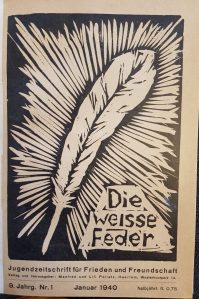
One of the rarest school magazines we hold  is Die Weisse Feder (1932-1940), the magazine of the school run by Manfred and Lili Pollatz, who had lost their positions as teachers in Dresden when the Nazis came to power. They moved to Haarlem where they opened a school to provide education to refugee children. Geneva Quakers have digitised one issue of the magazine, which you can read here.

Die Weisse Feder (January 1940)

Die Weisse Feder (January 1940)

School magazines are a useful resource for those researching the history of education, local and family historians, biographers and historians of Quakerism. Find out more about researching Quaker schools from our subject guide to histories and records of Quaker Schools in Great Britain and Ireland (free to download here).


Posted in Highlights | Tagged , , | 5 Comments

A 17th century Recording Clerk’s library: Richard Richardson’s books

As part of the ongoing work to improve access to the Library’s printed books and pamphlets we have now added the Richardson Collection to our online catalogue. Unlike the other early books catalogued as part of the project, these books were not included on our old card catalogue, so they were in effect hidden. From their well-thumbed appearance though, they had heavy use in the days of their former owner, Richard Richardson (1623?-1689), the Quakers’ second Recording Clerk.

Richard Richardson, Quaker

Richard Richardson had a background in teaching. As a schoolmaster he was tried at Chelmsford and imprisoned from 1670-1672 for teaching without licence and refusing to take the oath of allegiance. In 1674 he was appointed as master of a school for the children of poor Friends at Devonshire House, Bishopsgate. He assumed the role of Recording Clerk of the Society of Friends in 1681. His learning was valued by Friends: George Fox consulted him in 1679 in preparation for his tract on marriage True marriage declared or Severall testimonyes from the reccord of Scriptvre concerning the true marriages and such as are not according to the truth. Among other duties, he was responsible for procuring two copies of every book written by Friends and one copy of every book written against them, as minuted by the Second Day’s Morning Meeting in 1673 – the foundation of this Library’s remarkable and comprehensive collection of Quaker publications.

The Richardson Collection

The books in the Richardson Collection, however, were not Quaker writings, but part of the working library of an early Quaker Recording Clerk. As cataloguing progressed, a picture emerged of the importance for early Friends of this small scholarly collection of Old and New Testament editions, church history, post-Reformation theology, civil and ecclesiastical law, and dictionaries.

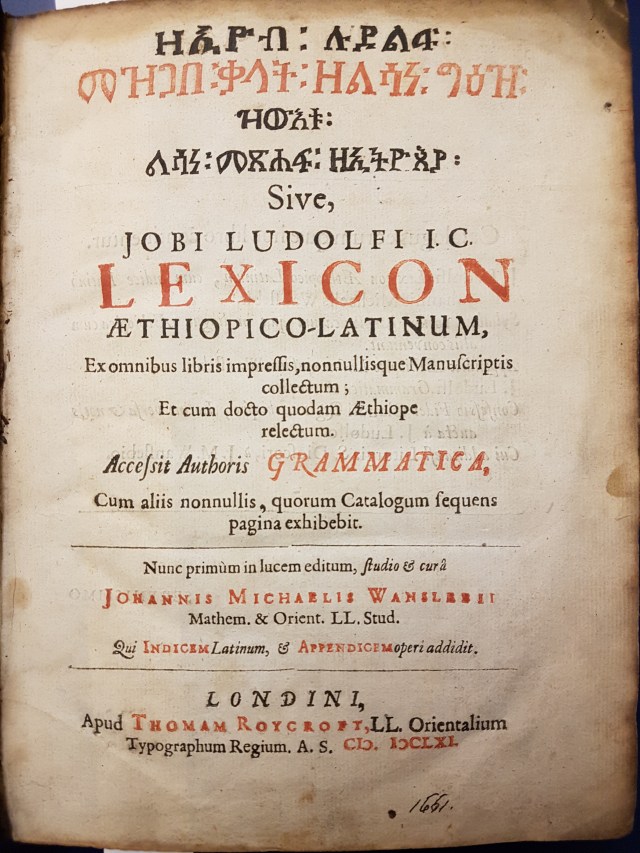
We found that while a dozen of the books (published between 1538 and 1679) were printed in London, the remaining 16 were published on the continent at Paris, Louvain, Lyons, Basle, Geneva, Zurich, Frankfurt, Nuremberg, Amsterdam and Rome. They indicate a breadth of study, and the range of resources that Friends needed in order to defend their beliefs and practice against the attacks of their opponents, during an era of fierce theological controversy. Richardson was certainly well educated, reading Latin, Greek, Hebrew, French, German and Dutch, and even Arabic and Ethiopic.

Richardson Collection 5. Lexicon Æthiopico-Latinum

Richardson Collection 5. Ludolf, Hiob, Lexicon Æthiopico-Latinum (1661)


Contemporary catalogues and lists of Richardson’s books

Cataloguing the collection revealed some puzzles about Richardson’s original library. Though he left his books to Friends, we do not know the full extent of his original library. And one book at least could not have come from Richardson (Sir Walter Rawleigh’s ghost (1652), inscribed by a later owner in 1702).

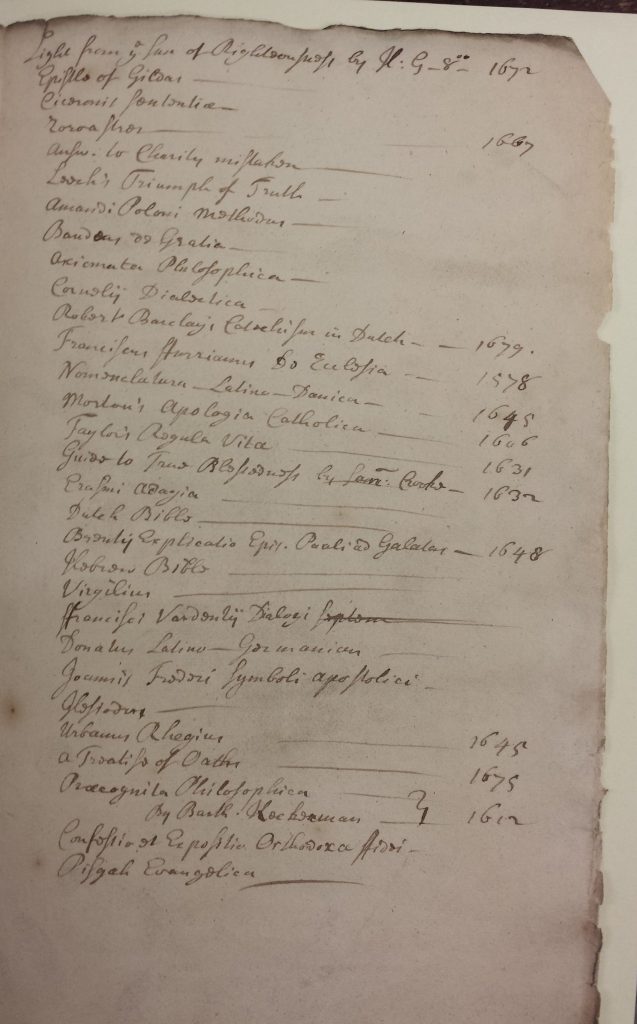
Piecing together the details of thirty titles listed on a handwritten 17th century document entitled Catalogus Riccardi Riccardson (in “A catalogue of Friends books bound up in severall volums” , archive reference CAT 1, shelf reference: SR1/113/2/6 Box 2) shelf reference: SR1/113/2/6 Box 2) produced little correlation with the surviving books.


Catalogus Riccardi Riccardson

Catalogus Riccardi Riccardson, in “A catalogue of Friends books bound up in severall volums” (archive reference CAT 1, shelf reference: SR1/113/2/6 Box 2)


Three of the Catalogus books are held elsewhere in our collections (including the Treatise on oaths, (1675), co-authored by Richardson with William Penn and others), but a close examination of those copies uncovered no conclusive evidence of Richardson’s ownership. Titles from the Catalogus not held here include works by classical Latin writers, and continental reformers such as Erasmus (1466?-1536), Johannes Brenz (1499-1570), Urbanus Rhegius (1489-1541), Heinrich Bullinger (1504-1575) and Bartholomäus Keckermann  promoter of the colony of Virginia.

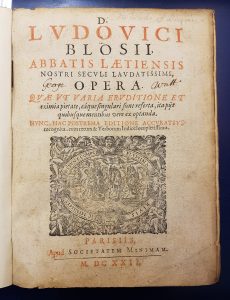
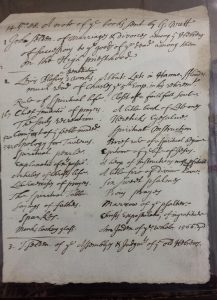
Between the leaves of one of the surviving Richardson books we came across a manuscript headed “14.6mo.88. A note of ye books sent by G. Watt”. George Watt died in the following month: George Fox wrote a testimony, or spiritual obituary, for him (A testimony concerning our dear Friend and brother George Watt, London, the 6th of the 9th moneth, 1688). This manuscript listed three book titles, one of which was the volume in which the manuscript was found (the writings of Flemish monk and mystic Louis de Blois – D. Ludovici Blosii abbatis Lætiensis nostri secvli laudatissimi Opera (1622), Richardson Collection no. 18). George Watt’s name is inscribed on its title page. The other two, by John Selden, were no longer with the Richardson Collection. To our delight we identified one of them – Selden’s De synedriis & præfecturis juridicis veterum Ebræorum libri tres (Amsterdam, 1679) – as a copy held in the Library’s general collection. It was clearly inscribed with the name of the earlier owner, George Watt, but not identified as part of the Richardson Collection.


All these books are now on our online catalogue, and we have reported the details of holdings to major bibliographic databases such as English Short-Title Catalogue, Short-Title Catalogue Netherlands, and the Verzeichnis der Drucke des 16. Jahrhunderts. Once again they are available for use, and their existence widely recorded.

We are grateful for the help given by Peter Salinger of University College London in identifying and cataloguing the collection’s two Hebrew Torahs, printed in Geneva in 1617-1618 and Amsterdam in 1630.

We welcome enquiries about the books in the Richardson Collection. For further information, or a list of the books catalogued, please contact us.


Sources

Skidmore, Gil, ‘Richardson, Richard (1622/3–1689)’, Oxford dictionary of national biography, (2004) http://www.oxforddnb.com/view/article/69118

Dictionary of Quaker biography (unpublished typescript, Library of the Society of Friends, London)

Penney, Norman, ‘Our Recording Clerks: no. 2 Richard Richardson’, in Journal of the Friends Historical Society, vol. 1 (1903), p. 62-8

Littleboy, Anna, ‘Devonshire House Reference Library’ part 2, in Journal of the Friends Historical Society, vol. 18 (1921), p.66-80 (p. 66-67 refer to Richardson)

Cadbury, Henry J., ‘Hebraica and the Jews’, in Howard H. Brinton, Children of light: in honor of Rufus M. Jones (1938), p.137-8

Posted in Projects | Tagged , , , , | 8 Comments

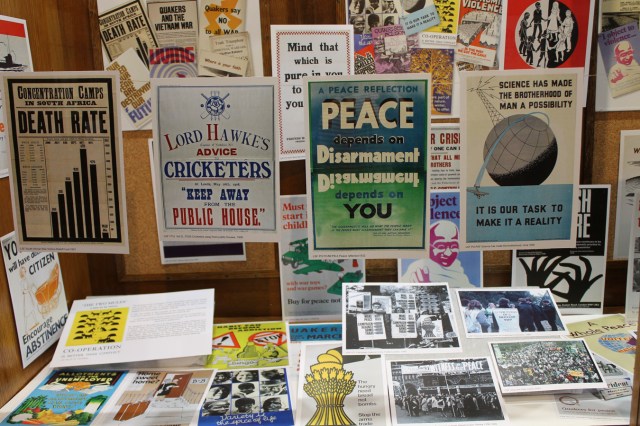
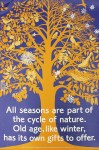
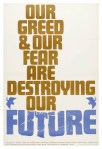
Quakers say it loud: the poster collection of the Library of the Society of Friends

The Library’s latest reading room display focuses on our poster collection. The posters are a historic visual record of Quaker values. These values – or ‘testimonies’ – of peace, equality, simplicity and sustainability, and truth and integrity are the founding principles of Quakerism.

Quakers live out their faith, acting according to these testimonies in their everyday lives. Quakers are perhaps best known for their peace testimony, which leads them to ‘witness’ against all war and violence.

Quakers have a history of publishing, which dates back to the days of the Society’s founder, George Fox. Early Quakers called themselves the ‘First Publishers of Truth’ and spread the faith by preaching and writing.

In 1656, while in prison, George Fox wrote: “Let all nations hear the word by sound or writing. Spare no place, spare not tongue nor pen, but be obedient to the Lord God and go through the world and be valiant for the Truth upon earth.” (Quaker faith & practice 19:32).

In 1660 George Fox and fellow Quakers presented a petition to Charles II declaring who Quakers were and the principles by which they live. The petition was also published as a pamphlet and is often known as the first peace testimony. The pamphlet was widely distributed to make the public aware that Quakers were nonviolent Christians who posed no threat.


Since the late 19th century, posters have been a popular way of advertising products or making announcements. To capture the public’s attention, posters have a few key words to convey a message and are illustrated with a striking image or design.

The Library holds the archives of the central organisation of Quakers in Britain. The committees administered by Quakers in Britain have produced many posters, pamphlets and cards. Committees and departments have evolved over the years but all of this material encompasses a wide range of interpretation of what these testimonies mean to a modern, ever-changing society.

Quaker public awareness campaigns have focused on world events, social values and spiritual fulfilment.

Peace

Quakers’ ardent campaigning for peace, at both national and local levels, led to the establishment of the Friends Peace Committee in 1888. The Peace Committee used its influence to promote peace on Christian grounds. Members attended peace conferences, wrote to magazines, newspapers, faith bodies and MPs about peace and arbitration, and distributed peace literature to the public.

Today Quaker Peace & Social Witness (QPSW) takes action on peace and social justice. It supports Quaker witness in local communities and schools in Britain and overseas – it works for peace in Palestine and Israel and in East Africa. The Quaker United Nations Office(QUNO) is based in Geneva and New York and facilitates positive social change on a range of issues including peacebuilding and disarmament.

Equality

Quakers believe everyone is equal. This means working to change the systems that cause injustice and hinder true community. It also means working with people who suffer injustice, such as prisoners and asylum-seekers. This testimony has led Quakers to campaign on issues like human rights, housing justice, the Living Wage and same-sex marriage.


Simplicity and sustainability

Quakers are concerned about the excesses and unfairness of our consumer society and the unsustainable use of natural resources. Quakers try to live simply and to find space for the things that really matter: the people around us, the natural world, our experience of God:

“We all need to take personal responsibility to make whatever changes we are called to. At the same time, we need to pledge ourselves to corporate action. The environmental crisis is enmeshed with global economic injustice and we must face our responsibility as one of the nations which has unfairly benefited at others’ expense, to redress inequalities…”

From minute 36, Yearly Meeting 2011

Truth and integrity

Guided by integrity, Quakers try to live the truth of word, power and spirit of God. This testimony raises awareness of making the world a better place through faith by working together as a community as well as individually.

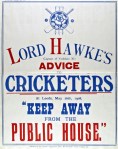
The posters of the Friends Temperance Union (1877–1990) encouraged abstinence from drinking and gambling, both of which were closely linked to social deprivation and poverty. The F.T.U. campaigned to help curb these vices, and Quakers toured the country, giving lectures illustrated with lantern slides to publicise the harm drinking and gambling caused to individuals and families. F.T.U.’s successor, Quaker Action on Alcohol and Drugs, no longer takes an abstinence only approach to alcohol, but continues to work within the Quaker testimony of abstinence and moderation, seeking to address gambling and the use and misuse of all substances, legal, illegal and prescribed, within a framework of Quaker values.

Posted in Exhibitions | Tagged , , , | 14 Comments

Quaker women: resources for women’s history in the Library of the Society of Friends

For Women’s History Month this March, we offer a broad overview of some of the great women’s history resources the Library has to offer. Whether you’re interested in the lives and thought of particular Quaker women, in the history of the Society of Friends and Quakerism, or in women’s history more generally, we hope this blogpost will give some pointers to fruitful sources for research and reading.

Archives of women’s meetings

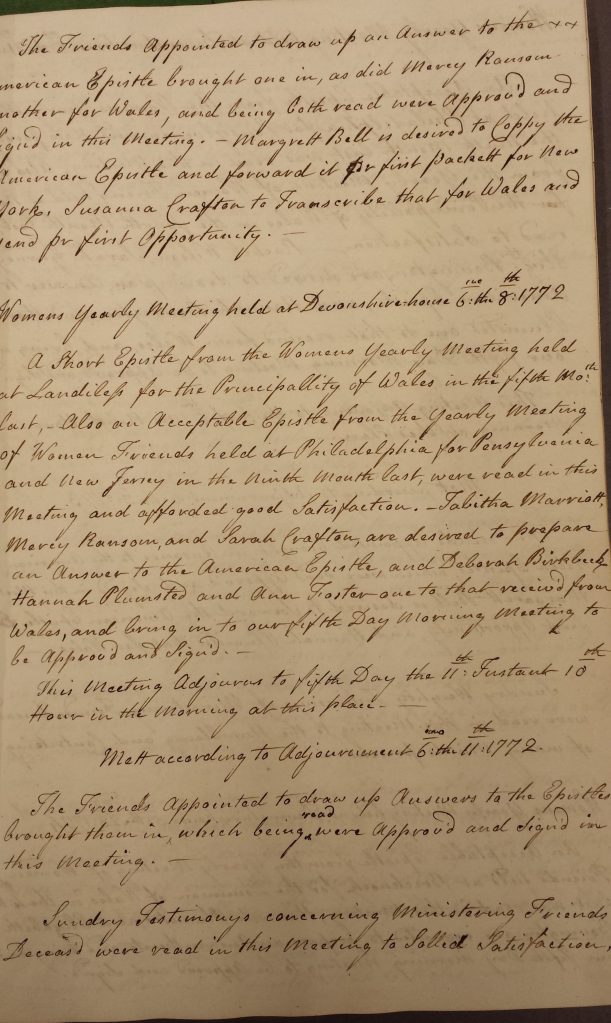
Quaker women gathered together regularly in London from the late seventeenth century, though an official Yearly Meeting of Women Friends was only formally established in 1784 (having first been proposed in 1753). It was finally laid down in 1907. The records of the Women’s Yearly Meeting include minute books from 1759 to 1907, and epistles 1753-1906.

Womens YM minutes 1772

Yearly Meeting of Women Friends. Minute book 1759-1785

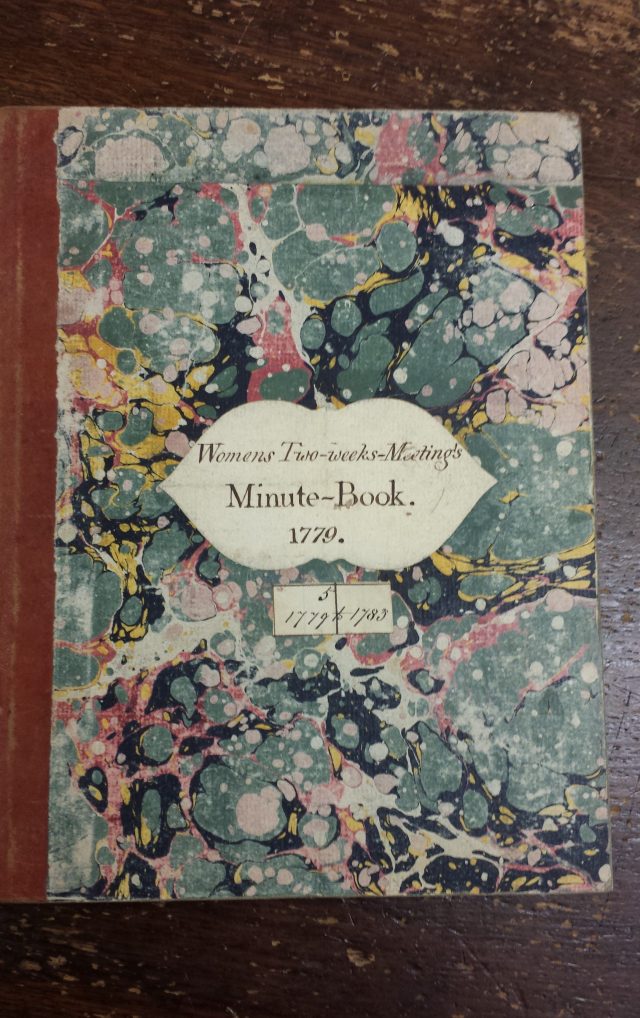
Meetings around the country also had their own separate women’s meetings. London and Middlesex women’s meetings records are here in the Library, including those of the Women’s Two Weeks Meeting and Box Meeting. Surviving records of other local women’s meetings are deposited locally along with other monthly meeting archives. For more information about specific local women’s meeting records and their whereabouts, contact us.

Womens Two Weeks Meeting Minute book 1779-1783

Womens Two Weeks Meeting. Minute book 1779-1783


Women’s published writings

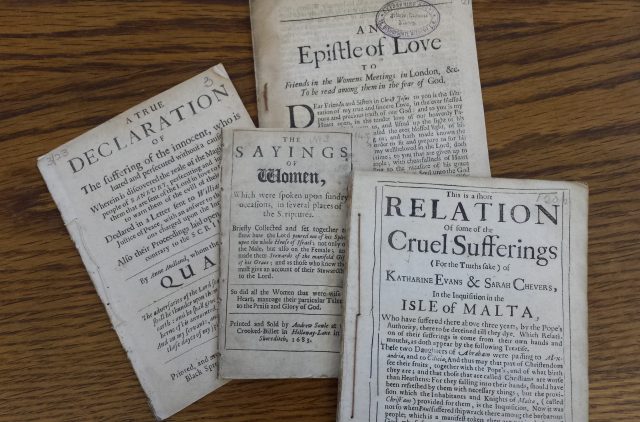
17th century Quaker publishing was remarkable both for its abundance and for the unusual number of women authors, at a time when women’s public writing was as uncommon (and as deprecated) as women’s preaching. It’s not surprising that many researchers have found the Library a rich resource for early modern women’s writing and publishing.

Womens tracts

Some key reference works and anthologies for research into 17th and 18th century Quaker women’s published writing include:

Quaker women have of course gone on writing on a wide range of topics and in a variety of forms ever since. Not only does the Library aim to collect all Quaker publications, but it also holds a representative range of books by Quakers on unrelated topics, including works by women authors who wrote for a living, such as botanical books for children by Priscilla Wakefield (1751-1832), or the poems and fiction of the novelist Amelia Opie (1769-1853).

So if you’re looking for the writings of a particular Quaker woman, or a particular title, your first stop should be the Library’s online catalogue. We’ve produced some catalogue search tips, to help focus your search – for instance by genre and date – and make good use of the results.

Women’s diaries, letters and other personal papers

Women’s stories have often gone untold through lack of documentation. Any surviving personal papers – diaries, correspondence, note books – can be invaluable sources for learning more about women’s public and private lives. You will find many examples of these, from the 17th to the 20th century, in the Library’s collections, including travel journals and spiritual diaries, which, by their nature, are more likely to have been preserved for posterity.

The most iconic are probably the diaries of Elizabeth Fry (1780-1845), prison reformer, whose presence in recent years on the five pound note gives an indication of her continuing fame. The recently conserved diaries (MS Vol S 255-271) give a fascinating insight into the inner life of a Quaker minister and social reformer, documenting her private moral and spiritual struggles as well as her philanthropic activities.

Here is a selection of some other women’s diaries to whet your interest (click on the links for full catalogue descriptions of these manuscripts, or contact us for a longer list).

Eighteenth century

Nineteenth century

Twentieth century

Secondary sources

Besides published biographies of individual women or families, the Library holds historical studies of Quaker women of different periods, written from various standpoints. Mabel Brailsford’s Quaker women 1650-1690 published over a century ago was the first substantial study in the field, taking the biographical narrative approach which continued to be favoured in popular works on the subject, often for a mainly Quaker audience. More recent historical writing has been influenced by the increasing academic professionalisation of history, but also by the growth of social and economic history, women’s history and gender studies, and the study of material culture (particularly in the domestic sphere). These developments, along with the impetus to tell untold stories and publish anthologies of source material on less well documented areas, have led to a proliferation of valuable secondary sources for anyone interested in studying Quaker women. Here’s a short selection of some of these important and useful works.

General

Seventeenth century

Eighteenth century

Nineteenth century

Twentieth century

 And much more…

This short blog post has merely scratched the surface of what’s available for the study of women’s history in the Library. We have omitted general biographical sources, such as the Dictionary of Quaker biography. And we haven’t even mentioned images and artefacts (photographs, cartes de visite, art works by and about women Friends, costume, museum objects), despite their importance for the study of women’s everyday lives. It’s clearly impossible to produce a single conspectus of all relevant Library sources, given the wide compass of possible topics relating to women’s history, and the range of potential users of the collections. Thankfully, the online catalogue will take you much further – and of course we are always ready to welcome new readers and answer enquiries about the collections.

Above all, we hope you will all join us in celebrating Quaker women’s lives and history, whether you’re a seasoned researcher or just dipping your toe in for the first time.

Quaker meeting attributed to Heemskerk F070

The Quaker Meeting, oil painting attributed to Egbert van Heemskerk, late 17th century (Library reference: F070)

Posted in Guides | Tagged , , , , | 4 Comments

War and social order

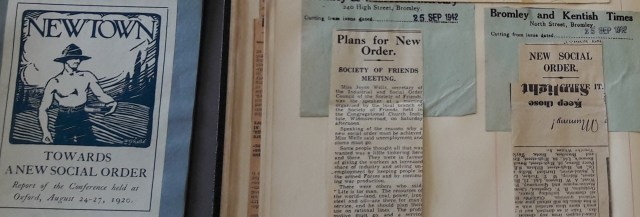
Reimagining a True Social Order is a new AHRC funded website exploring the historic background and contemporary significance of the Eight Foundations of a True Social Order, first agreed by London Yearly Meeting in 1918. Inspired by the richness of the new resource (produced by academics at Leeds, in collaboration with Quakers in Britain, Woodbrooke and others), this blogpost aims to highlight some of the Library material which relate to the origins and development of the Eight Foundations.

nwo-crop

Display of material for Yearly Meeting 2016 special interest group on the 8 Foundations

The war of 1914–18 made Friends more vividly aware of the close connection between war and social order. Many progressive social thinkers at the time blamed the failings of capitalism for the descent into war, and saw the masses caught up in fighting for their countries as pawns in the games of empire led by politicians, royalty and wealthy businessmen.

Nine months after the outbreak of war, London Yearly Meeting was inspired by the words of the 18th century Quaker John Woolman:  May we look upon our treasures, the furniture of our houses, and our garments, and try whether the seeds of war have nourishment in these our possessions (A Word of remembrance and caution to the rich, republished by the Fabian Society in 1897).

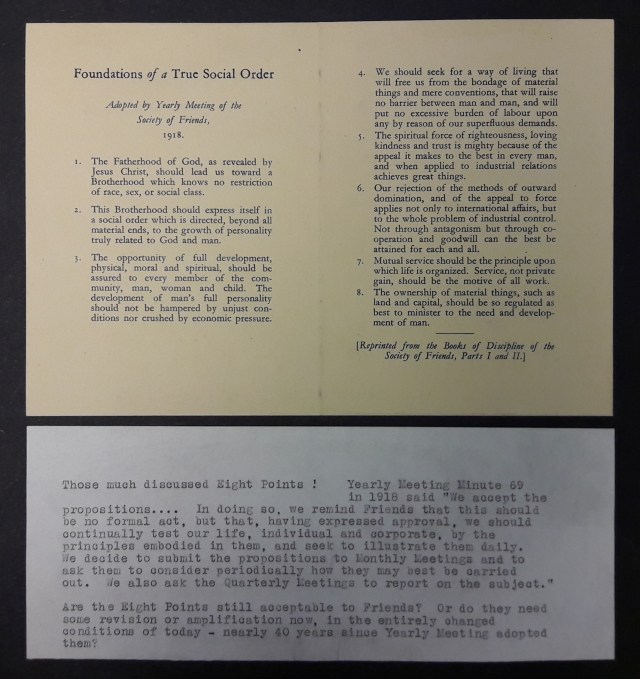
British Friends established a War & Social Order Committee in 1915 to look into all issues surrounding social inequality and the social conditions that make war possible. The Committee presented their findings to Yearly Meeting in 1918, leading to the adoption of eight ‘Foundations of a true social order’, ideals still included in Quaker faith and practice today(http://qfp.quaker.org.uk/passage/23-16/).

The War & Social Order Committee (WSOC) would later become the Industrial & Social Order Council (ISOC) which existed until 1962.

The most obvious starting place for anyone interested in finding out more, is the papers of these two committees.

For the War & Social Order Committee, 1915-1928, we hold the minutes of the main committee and the sub-committees, as well as conference minutes. For a full description of the records, go to our online catalogue entry: http://quaker.adlibhosting.com/Details/archive/110010972

For the Industrial & Social Order Council, 1928-1962, we hold similar records and also two scrapbooks of photographs and pamphlets. For a full description, go to our online catalogue entry: http://quaker.adlibhosting.com/Details/archive/110010392

much-discussedcrop

‘Those much discussed Eight Points’, Industrial and Social Order Council scrapbook, 1955-1956′, Library reference ISOC/6/1

However for those wanting to dig even deeper, there are other collections which are worth a look.

Papers from committees and people which shed a light on their wartime activities are important for getting a feel for how the war was influencing Quakers and in many cases leading them to new and more radical positions.

WSOC member Hubert Peet was already a Socialist before war broke out (acting as editor of The Ploughshare, journal of the Socialist Quaker Society), but as secretary of the wartime Friends Service Committee, he would have had contact with a large variety of young men from diverse backgrounds which may have also shaped his political and social views. His 1916 correspondence forms part of the Service Committee records here on the catalogue: http://quaker.adlibhosting.com/Details/archive/110010918.

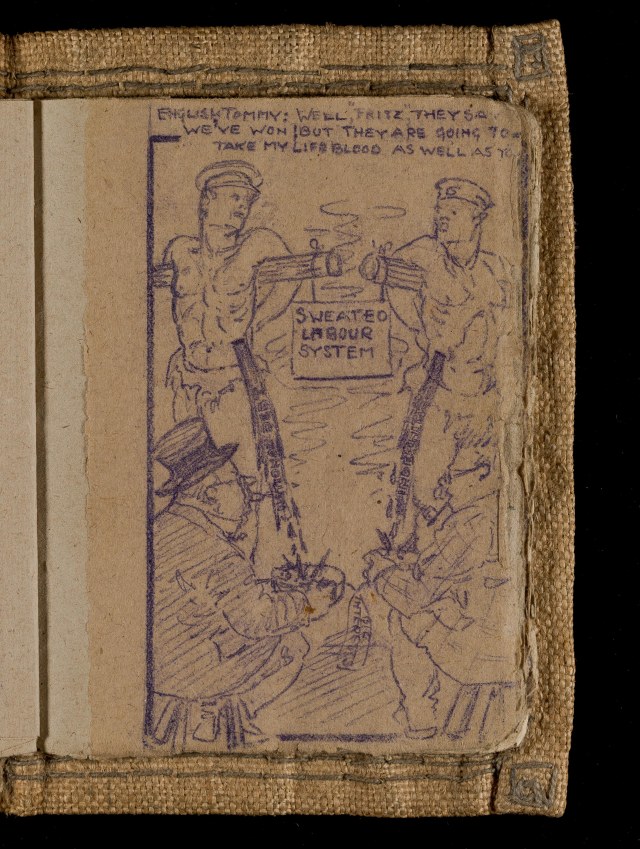
Some of the members of the War & Social Order committee were absolutist conscientious objectors, and when reading the letters and diaries of COs in our collections you can see how this experience led them to mix with other conscientious objectors through the No-Conscription Fellowship, and while imprisoned alongside these men. Often other COs objected on political grounds, and held strong socialist views. To find out more about this read our earlier blogpost on COs in prison https://quakerstrongrooms.org/2014/04/30/library-resources-for-researching-world-war-i-prison-experiences-of-conscientious-objectors/

ms_vol_77_0039-page-24

Page from clandestine CO prison newspaper featuring cartoon with socialist and pacifist themes, page 24, Winchester Whisperer, Library reference: Vol S 77

We also hold a variety of publications and collections from other members of the committee (http://www.quakersocialorder.org.uk/people/) which you can find by searching their names on our catalogue.

Notable collections include:

Maurice L. Rowntree papers (Library reference: TEMP MSS 480)

Rowntree had also served time in prison as a conscientious objector during World War I and his letters and notebooks written in prison show the huge impact this had on him especially with regards to prison conditions and rehabilitation. He went on to publish several works on war and social order, and this collection includes extensive research notes for his writing. The collection also includes research notes written on areas of industry – it seems Rowntree went ‘undercover’ and obtained jobs for periods in labouring work in order to get a better understanding of working conditions.  He also documents adult education projects and clubs for the unemployed in working class areas.

Joan Mary Fry papers                            (Library references: TEMP MSS 66; TEMP MSS 909 etc.)

Joan Mary Fry was a wealthy Quaker, daughter of a Judge, and sister of Roger Fry, the art critic, and Bloomsbury Group member.

She had served as a prison chaplain in World War One, before joining the relief effort in Germany after the war. Among other tasks on the War & Social Order Committee, she headed up the allotment sub-committee, promoting allotment work for the poor.

She published articles and books on issues to do with pacifism and social order, particularly focussing on unemployment, but also on religious and pastoral topics. Find out more about her publications by searching our online catalogue (see also our recent blogpost on Fry and others).

John Turner Walton Newbold papers                                       (Library reference TEMP MSS 225)

Walton Newbold was a journalist and politician, who became the first Communist MP in Britain. He was much influenced by his Irish Quaker father and espoused Quaker beliefs, although in later life he was drawn to Catholicism.

He was a pacifist and campaigned for the No-Conscription Fellowship through World War I although was ruled out of having to contest conscription on medical grounds.

His politics were complex and he moved from the Independent Labour Party to the radical Left, joining the new Communist Party of Great Britain in 1921. After a period of intense representation on domestic and international issues, which led to a suspension from parliament in 1923, he resigned from the Party in 1924 and renewed his allegiance to Labour.

We hold a collection of letters of Newbold to contemporaries such as Hubert Peet.

These collections provide further historical insight into the thinking behind the Eight Foundations, adding to the rich resources on the new Reimagining a True Social Order website.

Posted in Projects | Tagged , | 2 Comments

Good cheer!

What’s going to be in your Christmas stocking? Something good, we hope! For our final blogpost of 2016 we want to celebrate some of the “gifts” you’ve shared  over the past twelve months. There have been some heartening acts of generosity – both regular and surprising. We have many reasons to be thankful!

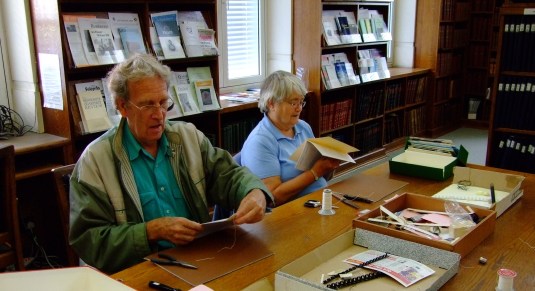
Every fortnight a dedicated group of NADFAS volunteers gather in the Library reading room to de-staple and re-sew our modern pamphlets a Herculean task they’ve been working on for over six years. Over the autumn we’ve also had the help of a student conservator, who’s been treating some more challenging items. Through this painstaking and unglamorous work a great many rare late 19th and 20th century pamphlets are being protected from the damaging effects of rust on paper.

A small team of other volunteers offer their skill and time regularly too. Between them, they carry out basic paper repairs in-house, check large collections of donated material, and provide invaluable support to the retrospective cataloguing project. Thank you, volunteers, for your time, good will and constancy!

NADFAS team at work

Without a paid ministry, Quaker meetings run on the voluntary service of their members, who may undertake a range of roles. One of these is the role of “meeting librarian” (meetings are encouraged to maintain libraries for the use of Friends and attenders, as an aid to the life of the meeting and outreach). Earlier this year Quaker Life Network formed a new “Quaker Meeting Librarians Cluster” (inspired by an earlier discussion group set up and run for over a decade by Nic Wright, former librarian at Bolton Meeting), intended as a forum for sharing experience, discussing books and swapping tips.

Not long after the cluster was established, a reader came to us looking for a loan copy of The Communion of life, Joan Mary Fry’s 1910 Swarthmore lecture. As a shot in the dark, we emailed the cluster. Suddenly, and quite unexpectedly, there were messages from meeting librarians all over the country generously offering to track down and lend the book from their own collections. The reader was delighted, and so were we. And a bit awed. Meeting librarians are amazing: you clearly have a passion for sharing!

A catalogue of the books, belonging to the Friends of Leeds Particular Meeting (Leeds: Printed by J. Binns, 1794)


We’ve blogged before about how much we and our other users owe to the generosity of researchers who share their own work with the Library. A large proportion of new accessions – scholarly historical works, biographies, articles, novels, local history and more are presented to the Library by their authors, and this year was no exception.  Topics included politics, theology, the role of women, radicalism, peace, voluntary service, and individual people and places, across four centuries, reflecting the broad compass of our collections. Here’s a random selection of some of the 2016 accessions:


To ensure the survival of our collections for the future, professional conservation treatment is sometimes needed, funded by our BeFriend a Book scheme. So we were delighted when the recent blogpost about our student conservator’s project prompted one reader to make a generous donation to the fund. Thanks to everyone who has donated, whether it’s a lot or a little, for making this work possible!

Among items conserved this year were 16 tract volumes – volumes of separately published works collected and bound up together (mainly 17th-18th century). Their significance as physical objects is enhanced by their associations with places and people, so any trace of former ownership (inscriptions, marginal notes, bookplates, etc.) is meticulously preserved. Here are tract volumes 294, 326 and 517, three of those conserved in 2016 with noteworthy provenance:

And those are just a few of the kindnesses we’ve witnessed in 2016. Thank you all, friends, whether you’ve shared your time, your money, your own research, or – not least – your good will.

Very warm wishes to users and friends of the Library for Christmas and the new year!

Posted in News | Tagged , , , , , , | 2 Comments

Preserving pamphlets: our student conservator talks about her work in the Library

We’re lucky to have Beth Franklin, a student conservator, volunteering at the Library this autumn. She’s working on-site to conserve some of the Library’s nineteenth and twentieth century pamphlets. We asked Beth about the kind of work she’s doing here and what drew her to a career in conservation.


Carrying out tape removal In the studio at Camberwell

Carrying out tape removal In the studio at Camberwell

How did you come to volunteer at the Library of the Society of Friends?

Beth: I’m a second year student on the Conservation M.A. course (Books and Archival Materials pathway) at Camberwell College of Arts, University of the Arts London, finishing in 2017, and looking for every opportunity to practice my skills. My undergraduate degree was in Theology and Biblical Studies, so I was interested in Quakerism. When my mentor Ian Watson, a conservator at Lambeth Palace Library, suggested a placement here I jumped at it. After my two week placement last spring I offered to come back one day a week through the autumn.


What did you do here during your first two week placement in the spring?

Beth: I broke up books! I had to dis-bind a set of nineteenth century pamphlet volumes. Like all conservation work, it required a steady hand and great care, and it was actually useful for understanding the structure of bound volumes, complementing what I had learned during my course so far.


You’re volunteering at the Library throughout the autumn. What kind of work are you doing now?

Beth: I’m working on the pamphlet material that the Library’s NADFAS team of volunteers have identified as needing more extensive work than they can do. I spent a day working with Ian at Sussex Conservation Consortium’s studio, and he helped decide what treatments were appropriate for me to carry out on site in the Library at Friends House, one day a week. Most of my work is repairing paper tears, reattaching covers and removing damaging staples – ones that are hard to get at because they are covered by the pamphlet bindings.


Beth’s tool roll

Beth’s tool roll – portable essentials

How does this fit in with the M.A. course you’re taking at Camberwell?

Beth: It’s useful experience. It gives me the opportunity to practise what I’ve learned in a classroom environment in a real life library and archive setting.


How long does each pamphlet take to treat?

Beth: It all depends – how long is a piece of string? A simple pamphlet might take ten minutes for careful staple removal and sewing; applying paper hinges to covers using wheat starch paste is longer, with drying time about an hour. I make up the wheat starch paste each time I visit the Library – it goes off in a week and smells horrible! One pamphlet that took a lot of time to treat was published in 2006 (Grow up or blow up, by Charlotte Waterlow). It was a thick pamphlet – 60 pages – with staples all the way through. I had to remove the staples, sew the pages together using the existing staple holes and re-attach the cover with Japanese paper hinges. Taking out the staples led to some loss of spine tape, which needed to be remedied with careful toning.


Wheat starch paste, made up for each visit to the Library

Wheat starch paste, made up for each visit to the Library

What’s the most challenging item you’ve treated so far this term?

Beth: A 19th century pamphlet about a visit to Ireland by James Hack Tuke (Irish distress and its remedies. The land question. A visit to Donegal and Connaught in the spring of 1880, Box 77/19). This was a well-used pamphlet whose covers had fallen off. It had been sewn but the stitching had gone, and I had to re-stitch the sections and sew them onto two cords, on site, with only the basic equipment I had here. My mentor Ian advised that it was do-able, and I’m pretty pleased with the result, considering I didn’t have the use of a sewing frame. I made a new paper cover, with a Japanese paper spine and I also had to remove some sticky tape (the bane of conservators).


Could you tell us about some of the other conservation work you’ve been doing?

Beth: I worked for a month over the summer at Lambeth Place Library, repairing three leather bindings by re-attaching boards and making a new leather spine – my first opportunity to work with leather bindings in a real life library context.

At the moment I’m also volunteering at the V&A Museum once a week, in their Blythe House store, making book wraps – bespoke enclosures for leather bound books with “red rot”, designed to protect neighbouring volumes (and users!) from the red flaking dust that comes off the volumes.

Enclosure for a book with "red rot"

Enclosure for a book with “red rot”

What drew you to book and archive conservation in the first place?

As an undergraduate I used university special collections for my research at Liverpool Hope University, and I loved it. I ended up volunteering there, and did some basic repair work, which got my interest going. In the future I’d like to work as a conservator in a religious library or archive.


Finally, what’s your favourite piece of conservation equipment?

My Teflon bone folder. A bone folder is the conservator’s best friend! But I also love my Japanese bristle brush with bamboo handle, which is beautiful as well as useful.


Posted in Collection care | Tagged , , , | 9 Comments