Bookshop Day – Henry Thomas Wake, Quaker bookseller

‘Imagine a second hand bookshop in a Derbyshire garden, and the bookman a fine old Quaker, lovable at sight, interesting withal, and himself the best book in his collection – a living book about books.’ 

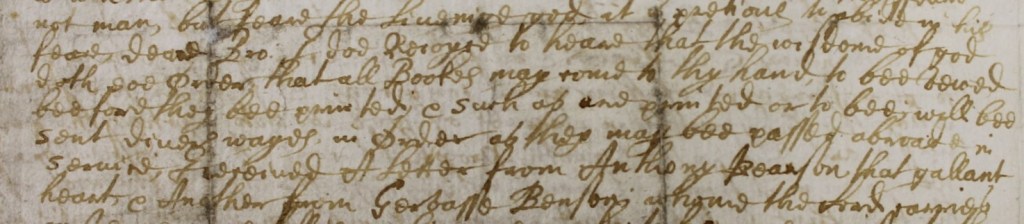
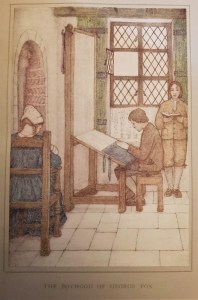
For Bookshop Day tomorrow, we thought we’d celebrate an undersung Quaker bookseller, Henry Thomas Wake, whose archives we hold at the Library. The quote above is from a visitor to his Fritchley bookshop in 1912, not long before Wake died. While there, the visitor viewed Wake’s beautifully hand-drawn catalogues and observed ‘You should have been an artist’. At this, Wake replied casually ‘That’s what Ruskin said.’ Wake had known not only the eminent Victorian art critic in his youth, but also Thomas Carlyle, whose bookplate he designed. How had this engineer’s clerk from a modest background ended up mixing in such illustrious circles? 

Wake was born to a Methodist family in Northamptonshire in 1832. A bright boy, he went to grammar school and eventually to London as a teenage clerk in various banking and shipping companies. Due to his low income, university wasn’t available to him, he nonetheless took advantage of the many opportunities for self-education that were springing up in the Victorian city. He was open and curious, attending the London Institution regularly, reaching out to Thomas Carlyle after he had read Sartor Resartus (impressed by the passages on Quaker founder George Fox). He visited one of Carlyle’s welcoming soirées, meeting Carlyle and his wife Jane. They bonded over English civil war memorabilia – Wake was already a budding antiquarian – and Carlyle commissioned a bookplate from Wake.  

His curiosity also took him to his local Friends’ Meeting House – Brook Street in Ratcliff – where he was an attender for two years before he was admitted as a member of the Society of Friends in 1856, at the age of 25. However, even before this, Carlyle felt he was already losing his new friend: ‘There is clearly nothing to be made of that Grampus Wake: the leather jerkin of George Fox has buttoned him up from the sight of Sun and Moon,’ he lamented to John Ruskin who also knew Wake. 

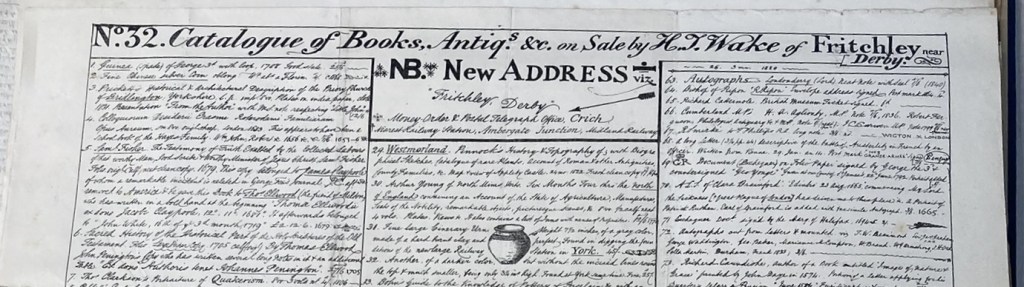
By this time Henry had also met and married a distant cousin, Lydia Carter, and had a growing family. Only a few years later they all left London and moved north, to the cradle of Quakerism – Cumbria – where he became a tutor. He continued his sideline as an antiquarian and bookseller, becoming also a dealer in manuscripts. He began to create exquisitely illustrated catalogues of items for sale, hand-lettered, with many small images of star items. A bound volume of these catalogues is held by the LSF.  

Also at the Library are Wake’s personal diaries and sales ledgers, which were always overlapping records: at first his personal journal recorded sales he made, and later the diaries became sales ledgers, which still included many personal notes, and the same charming illustrations that could be seen in his catalogues.

More mundane things like a pair of new boots might share a page with a recently acquired antiquity. They also contained more poignant personal notes, such as when Wake’s wife Lydia died in 1876, he recorded this in worked-over font, expressing his depth of emotion. 

He was left with three children still under 14, and as was often the case with widowers with young children, was mindful of finding them another carer to share the load of their upbringing.  By this time, he had been living in Cockermouth, Cumbria for more than ten years, but we see from his catalogues that some time in the middle of 1879 (three years after Lydia’s death) he moved to Belper in Derbyshire. A clue to the reason for his move might be found in his marriage in August of that year to Hanna Sadler in nearby Matlock. From Belper he moved the following year to Fritchley. 

Fritchley, a small village in Derbyshire, has an inversely outsize place in British Quaker history. Following liberalisation around dress and language in the mid-nineteenth century there was some reaction amongst more conservative Quakers . This led to some schisms within the faith, more pronounced in the US than in the UK. Fritchley meeting, led by newcomer to  the area John S Sargeant decided to break with London Yearly Meeting (as the national organisation then was), and chose to keep to old-style simple dress, and language. They sent no representatives to LYM and only rejoined the main body of Quakers in 1967.  

Perhaps as one who came to Quakerism rather than being born into the faith – those new to any belief system often being known for their zealousness – Wake found himself drawn to Fritchley. He ended up living at ‘The Chestnuts’ or ‘Chestnut Lodge’, designed by local Quaker architect Edward Watkins. It was a large set of buildings that served as a school with a home attached, which Wake occupied with his wife Hannah. It was from here that he supplied the Library (then at Devonshire House in Bishopsgate) with some key treasures in our collection, including a volume of letters of early friends in the handwriting of early Friend, William Caton, as well as being part of the chain of custodians of a rare copy of De imitatione Christi (The Imitation of Christ) by Thomas à Kempis, published at Milan in 1488. There was clearly more behind the unassuming frontage of a Fritchley bookshop than met the eye. Not only did the abovementioned visitor receive a cup of tea from Hannah Wake, but on expressing an interest in Thomas Carlyle, also received one of his letters to take away along with his haul of books. Hannah had persuaded her husband to part with it by pointing out forthrightly ‘We’ll not live more than twenty years anyway.’   

Sadly she was right at least about her husband. Henry Wake died a year or so later on the eve of WWI, with many of his descendants already emigrated to Canada. However, he is well memorialised at the LSF as we have many of his wonderful catalogues bound on the shelves, along with his journals and illustrated sales ledgers. Some are too fragile to handle, but all are on microfilm and available as PDFs. 

Henry Thomas Wake papers https://quaker.adlibhosting.com/Details/archive/110013775

Carlyle’s bookplate and its designer : with several hitherto unpublished letters and unique Carlyle relics / by Davidson Cook https://quaker.adlibhosting.com/Details/fullCatalogue/64973

Catalogue of books, manuscripts, drawings, coins, autographs, old china, curiosities, &c. on sale at the cash prices affixed by Henry T. Wake https://quaker.adlibhosting.com/Details/fullCatalogue/70269

Posted in Highlights | Tagged , , , | Leave a comment

A Flame in the City: The 1821 Gracechurch Street Fire and Its’ Impact on the Quaker Community

Abstract

In September 1821, a catastrophic fire broke out on Gracechurch Street in London, destroying several commercial and residential buildings, including the prominent Quaker meeting house. This article revisits the fire through contemporary reports and explores its lasting effects on the Religious Society of Friends in the City of London and surrounding areas. Examining archival material preserved at Library of the Society of Friends, it highlights the survival of key records, introduces archive conservation techniques, and draws on contemporary events to underline the endurance of Quaker recordkeeping.

Boxed volume of Gracechurch Street Monthly Meeting Minutes (1791-1793) alongside a bookmark depicting Gracechurch Street meeting house produced by the Library of the Society of Friends.

Introduction

In May 2025, a cataloguing initiative at the Library of the Society of Friends (LSoF) shed new light on material from the Gracechurch Street Quaker Monthly Meeting. This work formed part of a wider ambition to improve access to and understanding of early London Quaker records. The project involves extracting information currently embedded in PDF documents attached to legacy catalogue descriptions and using this data to build a structured and searchable catalogue hierarchy for meeting records. This undertaking not only adheres to archival standards of description but also makes it easier for researchers to trace the administrative and spiritual life of London Quaker meetings across time.

As part of this initiative, the LSoF—where London Quaker meeting records are held on deposit—has begun the task of systematically re-cataloguing the collections, starting at the level of monthly meetings. As such, the Gracechurch Street Monthly Meeting was one of the first selected for this work. The choice was initially practical: the records were accessible and relatively compact, making them a manageable starting point. However, the re-cataloguing process soon uncovered a compelling historical narrative.

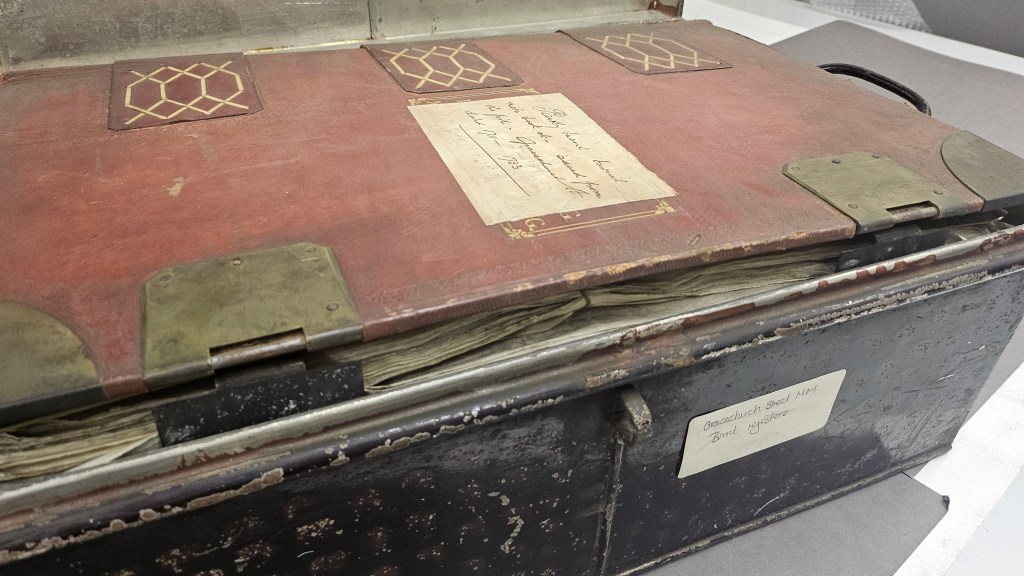
Metal chest with the label “Gracechurch Street MM Burnt registers”.

Within the 18th-century minute books and correspondence were a small group of documents showing unmistakable signs of fire damage. These records had been preserved among otherwise routine papers and volumes and had not previously been flagged as exceptional. It is fortunate then, that the project has resurfaced records which bear a physical testament to the fire that destroyed the Gracechurch Street Meeting House in September 1821.

The cataloguing of these records provided a valuable opportunity not only to assess their physical condition and implement appropriate conservation and access measures, but also to revisit the historical circumstances of their creation and near-destruction.

Gracechurch Street Meeting’s Place in Quaker Life

Gracechurch Street Meeting played a central role in the religious and communal life of London Quakers. As one of the most prominent meeting houses in the city, it became a key gathering place for influential members of the Society of Friends. The meeting also hosted the Society’s Reference Library[1] and was the site of significant events, including the being host to the last sermon to be given by George Fox[2]. Its importance is further underscored by the fact that it succeeded the Bull and Mouth meeting, which had been the largest early Quaker meeting in London. This continuity reflected the growth and institutional development of the Quaker movement in the capital. The Gracechurch Street Meeting attracted many well-known and active Friends, serving not only as a spiritual centre but also as a place where Quaker organisation and discipline were strengthened and maintained.

The Fire and Immediate Consequences

The fire was reported in contemporary newspapers, including The Guardian[3], which chronicled the fire’s progression and the attempts to contain it. The blaze began in the early hours at the rear of Mr. Ryan’s cheesemonger’s shop and spread rapidly to adjoining buildings. Despite the prompt action of a watchman, efforts to extinguish the fire were quickly overwhelmed.

While occupants of nearby homes and businesses managed to escape with their lives, attempts to preserve property were less successful. As firemen worked to rescue items from the Quaker meeting house, its front wall collapsed, burying four men. One died at the scene, another succumbed soon after, and a third’s body was not recovered until the following day.

The destruction of the meeting house marked more than the loss of a building; it represented the dislocation of a historic religious community within London. Though the physical structure was lost, the community’s response was swift and grounded in their testimony of resilience and mutual care.

Archival Survival and Conservation

Among the debris, records from the Gracechurch Street Monthly Meeting were recovered. These documents were retained and, in subsequent years, transferred to LSoF with the latest being by gift in 1908. Their survival offers a rare, tangible connection to the fire and to the continuity of Quaker recordkeeping tradition.

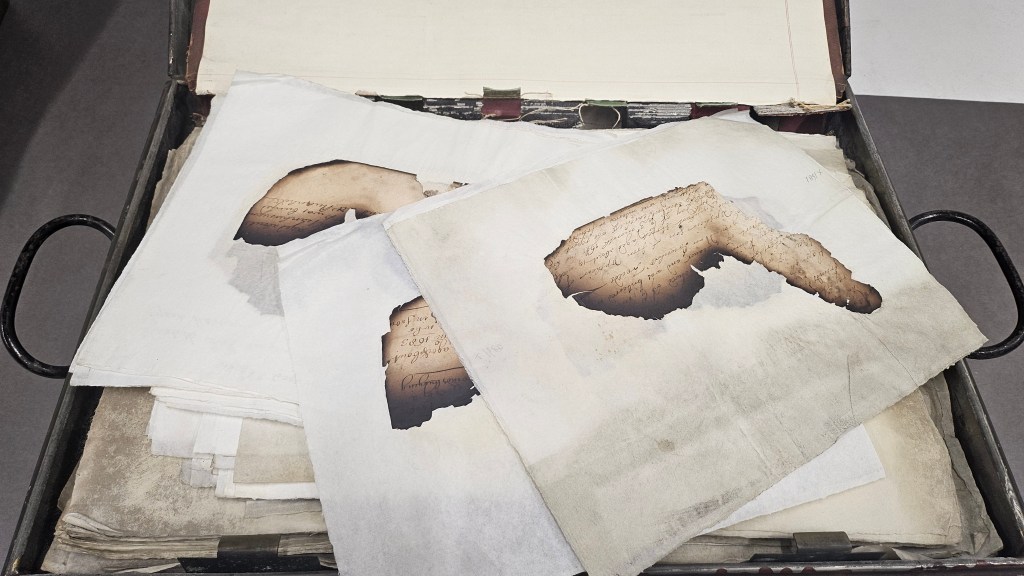
Loose leaves of paper pasted with burnt sections of Gracechurch Street burial notebook (1711 – 1733).

There is little historical documentation about the immediate treatment of these fire-damaged records in the 19th century. It is likely that they were simply pasted into volumes in order to keep their original order intact and stored with minimal further intervention. Their condition today, though bearing visible scars, shows that they were highly valued and preserved with enough care to avoid total deterioration.

In the present day, these materials would be maintained according to current best practices in archival conservation. Techniques used to stabilize fire-damaged documents include low-humidity drying and soot removal through micro-vacuuming. Today, we typically expect that fire-damaged materials will also be water-damaged due to sprinkler systems or firefighting efforts. Very wet documents should not be separated immediately and instead should be interleaved every 2 cm with absorbent materials like paper towelling, blotting paper, or photocopy paper. As these become saturated, they must be replaced to reduce moisture buildup, whilst airflow from fans or open windows can assist with drying.

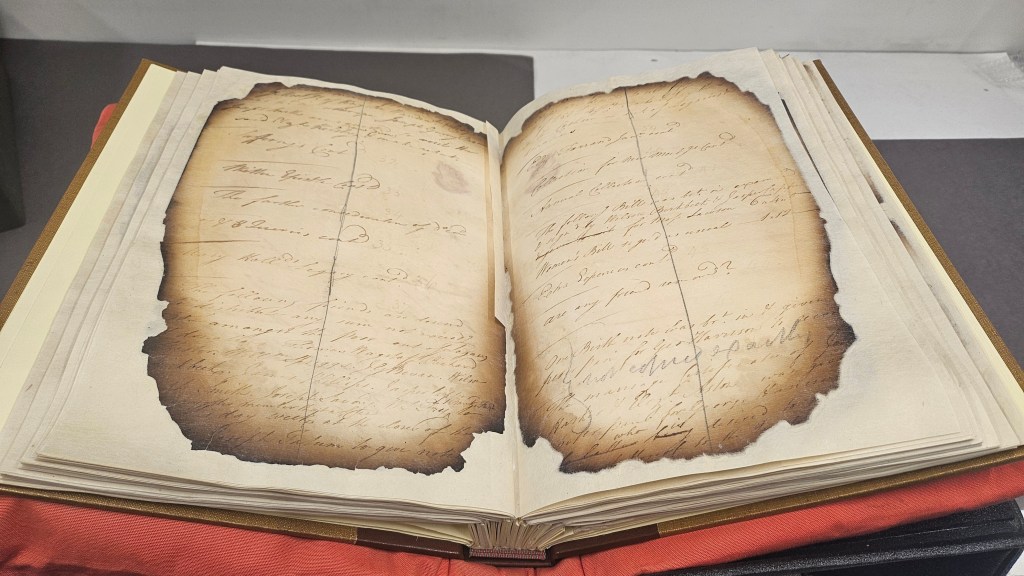
Volume pasted with burnt pages from Gracechurch Street Monthly Meeting Minutes (1791-1793).

Once the paper begins to dry and regain strength, individual pages can be separated using a blunt knife, starting from the least burnt edge. Freed pages should be laid flat on absorbent paper and turned regularly until completely dry.

After wet materials are under control, soot can be removed from dry pages using a soft brush and a vacuum nozzle covered with gauze, or with a kneadable eraser for more stubborn residue, although charred areas should be avoided due to their fragility.

If drying cannot be done immediately, documents can be frozen in small bundles wrapped in greaseproof paper for later recovery[4].

At LSoF, these records have been catalogued taking into account any need to limit physical handling. Importantly, the damage they sustained has not been obscured; instead, the burn marks and smoke staining serve as physical testimony to the historical event they endured.

The conservation status of these records reflects both their practical function as sources for historical research and their symbolic value as material witnesses to the fire – a vivid reminder of the fragility of knowledge and memory as well as the enduring efforts to preserve it.

Legacy and Relocation

The 1821 fire did not just destroy buildings; it catalysed a wider shift within the Quaker community. For decades, Gracechurch Street had been a centre of Quaker worship and social life. However, even before the fire, demographic and cultural changes were prompting many Friends to relocate from the bustling commercial heart of the city to more suburban environments. The fire accelerated this movement, particularly toward Stoke Newington, which by the mid-19th century had become a thriving Quaker enclave.

Volume with hand-written label “Partially burnt note book etc -  saved from the fire Gracechurch St dated 1711-1733”.

Though the Gracechurch Street Meeting was eventually rebuilt, its role within the broader London Meeting network evolved. The fire thus served as both a rupture and a turning point in the spatial and institutional development of Quakerism in the capital.

Conclusion

The 1822 fire at Gracechurch Street is emblematic of both the hazards of urban life in Georgian London and the fortitude of the Quaker community. These records offer more than administrative data; they are artifacts of disaster, resilience, and remembrance. Their rediscovery as part of the cataloguing project has not only increased their accessibility but reintroduced a powerful story of faith and survival into the historical record.

This incident also resonates with present-day events. In April 2025, Westminster Meeting House, another central London Quaker site, was subject to a police raid despite the building being widely recognised as a space of peace, nonviolence, and sanctuary[5]. While the physical damage was minimal, the intrusion provoked national discussion about the protection of sacred and community spaces. For many Quakers, it echoed the long history of state pressure that Meetings and the premises that house them have endured.

Together these episodes, separated by just shy of 200 years, demonstrate that meeting houses are not merely architectural heritage sites but living testimonies to Quaker witness. They have served as spaces for worship, refuge, dissent, and healing. Whether threatened by fire or state incursion, their endurance and the records they create continue to embody the values of integrity, peace, and community. Preserving their stories is thus essential not just for historical memory, but for the ongoing life of the Quaker tradition in an often-turbulent world.

The catalogue of the collection can be viewed here: https://quaker.adlibhosting.com/Details/archive/110001799


[1] Littleboy, Anna L. The Journal of the Friends Historical Society, Vol. 18 No. 3-4 (1921) Devonshire House Reference Library.  https://journals.sas.ac.uk/fhs/article/view/3725/3676

[2] Inward Light. The Death & Burial of George Fox .https://inwardlight.org/transformation/change/the-death-burial-of-george-fox/

[3] The Guardian. From the Archive: Fire on Gracechurch Street. September 15, 1821.https://www.theguardian.com/news/1822/sep/15/mainsection.fromthearchive

[4] National Archives of Australia. Recovering fire-damaged records.https://www.naa.gov.au/information-management/storing-and-preserving-information/preserving-information/recovering-fire-damaged-records

[5] Townsend, Mark. Police Raid on Westminster Quakers During Protest Sparks Outrage. The Guardian, 21 April 2024. https://www.theguardian.com/uk-news/2024/apr/21/police-raid-on-westminster-quakers-during-protest-sparks-outrage
Posted in Projects | Tagged , , , , , | Leave a comment

The Swarthmore Documents: letters from the beginning of Quakerism

The Swarthmore Manuscripts, our famous collection of early Quaker letters, have been described as the “jewel in the crown” of the Library’s collection.  But did you know they are only one part of a larger collection known as the Swarthmore Documents? 
The Swarthmore Documents are a 17th century collection of well over a thousand manuscript papers that belonged to the early Quaker leader Margaret Fell. The collection, with letters describing the legal struggles, personal lives and theological wranglings of early Friends, is now in multiple parts, most of which are held in the Library of the Society of Friends.

The history of how these documents came to the Library is complex. This is reflected in their current order which can be difficult to navigate. To date there is no single complete listing of the collection. However, we have recently produced a guide, which sets out what Margaret’s collection looks like now, how the different parts came to the Library and the best way to start using them for your research. This guide is available here: https://www.quaker.org.uk/documents/research-guide-swarthmore-documents-2024

The Swarthmore Documents are one of the most important sources for studying the beginning of the Quaker movement, but readers of the letters should understand that the core of the collection was curated by Margaret and her second husband George Fox, one of the founding figures of Quakerism. The history that the letters relay was shaped by them. 

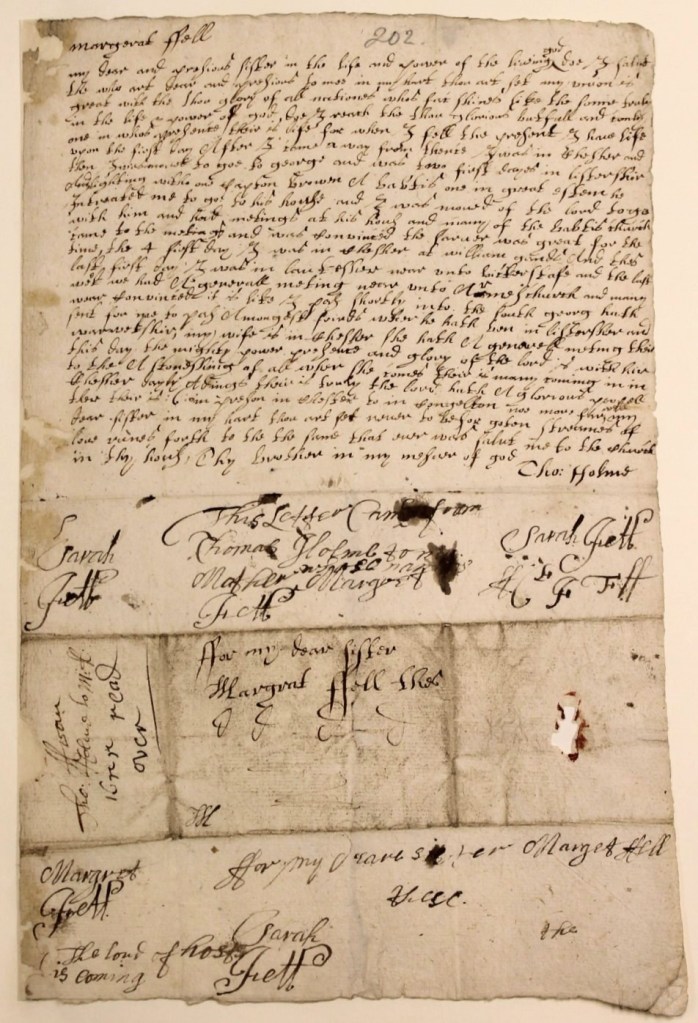
LSF MS Vol 352/202 – A letter from Thomas Holme to Margaret Fell, 1655. Like many other letters in the collection the blank spaces on this letter have been used for handwriting practice by Sarah Fell, one of Margaret’s daughters.

In 1652 George Fox visited Swarthmoor Hall, the home of Margaret and her husband, Judge Thomas Fell. He spoke at their parish church and made numerous converts to the fledgling Quaker movement, including Margaret herself.  However, at this point she was the mother of 7 children, 3 of whom were under the age of 10, and her youngest daughter Rachel was born the following year. Thomas Fell was an assize judge who was frequently away from home travelling on his circuit. It was harder for Margaret to leave home and travel around preaching as others in the movement were doing. Instead, for most of the 1650s, she remained at Swarthmoor and became the hub of a Quaker information network that stretched across the world.  

Friends would write to her, letting her know the latest news or sending copies of epistles. Where necessary she would have the letters copied and sent on. Margaret wrote many letters herself, offering advice and support to Friends or speaking to those in power. She kept the letters that she was sent, as well as copies of some that she wrote, collecting them together in an archive. Margaret’s role as proto-archivist also involved other Friends sending her their correspondence to be kept or discarded as she saw fit. 

“Fox realised what most people who write their memoirs know: that they can determine what others know of the past by controlling the evidence that gives future generations knowledge of it… no details, no history, my details, my history” – H. Larry Ingle, 1993

George Fox was very aware of the importance of public perception. When the Society of Friends began in the 1650s they were a transgressive religious movement, despised by the established church and looked at with suspicion by those in power. After the return of King Charles II in 1660 this only got worse. George encouraged Friends to create records of their experiences, to define what Quakerism was as they saw it, to avoid being defined for posterity by those who were persecuting them. 

He also exerted control over the material Quakers published. Letters from within the Swarthmore Documents show that he expected to have copy approval over Quaker publications from 1653, a responsibility that was later delegated to Morning Meeting.

LSF MS Vol 354/39 – Excerpt from a letter written to George Fox by Thomas Aldam in 1653. He supports the idea of books being sent to George for review before going to the printers.

Margaret and George had formed an extremely strong partnership in the years following their first meeting and they were married in 1669. They worked together with other Friends to create an identity for Quakerism that would enable them to survive their initial struggles. This meant distancing themselves from extreme acts such as James Naylor’s “blasphemous” recreation of Christ’s entry into Jerusalem and adopting the peace testimony as a defining characteristic. 

After his imprisonment at Worcester in the 1670s, George began to think seriously about his legacy. He came to convalesce at Swarthmoor Hall after his release. Whilst there he dictated his autobiography (later published as his Journal), and sorted through Margaret’s collection of letters, ordering some to be copied for a London-based collection, editing some, and presumably destroying others. His endorsement appears on the majority of the surviving letters.

Margaret held on to the curated documents, which now included the manuscript of George’s autobiography, and added to it letters she received in her later years. It was passed down her family to her grandson John Abraham. John split up the collection. Most of the surviving parts have found their way here to the Library, but some letters made it into collections in the United States, and others remain in private hands.

As part of the George Fox 400 celebrations we want to make these early Quaker letters more accessible. One way of doing that is producing the guide linked above, This will help a researcher to navigate them, but also provides links to existing transcripts that are easily accessible online. We have also been working with the PRINT project, a collaborative digital humanities project based at the University of Central Florida. This project provides access to 17th and 18th century letters from collections in the US, UK, the Netherlands and Germany. The letters relate to European religious minorities and migration across the Atlantic, and many of those selected are part of the Swarthmore Documents. 

We hope this project will make these letters accessible to a wider audience and encourage our readers to look at the letters and give transcription a try. You can find out more and have a go here: https://www.zooniverse.org/projects/printmigrationnetwork/print  

Selected Further Reading 

Ames, M (2017) Margaret Fell, Letters, and the Making of Quakerism. Oxford: Routledge. 

Larry Ingle, H ( 1993) “George Fox, Historian” Quaker History 82(1) pp.28-35. 

Posted in Guides, Highlights | Tagged , , , | Leave a comment

How a teacup made its way home to tell a story of Quaker activism: working with the Faith Museum

by Melissa Atkinson

For the last few years, I have had the privilege of being involved with a new museum project at Auckland Castle in Bishop Auckland, County Durham. This regeneration project encompassed renovating the castle and its grounds with a new heritage centre, galleries and a museum focusing on the history of faith in Britain.

In August 2014, one of the Project Curators contacted me about the development of the new Faith Museum. It would be the first museum in England to explore a history of faith and belief in the British Isles from prehistory to the present day, using personal histories of faith through rare and compelling objects.

Due to the complexity of organising an exhibition and borrowing material from other institutions, museum exhibition planning and preparation are developed up to ten years in advance. Large-scale projects evolve over time, budgets are cut, pandemics intervene and plans change, so the Faith Museum itself has evolved, producing a gallery layout that is now thematic, rather than based on a chronological approach. The objects have been selected from their own collections, as well as private and public collections such as ours.


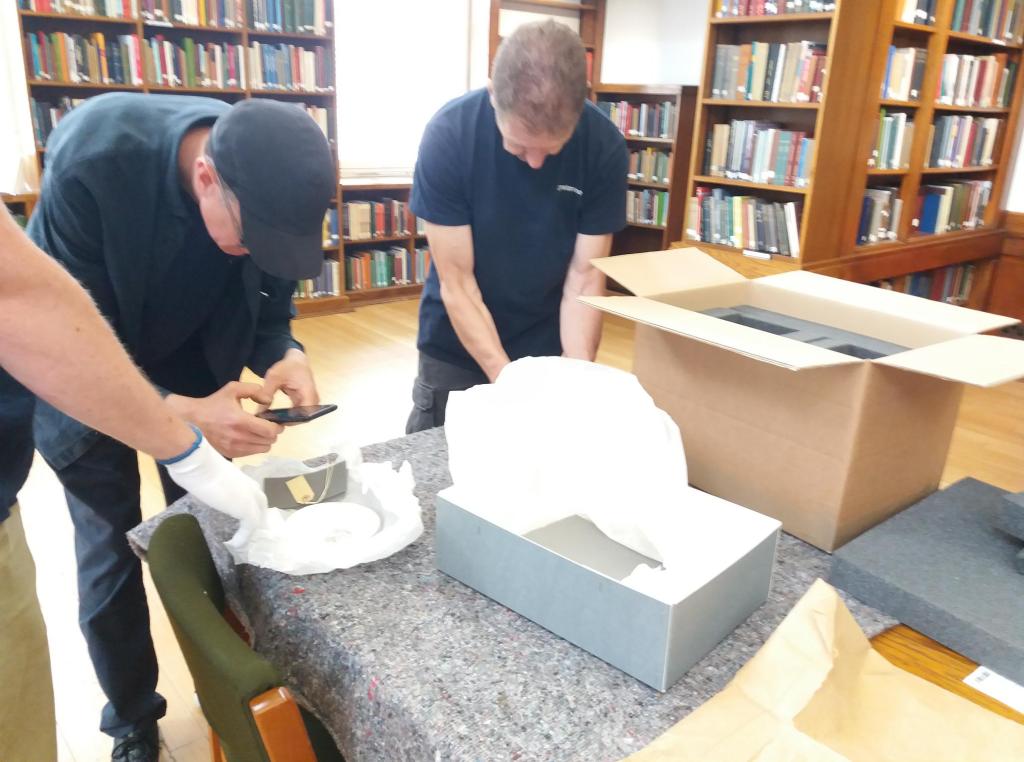
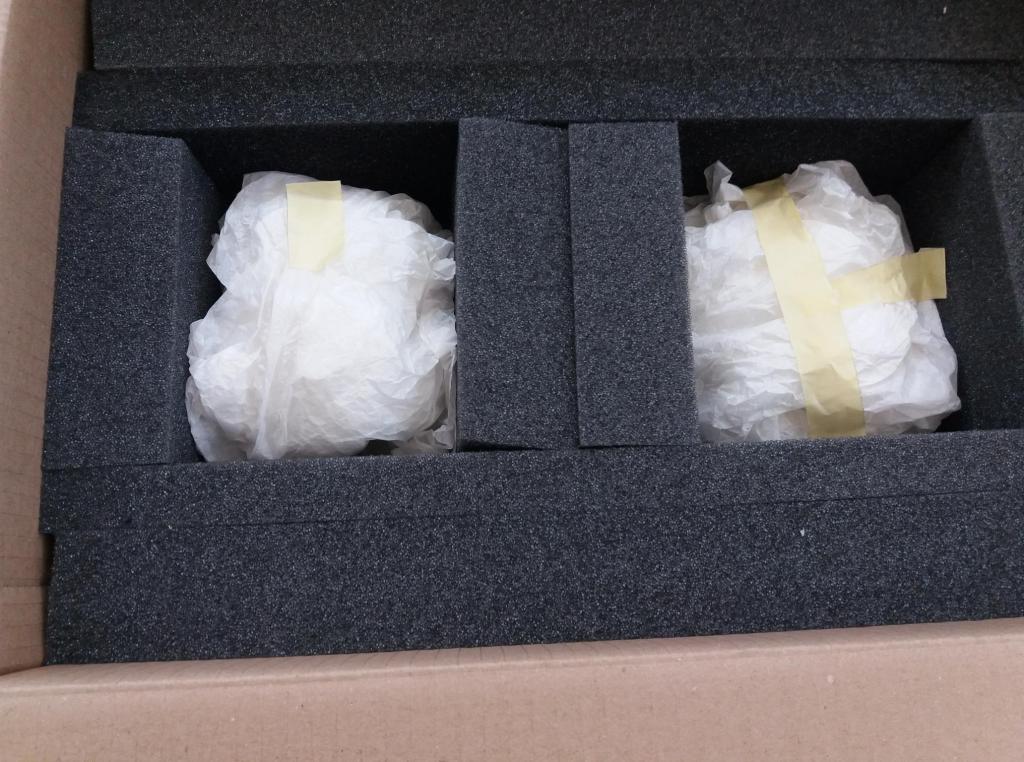
Constantine Fine Art transport team in the Library, packing the teacup and saucer for its move up north

The Library’s collections encompass a vast range of material such as letters, diaries and objects from people involved with the beginning of Quakerism. Letters written by Anne Audland (1627-1705), a minister jailed at Auckland for preaching, are one example. Quakerism had a strong following in the North East and at Auckland a building was bought for use as a meeting house in 1686.

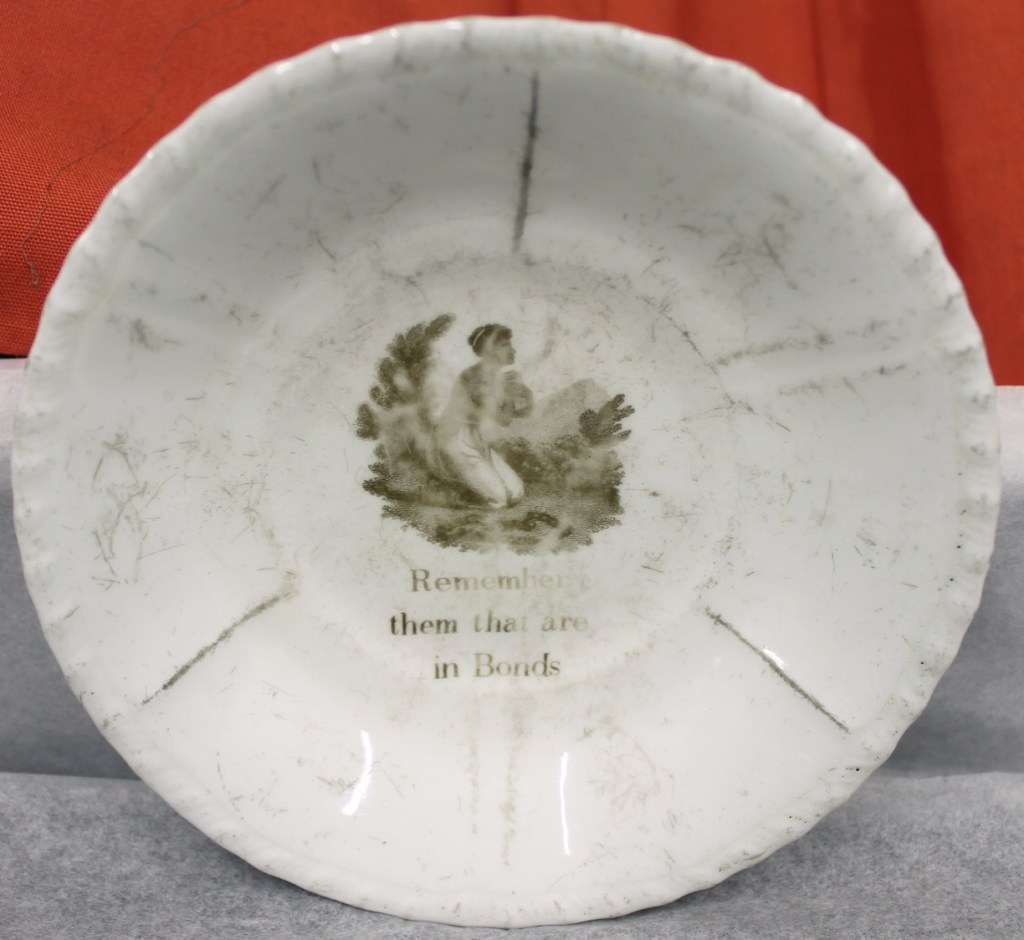
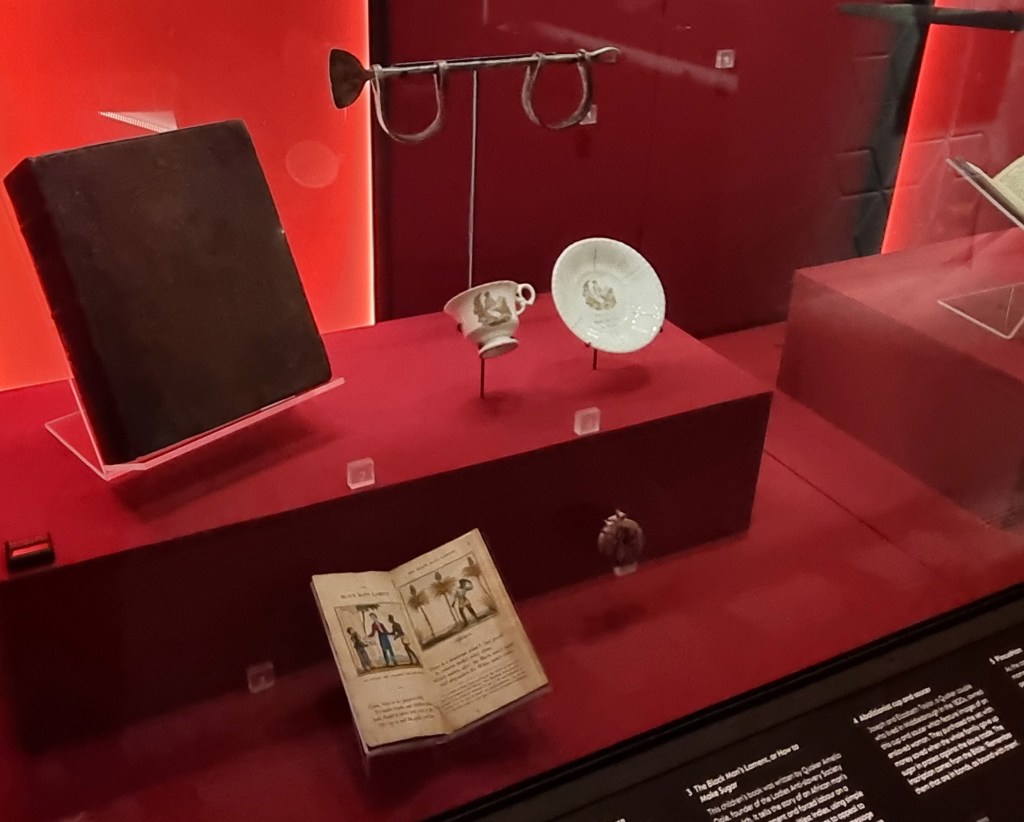
Due to space limitation and the need for other stories to be told, a long list of potential objects to loan was eventually narrowed down to an “abolitionist” teacup and saucer with direct links to the North East.

The teacup and saucer were part of larger tea set owned by Quakers Joseph Taylor (1783-1860) and Elizabeth [nee Harris] (1788-1873) and their 12 children, of Middlesbrough. The family boycotted sugar produced on plantations using slave labour. This tea set and others like it helped raised awareness of the issues and promoted the campaign.  

Abolitionist cup and saucer on loan for 3 years to the Faith Museum (LSF 37a & 37b)

The teacup and saucer are made of bone china with a transfer print made circa 1820-30 from Staffordshire potteries. Many Quakers joined the campaign to boycott the products of enslavement, such as dyes, cotton and sugar.

In the 1820 to 1830s many female anti-slavery associations were set up. Female campaigners including Elizabeth Heyrick (1769-1831) helped organised a mass sugar boycott, produced leaflets, raised funds and abstained from slave grown sugar.

We’re delighted that a museum object from our collections, with an interesting story shedding light on Quaker witness, can now be on display so close to where it was owned by a Quaker family. Joining over 250 other objects telling the story of multi-faith Britain, our teacup and saucer with their own unique social history can now be seen by a new audience, in a brand new venue.

The Faith Museum opens October 2023. Details can be found here:

https://aucklandproject.org/venues/faith-museum/

Abolitionist cup and saucer along with other objects in display case at the Faith Museum.
Posted in News | Tagged , , | 3 Comments

Restore and renew: the Library refurbishment project

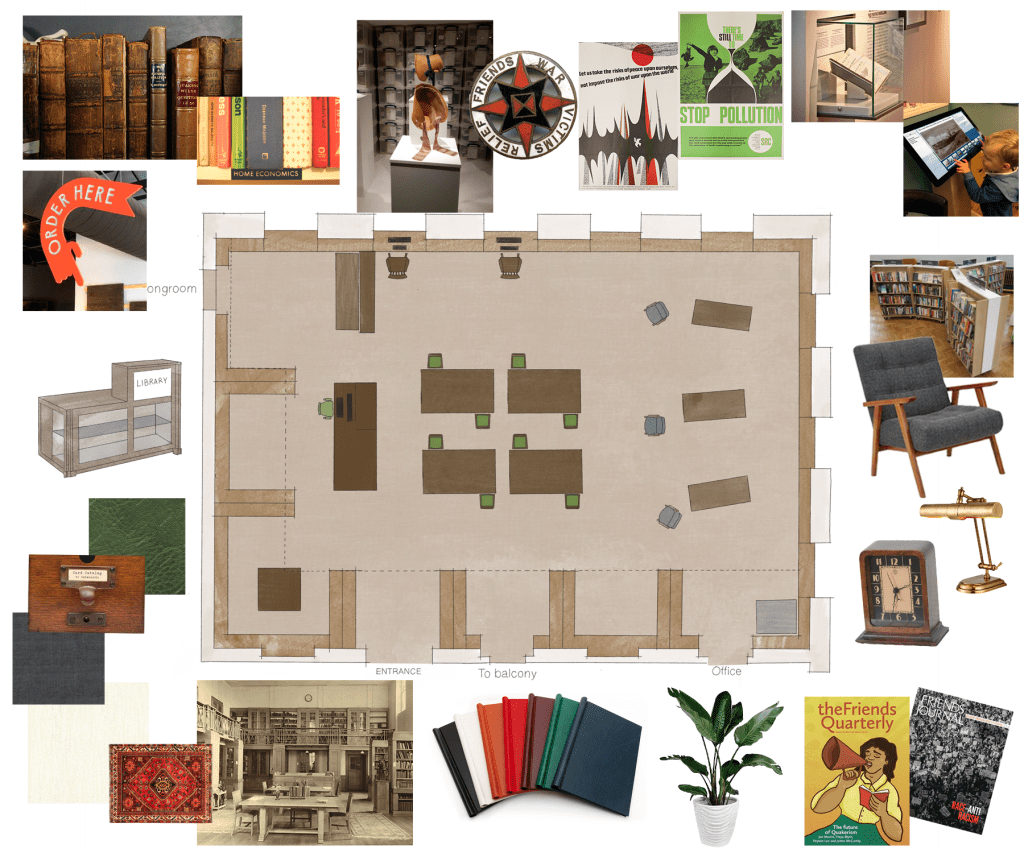
Library moodboard

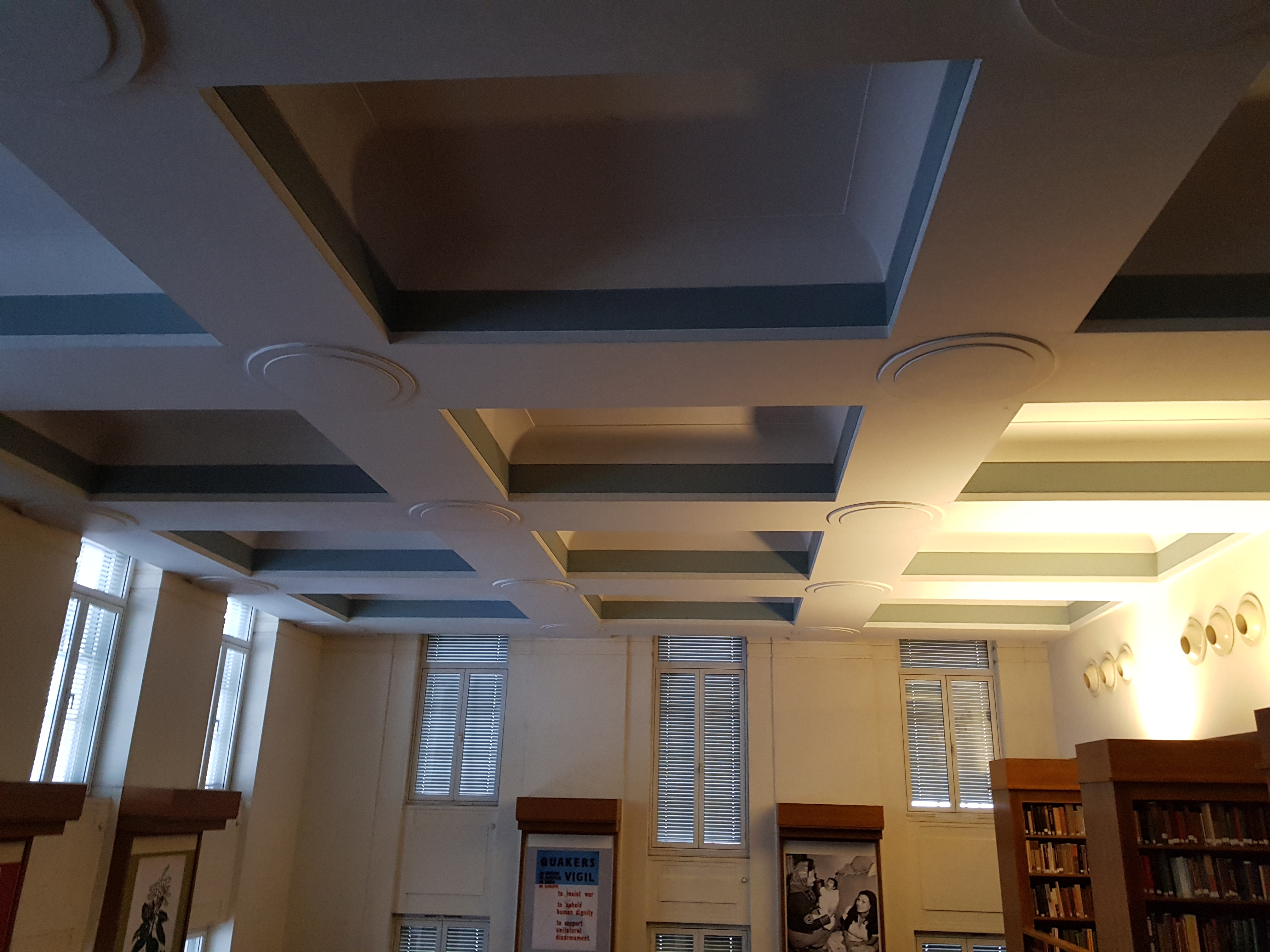
We took the decision in 2020 to try to use the closure of the Library of the Society of Friends due to the pandemic as a positive opportunity, and use the time to carry out some long overdue refurbishment work on our reading room. While there was some necessary maintenance work such as painting and upgrading window blinds, we also thought about how to futureproof use of the room and expand the potential for holding events, creating an ambitious programme of work. We want to share the story so far.

The last major refurbishment of the Library was in 1993. At that time the room had been subdivided to allow staff working space as well as reader space and the decision was taken to strip this out and return the room to sole use for readers; this was also aimed at returning the room to look more like its original design when Friends House opened in 1926.

We have given similar thought to this major refurbishment, knowing it may be another 20-30 years before another opportunity arises to refurbish and change fixtures and fittings.

Inspired by the fabulous photograph of the Library as it was when Friends House first opened in the 1920s, we decided to lift some carpet tiles and see if the original wooden floor beneath was intact…..it was, albeit with some sections removed for electrical wiring. We took the decision to restore the wooden floor which will be the centerpiece of the refurbishment programme.

Photo of the Library from the 1920s

We considered how the space in the room is being used currently and what improvements might be made, taking into account ideas for outreach, events we have held in the past, and other colleagues in Britain Yearly Meeting who use events spaces. While protecting a research space is paramount for our service, we also want the Library to be a space that works for other stakeholders, including Quakers during Yearly Meeting and on visits to Friends House.

With that in mind we are removing some of the larger fixed pieces of furniture to create a more flexible space for events. We look forward to Quakers and colleagues sharing creative ideas about events and activities the room could be used for.

Continuing the theme of creating a more welcoming space for all, we are replacing the enquiry desk with something less imposing and accessible for all users, and hopefully installing glass paneled doors so people can see what’s on offer from outside the Library.

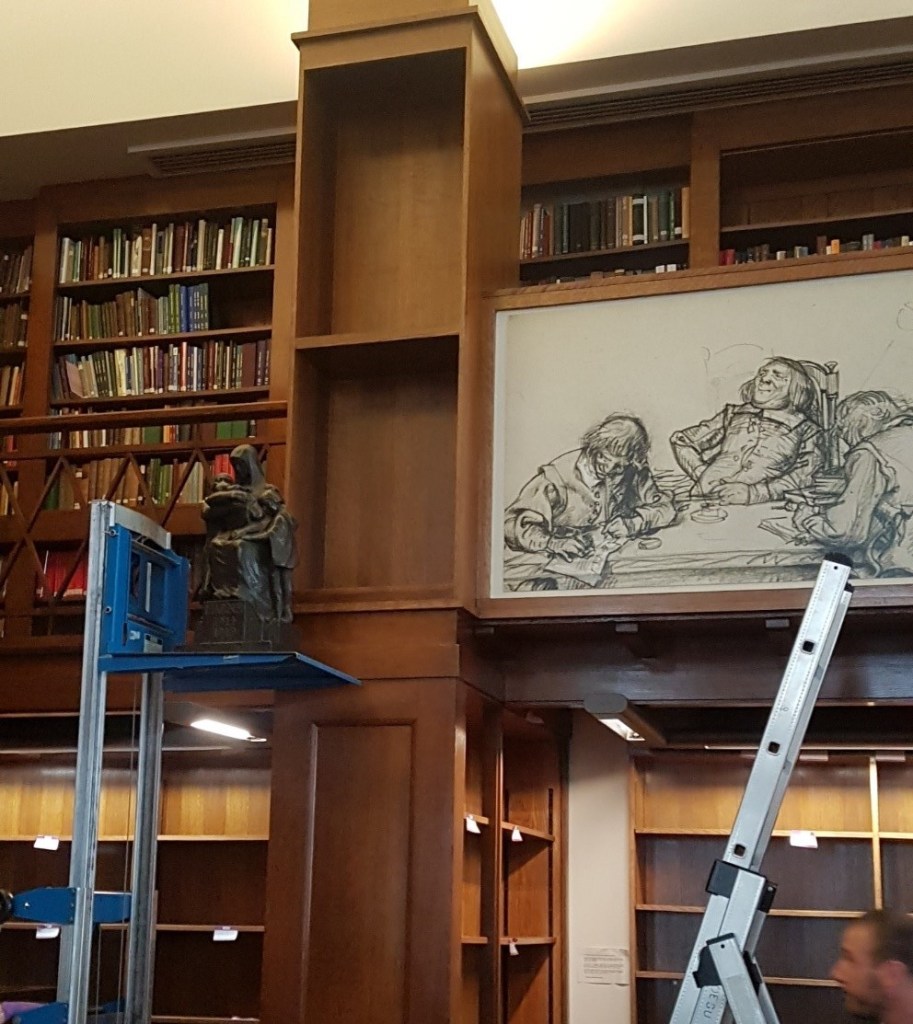
Achieving this programme of work in a listed building, while at the same time protecting our collections from the inevitable dust, debris and paint, is a huge task, not made any easier by our current reduced access to Friends House and Covid-safe working practices. We have removed many of the more vulnerable and valuable collections from the room for their protection including a nervous day with art handlers removing sculpture from the high alcoves in the room!

Removal of statue from high alcove

As always with building works, unforeseen setbacks have occurred including the need to update wiring in the room, as well as the supply issues which we have all heard about in the news. We are learning a lot about the challenges our Facilities team face in their work, increasing our admiration for their positive, can-do attitude!

We also have a huge game of Tetris to fit collections back into the room and our basement storage with reduced shelf space which will keep us occupied for the next few months.

We are grateful for the patience of our readers during this time, and currently hope to be able to welcome readers back to the new and improved space in early 2022. Keep an eye on the Visit the Library page on our website for further updates closer to the time.

We are now going onsite more frequently and have some access to collections, so invite researchers to get in touch and see what we can do to support their research.

Posted in Collection care, Projects | 8 Comments

Women’s History Month

Since March is Women’s History Month, we’re taking the opportunity to highlight some blogposts that have appeared here on Quaker Strongrooms over the years, in case you missed them. And over on Facebook we’ll be bringing you some glimpses of women’s history highlights from the Library collections during the coming weeks.

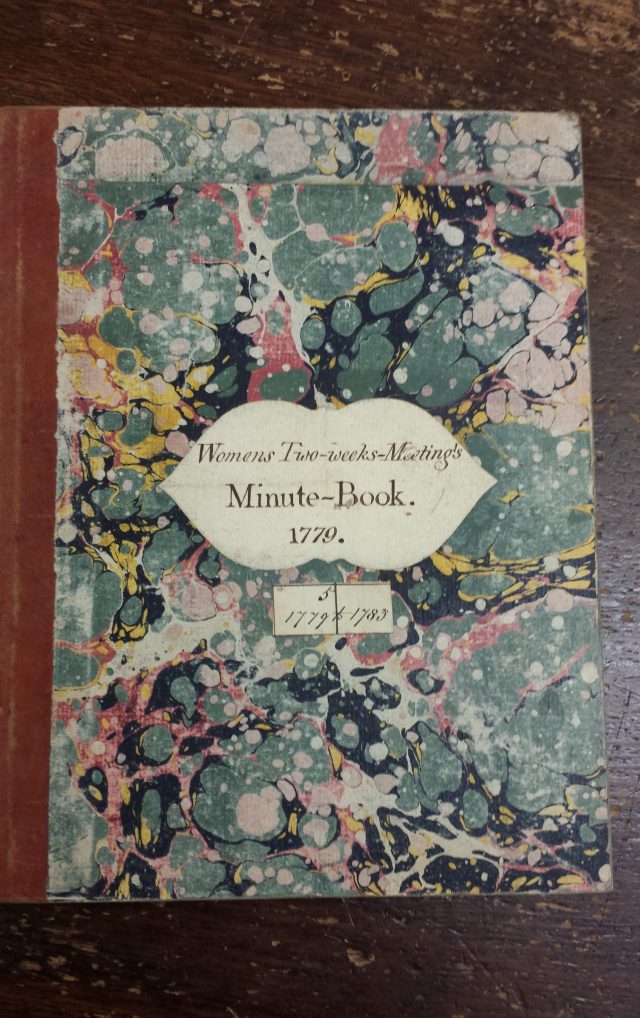
Last year we blogged about the position of women within the Society of Friends, the role of separate women’s meetings, and the struggle for women to have a voice in the Society: https://quakerstrongrooms.org/2019/06/18/respected-friend-women-and-equality-in-the-society-of-friends/. As 17th century Quakers had argued for women to be allowed to preach, and women Friends had a reputation for fearless ministry, this was a surprise even for some Quakers!

Womens Two Weeks Meeting Minute book 1779-1783

Womens Two Weeks Meeting. Minute book 1779-1783

In an earlier Women’s History Month blogpost we gave readers a whistle-stop tour of resources for women’s history in the Library: https://quakerstrongrooms.org/2017/03/01/quaker-women-resources-for-womens-history-in-the-library-of-the-society-of-friends/. Whether it’s records of women’s Quaker meetings, pamphlets by seventeenth century women writers, unpublished manuscript diaries, letters and papers, or photographs, there’s a wealth of primary source material. In the blogpost we also listed a few helpful secondary sources for each century.

Quaker meeting attributed to Heemskerk F070

The Quaker Meeting, oil painting attributed to Egbert van Heemskerk, late 17th century (Pic F070)

Other blogposts have focused on some remarkable Quaker women.

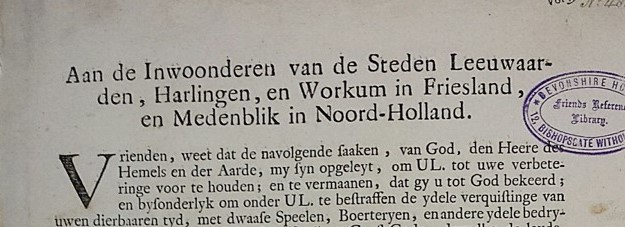
Margaret Langdale (1684?-1742) was an early 18th century travelling minister. We pieced together evidence about her travels to Ireland, Holland and America and identified her as the author of a unique broadside in Dutch: https://quakerstrongrooms.org/2015/05/29/sole-survivor-a-dutch-broadside-by-an-early-18th-century-woman-friend/.

Broadside by Margaret Langdale, about 1717

Margaret Langdale, Aan de Inwoonderen van de Steden Leeuwaarden, Harlingen, en Workum in Friesland, en Medenblik in Noord-Holland. Published about 1717 (Vol. D/48)

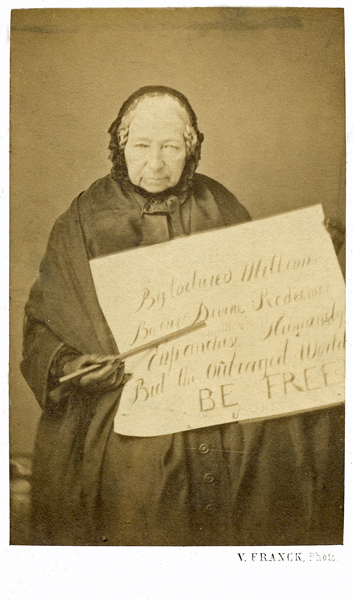
Anne Knight (1786-1862) was a social reformer and feminist. A carte de visite photograph from 1855 among her papers (MS Box W2) inspired our special collections curator to blog about her: https://quakerstrongrooms.org/2015/09/18/the-life-of-a-photograph-and-an-extraordinary-woman/.

Anne Knight, photograph by Victor Franck, c.1855 (MS BOX W2)

Catherine Impey of Street (1847-1923) campaigned against racial discrimination and published a pioneering magazine, Anti-Caste from 1888 to 1895: https://quakerstrongrooms.org/2012/09/18/catherine-impey-of-street-somerset-and-her-radical-anti-racist-newspaper/.

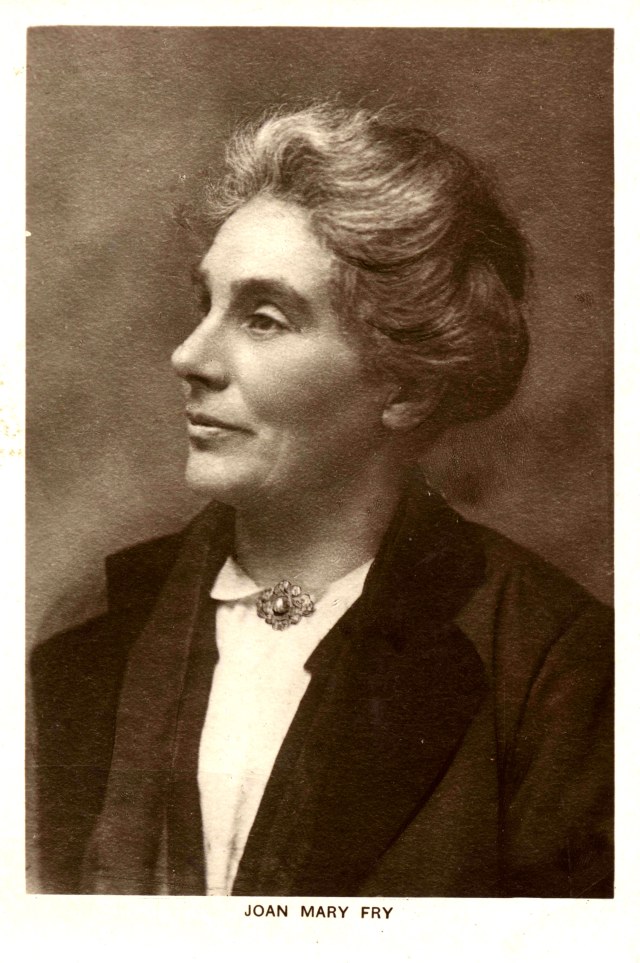
Twentieth century women have been particularly well-represented on the blog, especially those who contributed in the field of humanitarian relief and peace, thanks to the focus on World War One and its aftermath in recent years. A single blogpost from 2016 describes the contribution of three of these women – Joan Mary Fry, Elizabeth Fox Howard and Francesca Wilson – and details what primary and secondary sources on them you can find here in the Library: https://quakerstrongrooms.org/2016/03/23/three-remarkable-women-of-the-twentieth-century-joan-mary-fry-elizabeth-fox-howard-and-francesca-wilson/.

Joan Mary Fry

Joan Mary Fry (1862-1955) (Pic F91)

Two other twentieth century women whose personal papers – letters, diaries and notebooks – are held by the Library are Dorothy Henkel (1886-1983) and Hilda Clark (1881-1955). We have been very lucky to have these papers catalogued by two trainee archivists, who kindly wrote about their subjects for the blog here: https://quakerstrongrooms.org/2013/06/10/a-life-of-quaker-service-in-england-and-germany-from-world-war-i-to-ii-cataloguing-the-papers-of-dorothy-henkel-1886-1983/ and https://quakerstrongrooms.org/2012/07/03/world-war-i-and-its-aftermath-cataloguing-the-papers-of-hilda-clark-1881-1955/.

We hope you enjoy the blogposts – feel free to share your thoughts in the comments below. And look out for our Facebook page updates over the next few weeks.

Posted in Highlights | Tagged | Leave a comment

Theatre: some collection highlights

We hope you enjoyed our blog post back in October exploring some of the many works of fiction in our collections. Returning to the theme, we’d like to focus this time on drama. You might not necessarily think of theatre when you think of our collections at Friends House Library. Our collections do, however, include fascinating items that reflect the changing attitudes of the Society of Friends to the dramatic arts from the 17th century to the present.

During the early days of Quakerism theatres were closed, having been banned at the start of the civil war in 1642. Although some were reopened in 1660, many religious groups were still hostile to drama. It wasn’t just the content of the plays they objected to but the whole experience of going to a playhouse. Early Friends too criticised the nature of plays and playhouses. Influential members of the Society, including William Penn in No Cross, No Crown (1682) and Robert Barclay in his An Apology for the True Christian Divinity (1678), wrote against them.

As well as these texts, our collections include other examples of pamphlets and addresses written by Friends urging people not to frequent theatres.

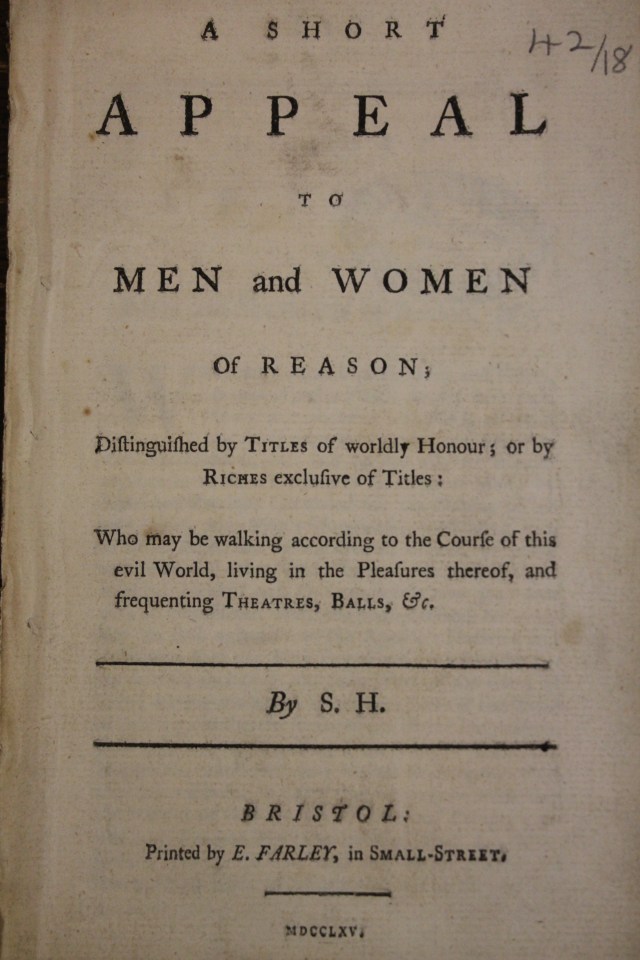
An Appeal to Men and Women of Reason by Sophia Hume (1765)

An Appeal to Men and Women of Reason by Sophia Hume (1765)

An Address to the Citizens of Bristol (1739)

An Address to the Citizens of Bristol (1739)

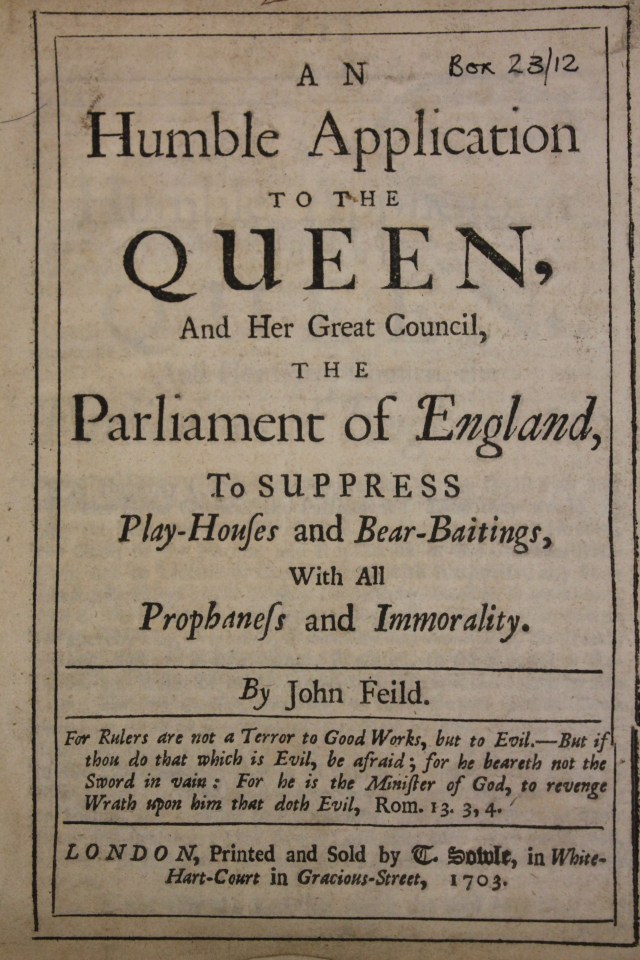
John Field even wrote to Queen Anne herself on the subject in 1703:

Officially too, the Society of Friends warned against the dangers of play-going. As the earliest printed Book of Discipline from 1783 warned against the reading of novels, so it also urged Friends to “avoid sports, plays, and all such diversions, as tending to alienate the mind from God, and to deprive the soul of his comfortable presence and power”.

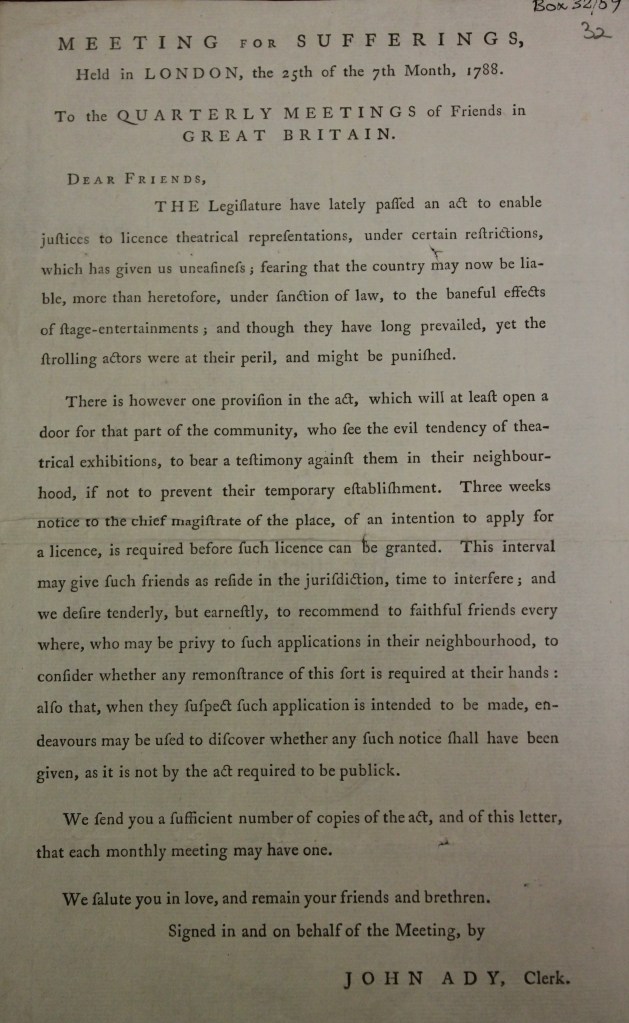
In 1788 a letter was issued by Meeting for Sufferings regarding a recent act that had been passed allowing justices to grant licenses for stage entertainments. Three weeks’ notice was required; this, the letter explained, “may give such friends as reside in the jurisdiction time to interfere”.

Turning to the dramas themselves, our collections generally fall into two categories: works written by Quakers and works that feature Quaker characters. Not surprisingly given Quaker feelings towards theatre at the time, our earliest material falls into the latter category and not all the depictions are entirely flattering. Ezra Kempton Maxfield, writing on Quaker appearances in English stage plays in the late 17th and 18th centuries, observed that “the attitude of playwrights toward Quakers varies all the way from the simply humorous to the downright malicious”.

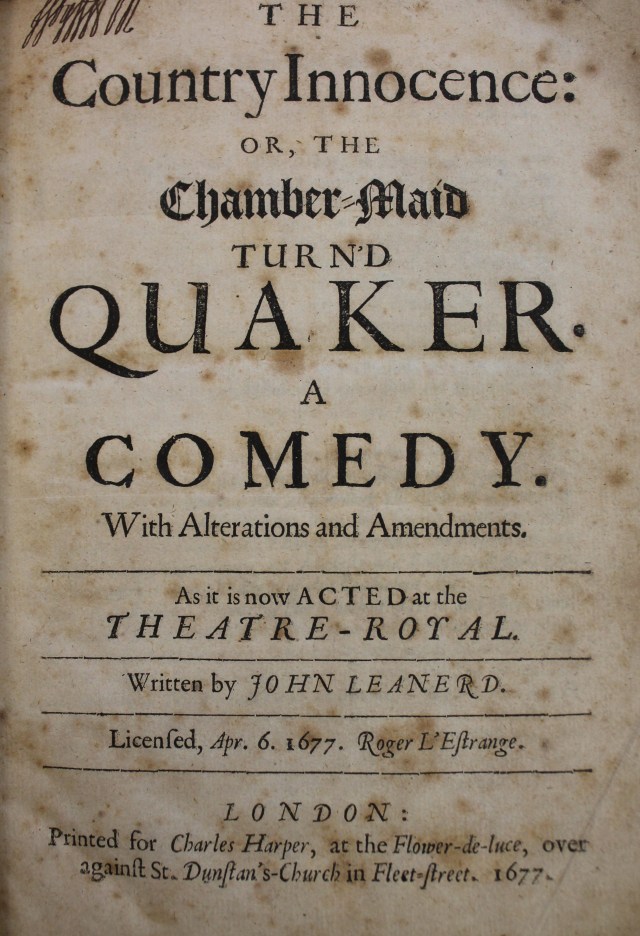
According to Kempton Maxfield, the first reference to the Quakers in a play was in The Country Innocence, or the Chambermaid turned Quaker by John Leanerd, published in 1677.

In 1921, in an article about the Library, when it was still situated in Devonshire House, the Society of Friends’ former headquarters, Anna L. Littleboy noted of its contents:

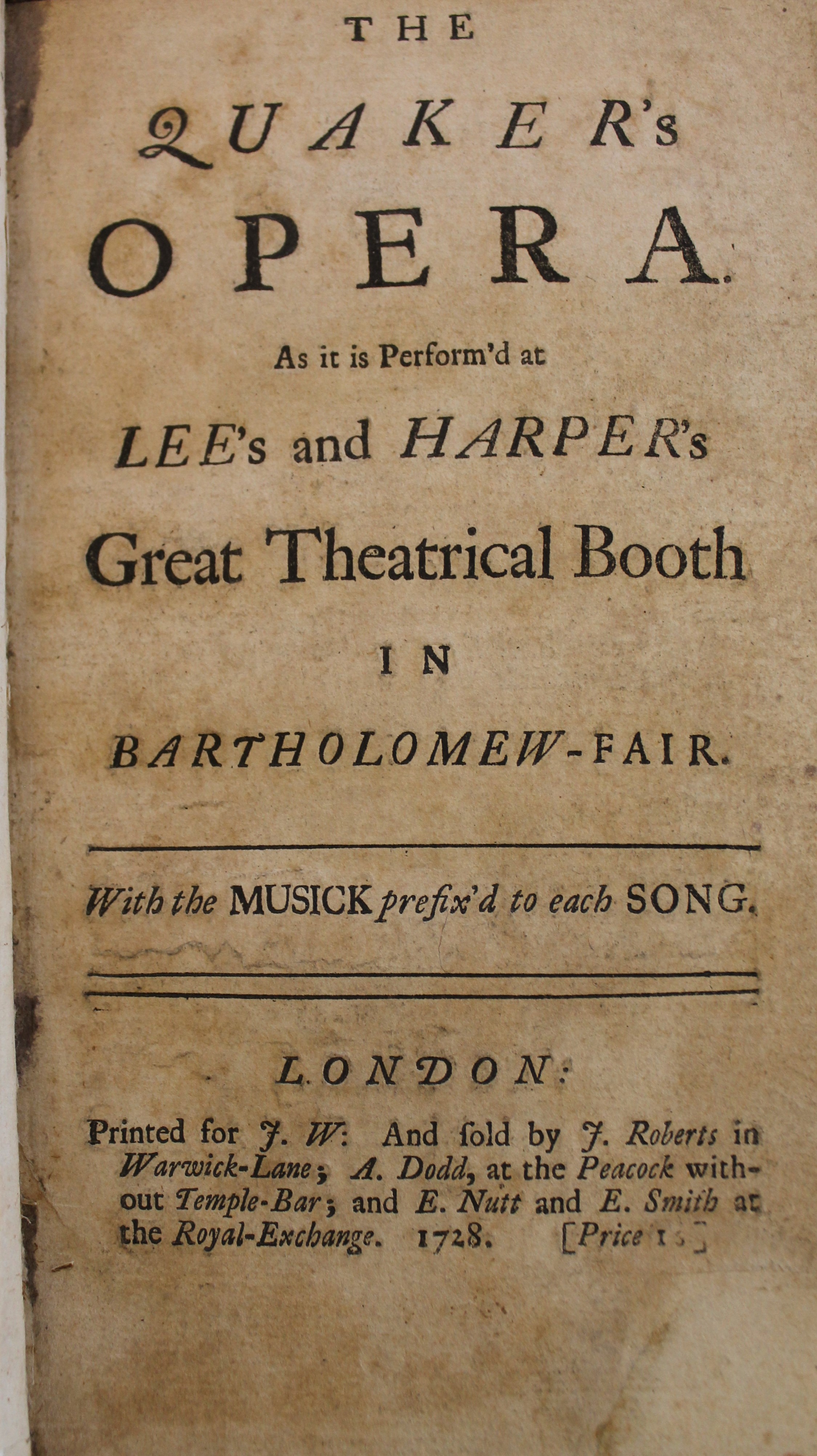
The anti-Quaker literature is large in bulk and very curious and interesting. It is not all serious argument or even invective. Sometimes it takes the form of poetry…and there are quite a number of satirical plays, which would make an  interesting study, such as The Country Innocence (1677), The Fair Quaker of Deal (1710), The Quaker’s Opera (1728), and others, most of which are scrupulously catalogued as “Adverse”.

The Quaker's Opera by Thomas Walker (1728)

Misgivings about theatre continued well into the late 19th century, as demonstrated by a series of articles called ‘Quakerism and Recreation’ in the Friends Quarterly Examiner in 1882. But opinions were beginning to soften. Philip Thompson, author of the first of the articles, argued that, “there is assuredly nothing immoral, or opposed to religion, essential to drama in the abstract. And whatever room for improvement there may be, I venture to think that the stage as a whole does not deserve the stigma that has been fastened on it by a large proportion of religious people.”

We even see Friends venturing into writing plays. Arthur E. Tregelles (1835-1911), for example, produced several historical dramas published in the last decade of the 19th century.

Three historical plays by Arthur E Tregelles: The Commonwealth and King Charles II (1891), Queen Elizabeth (1890), King Charles I and King James I (1890)

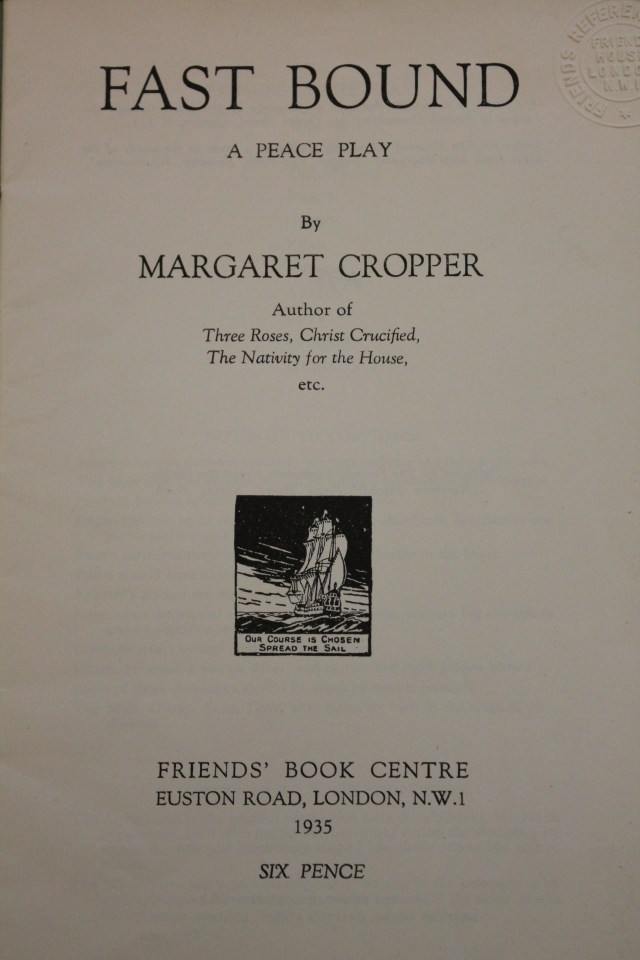
These trends continued and developed in the twentieth century. As the reputation of the playhouses themselves improved, so Friends saw the medium as a way to explore their values. For example we have a number of plays exploring peace and pacifism:

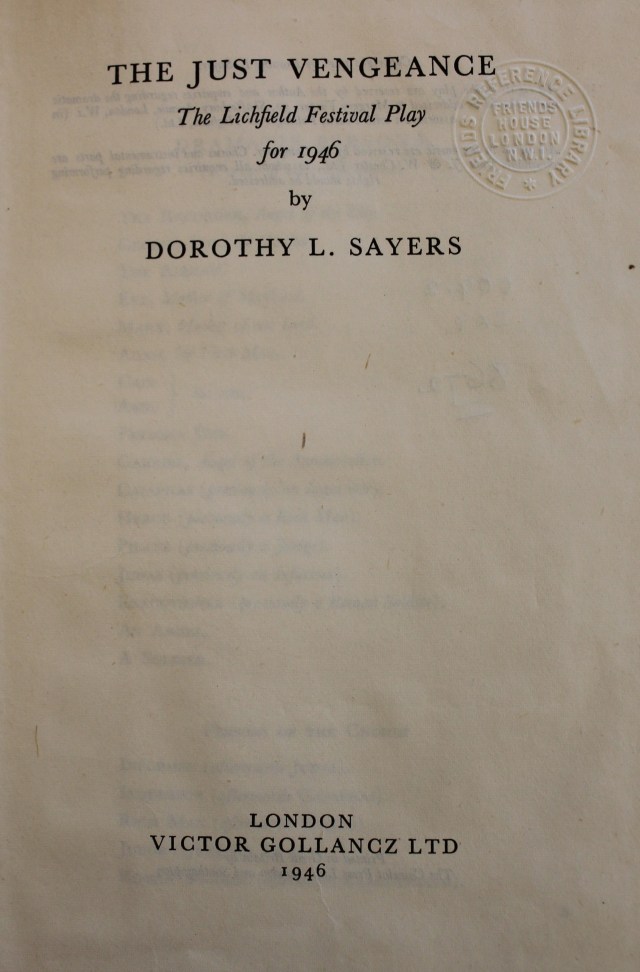
A sure sign of an acceptance of drama was its use in Quaker schools as demonstrated by this script from Ackworth School in 1910, performed to celebrate the history of the school.

The 1925 edition of Christian Practice included a full page on Drama which explained:

The dramatic faculty, which is latent in every child and is strongly marked in gifted persons, is one which, with due discrimination and under appropriate conditions, may rightly be developed, and the dramatic art is one by which performers and spectators alike may gain a truer insight into human life, a deeper appreciation of its meaning, and wider sympathy with mankind. Friends have refrained in previous generations from supporting the theatre, and even from encouraging the amateur performance of plays, having been led to take this attitude because of the undesirable associations of the stage, the doubtful characters of many plays, and the dangers connected with the actors’ profession. The position has however been considerably altered by the endeavours of the profession itself, and many of its supporters, to make the drama a more healthy and valuable factor in social life. In some respects the old objections still hold good. Undesirable plays are numerous. Yet the drama is also being used for the representation of aspects of life, gay and serious, in such a way as to make it a healthful means both of entertainment and of education. Friends who go to see plays should feel it laid upon them to make a careful choice and to support the good.

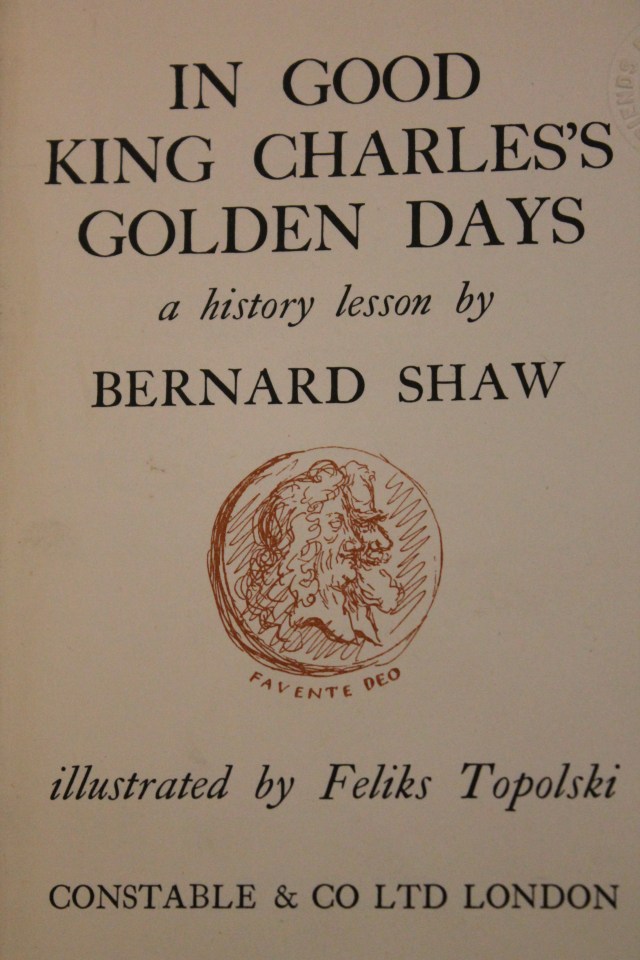
Friends continued to feature as characters in plays as well and we have works by some well-known dramatists. Both of the examples below feature George Fox as a character.

This has necessarily been a very brief overview of the Library’s drama collections. If you’d like to carry on exploring you can use our online catalogue to search for plays and publications on the subject of theatre-going. Use the “Expert search” screen to search for publication type = plays, or subject = theatre, narrow your results to a particular period, or combine with other search terms. And for some handy hints on using the catalogue, check out our catalogue search tips here.

Further Reading

Philip Thompson, ‘Quakerism and Recreation I’. In Friends’ Quarterly Examiner, vol. 16, no. 61 (First Month 1882), pp. 130-138.

Anna L. Littleboy, ‘Devonshire House Reference Library’. In Journal of the Friends Historical Society, vol. 18 (3-4) (1921), pp. pp. 66-80. Available online: https://journals.sas.ac.uk/fhs/article/view/3725/3676.

Ezra Kempton Maxfield, ‘The Quakers in English Stage Plays before 1800’. In Publications of the Modern Language Association of America, vol. 45 (1) (March 1930), pp. 256-273.

Frederick J. Nicholson, Quakers and the Arts (London: Friends Home Service Committee, 1968).

Tamara Underiner, ‘Plain Speech Acts: Reading Quakerism with Theatre and Performance Studies’. In Religion, Theatre, and Performance: Acts of Faith, ed. Lance Gharavi (New York & Abingdon: Routledge, 2012).


Posted in Highlights | Tagged , , , | 2 Comments

Dr John Fothergill

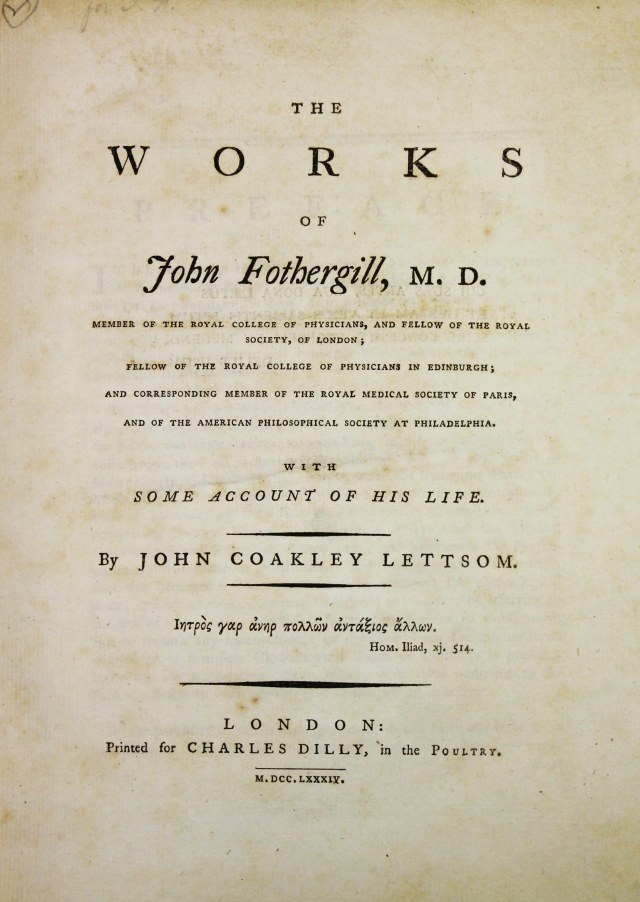
If you are interested in 18th century Quakers, there is one person you are almost certainly going to come across at some point – Dr John Fothergill. He was at the centre of Quaker activity throughout his life, involved with peace, prison reform and poor relief projects. He also made significant contributions in medicine and botany and his list of friends and acquaintances reads like a who’s who of the 18th century. The Library has a significant collection of his correspondence and other archival material about him, as well as copies of many of his published works.

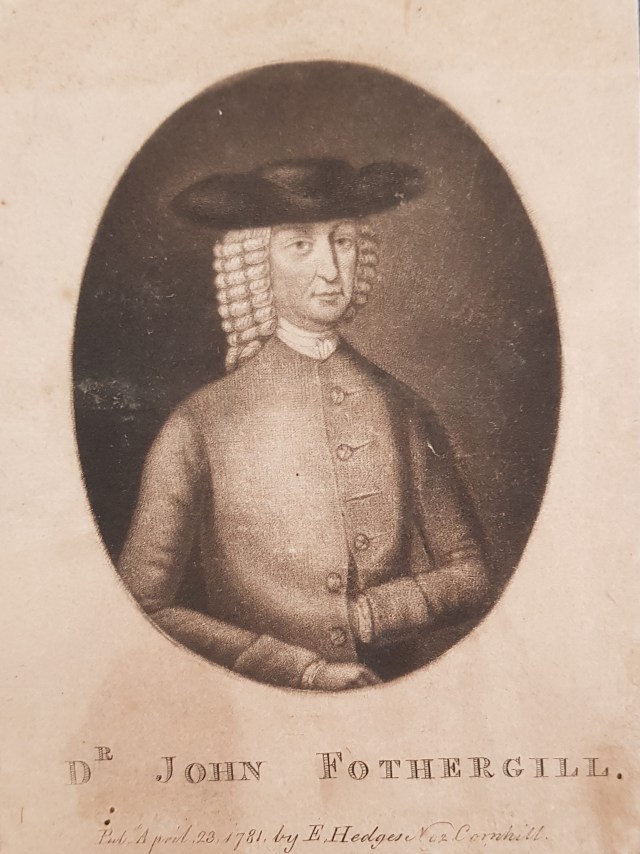
Dr John Fothergill

Dr John Fothergill. Print published by Edward Hedges, 1781 (Library ref: MS Vol 337/67)

John Fothergill was born in Wensleydale in 1712 into a well-known Quaker family. Both his grandfather and great-grandfather had been imprisoned in York for refusal to pay tithes, and his father was a well-travelled “publick friend”. John himself remained a faithful member of the Society of Friends until his death in 1780, serving as clerk for London Yearly Meeting, paying for the publication of the Purver Bible (the “Quaker Bible”), and founding Ackworth Quaker school.

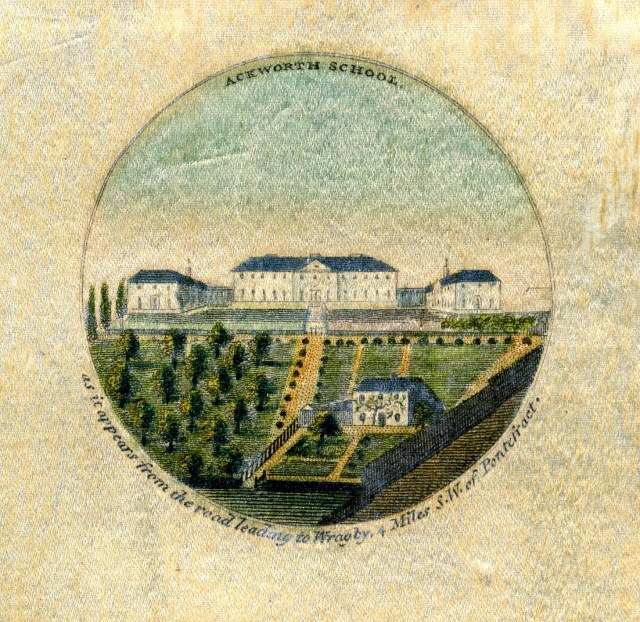
Ackworth School

Ackworth School (Library ref: Pic Vol II/185)

He had initially seemed destined to be an apothecary, apprenticed to the Quaker Benjamin Bartlett at Bradford. Bartlett quickly recognized his pupil’s ability, however, and suggested that he attended medical school instead. As a Quaker, Oxford and Cambridge were closed to him, so he attended Edinburgh University, graduating in 1736 and then moving to London to practice.

Studying at Edinburgh instead of the English universities initially put the young doctor at a professional disadvantage – he was ineligible for a fellowship of the Royal College of Physicians – but he went on to become one of the most successful and well-respected doctors of his day. His writings on angina, diphtheria, trigeminal neuralgia (also known as Fothergill’s Disease), and migraine were considered groundbreaking and he gave the first known lecture on mouth-to-mouth resuscitation.

His medical opinion was respected. He was considered for the role of Royal Physician, but his religious beliefs ruled him out. When Catherine the Great was looking for a British doctor to inoculate the Imperial court against smallpox, it was Fothergill that the Russian ambassador approached, and Fothergill who recommended his friend Thomas Dimsdale.

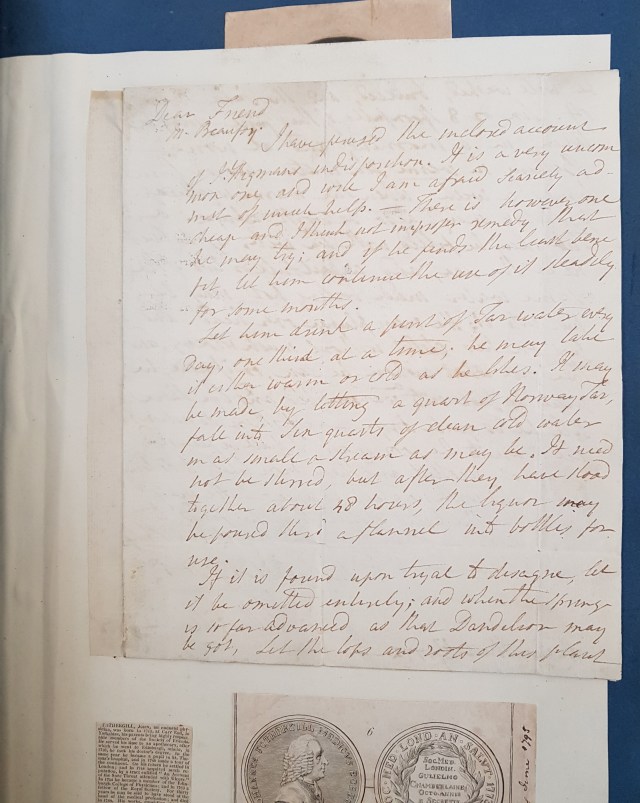
Quakers used their network of connections to gain his advice. In the letter below, Fothergill is replying to his friend Mark Beaufoy, who had forwarded him a letter from William Phillips of Redruth, Cornwall on behalf of one J. Higman. Unfortunately we don’t have the original letter describing the ailment, so we only have Fothergill’s suggested prescription – tar water, dandelion sap and sea-bathing.

Letter from Dr Fothergill to Mark Beaufoy suggesting treatment for J. Higman's complaint

Letter from Dr Fothergill to Mark Beaufoy suggesting treatment for J. Higman’s complaint, 1772 (Library ref. MS Vol 337/67)

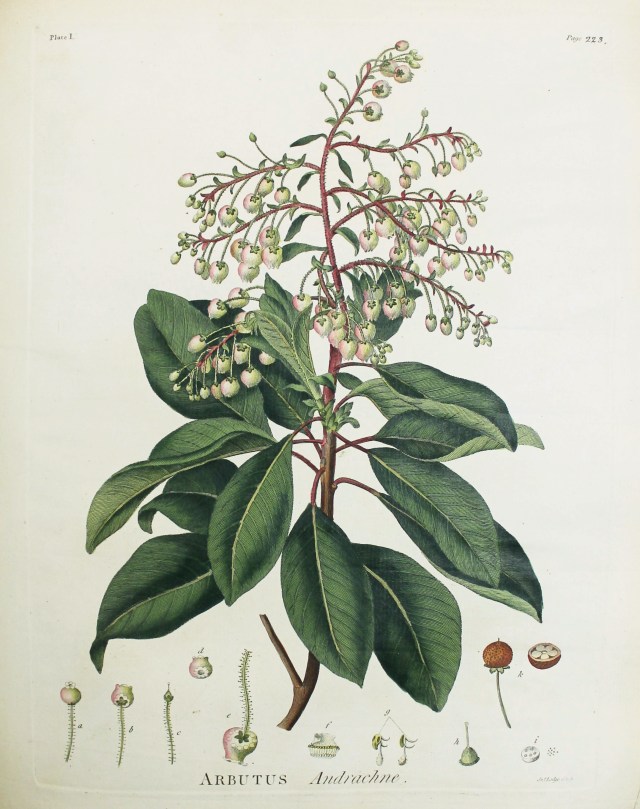
Like many other 18th century men and women of science, including Quakers, Fothergill was interested in the study of natural history. He collected insects and shells (his collections now form part of the Hunterian Museum), botanical art (his collection was bought by Catherine the Great and is now in Russia), and plants (his herbarium is now in the Natural History Museum). He bought Upton Hall estate in Essex and created an extensive botanical garden, with over 6000 species of plants and a 260ft greenhouse. This garden became what is today West Ham Park.

Plate from The Works of John Fothergill (1784)

Plate from The Works of John Fothergill (1784)

His interest in botany led to him being part of a large scientific network that included Sir Joseph Banks, William Hunter and the American founding father Benjamin Franklin. He was elected a fellow of the Royal Society, and sponsored other Quakers in their botanical endeavours. The Library holds several pieces that illustrate this, including a bill from William Bartram for plant collecting on Fothergill’s behalf,

Receipt for plant collecting payment signed by William Bartram

Receipt signed by William Bartram, American plant collector, 1773 (Library ref: MS Vol 337/19)

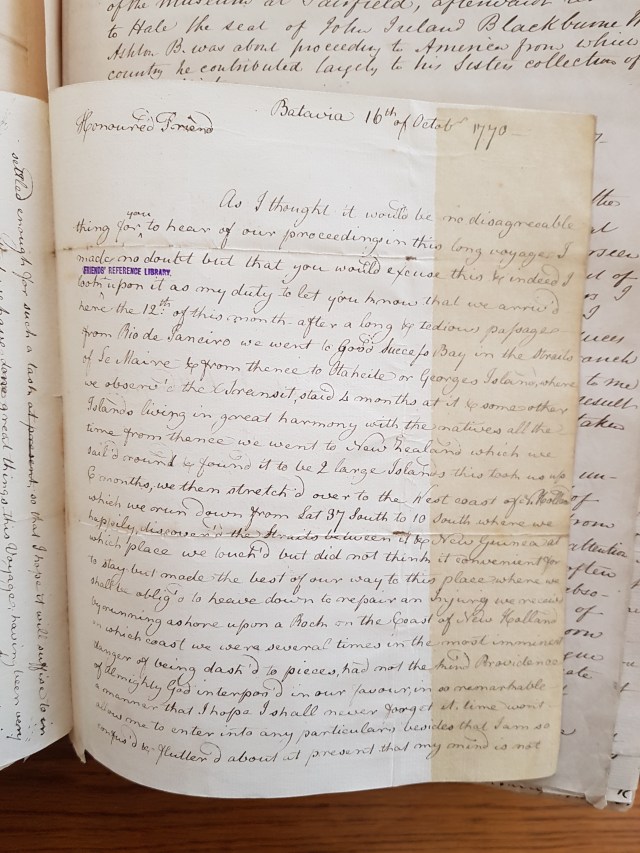
and the only extant letter by the young Quaker botanical illustrator, Sidney Parkinson, written while accompanying Captain Cook on his first voyage to the Pacific.

Letter to Dr Fothergill from Sydney Parkinson Portfolio 20.46

Letter to Dr Fothergill from Sydney Parkinson, 1770 (Library ref: Port. 20/46)

Fothergill had sponsored Parkinson, and went to great trouble to assist in the publication of his drawings after his death.

The primary strength of the Library’s Fothergill collections are letters between John Fothergill and his family, most of whom were also Quakers. It is through these letters that we can see the influence of his sister Ann Fothergill on his life. John never married, and Ann moved in with him to look after his three houses. Several of the letters are to or from both John and Ann, and there are also a number of letters by Ann about her brother, particularly following his death, when she was managing the dispersal of his estate.

The Library also holds published works, correspondence, diaries and commonplace books of other members of the Fothergill family, most famously the diary of John’s niece Betty who described her uncle as someone “who delights in making young people chearfull”.

As well as achieving professional success, Dr John Fothergill was “beloved & respected” by those around him. His life was one of energetic engagement in wide scientific and philanthropic affairs of the time, reaching far beyond the confines of his own religious society.

Further Reading

Chain of friendship: selected letters of Dr John Fothergill of London, 1735-1780, ed. Betsy C. Corner and Christopher C Booth (Oxford University Press, 1971) [includes a number of Fothergill’s letters from the Library’s collection]

Hingston Fox, Dr John Fothergill and friends: chapters in eighteenth century life (London: Macmillan, 1919)

Betty Fothergill’s journal, 1769-1770, ed. Elizabeth Francis Diggs (Ph.D. thesis – Columbia University, 1980)

Posted in Highlights | Tagged , , , | 8 Comments

Quaker fiction: some collection highlights

Following the popular recent blogposts on fictional Quaker characters over on the Quakers in Britain blog  we thought we’d highlight some of the wide range of fiction written both by and about Quakers that you can find in the Library here at Friends House.

The Library collects two categories of fiction: books featuring Quaker characters, and books written by Quakers. The publications cover a wide period – from Regency era anti-slavery stories to 21st century young adult fiction by authors like Sally Nichols – in a range of genres and forms. The collection is a valuable resource for exploring both how Quakers have been represented and how they have represented themselves and their views.

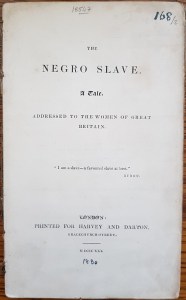
The Negro slave: a tale (1830), title page

The Negro slave: a tale (1830)

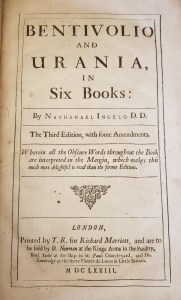
The oldest fictional work in the collection is Bentivolio and Urania, by Nathanael Ingelo (1673), a book of religious instruction delivered as fiction. This contains a reference to well-known Quaker James Nayler, making him one of the earliest Quaker characters to appear in a work of fiction. Most of the collection, however, dates from the beginning of the 19th century onwards.

Nathaniel Ingelo, Bentivolio and Urania, in six books (1673), title page

Nathaniel Ingelo, Bentivolio and Urania, in six books (1673)

Until late in the 19th century the Society of Friends, in common with many other religious groups, officially disapproved of most forms of fiction. Friends believed that reading stories, novels, and plays could have a damaging influence, giving false ideas about life and inspiring artificial emotions, contrary to truth.

The earliest printed version of the Book of Discipline (1783) offers the following advice, under the chapter heading “Books”:

This meeting being sorrowfully affected, under a consideration of the hurtful tendency of reading plays, romances, novels, and other pernicious books, it is earnestly recommended to every member of our society, to discourage and suppress the same.

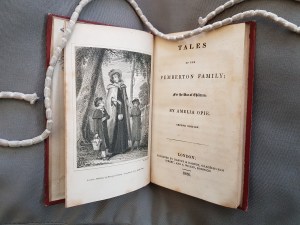
Amelia Opie, a very popular writer at the beginning of the 19th century, felt compelled to give up the novel form when she became a convinced Quaker in 1825. She did, however, continue to publish poetry and short moral tales, which were more acceptable.

Amelia Opie, Tales of the Pemberton family. 2nd ed (1826)

Amelia Opie, Tales of the Pemberton family. 2nd ed (1826)

Following the example of Jesus and the parables, fiction with an avowedly moral or educational purpose was the only sort that was considered appropriate reading, and it is this type of book that forms the bulk of the Library’s fiction collection. The majority of these books were aimed at a young audience.

Unsurprisingly religion and moral conduct were popular themes, including re-tellings of biblical stories  and fictionalised biographies of well-known Quakers

Plate from: L. V. Hodgkin, A Book of Quaker saints (1917)

Plate from: L. V. Hodgkin, A Book of Quaker saints (1917)

Some publications illustrated temperance and pacifist principles through fiction, including The Olive Leaf magazine, published by Anna and Henry Richardson which contains poetry and stories for children.

A page from The Olive Leaf, vol. 1 (1844)

A page from The Olive Leaf, vol. 1 (1844)

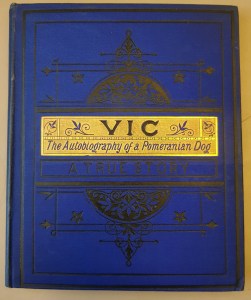
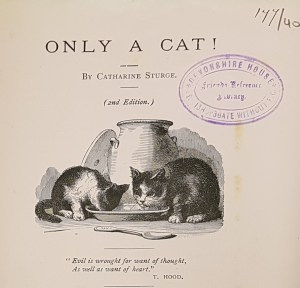
Another popular topic was the natural world. Black Beauty, one of the best-selling books of all time, was written by Anna Sewell (who was born a Quaker and buried in Lamas Quaker burial ground near Buxton, Norfolk, though she had resigned her membership), explicitly to educate the reader on the welfare of horses. This was followed by similar works by other Quaker authors such as Vic, the autobiography of a Pomeranian dog by Alfred Cooper Fryer  and Only a Cat! a story-pamphlet by Catharine Sturge.

Alfred Cooper Fryer, Vic: the autobiography of a Pomeranian dog (1880), front cover

Alfred Cooper Fryer, Vic: the autobiography of a Pomeranian dog (1880)

Catherine Sturge, Only a cat. 2nd ed. (1890s)

Catherine Sturge, Only a cat. 2nd ed. (1890s)

There were also more lighthearted animal stories that taught some basic zoology, such as Stories of Animals, intended for children between five and seven years old by Maria Hack (1820), a small book of beautifully illustrated short stories that tell the reader something about the animals in an amusing way, somewhat like Kipling’s Just So Stories.

Some of the earliest novels for adults in the Library collection were written by authors who grew up as Quakers but left the Society as adults to pursue other religious beliefs, and then began novel-writing. Sarah Stickney Ellis, educationalist and advocator of the idea that a woman’s primary duty was as mother and home-maker, wrote novels such as Family Secrets, or hints to those who would make home happy (1841).

Like Sarah Stickney, William Howitt was educated at Ackworth Quaker school. He married another Quaker, Mary Botham, and together they pursued a career as writers, publishing prolifically. The Howitts also published their poetry in a literary annual called The Gem, which features poems such as this one by Boodles founder James Kenney.

The gem: a literary annual (1830)

The gem: a literary annual (1830)

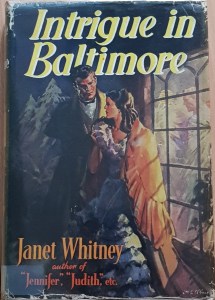
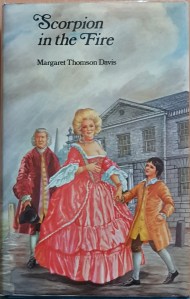
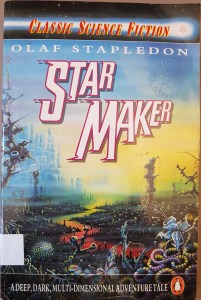
Quaker attitudes to literature have long since changed, and the arts are embraced as another source of light and inspiration (https://qfp.quaker.org.uk/passage/1-02/). Since the 20th century Friends have been writing in a variety of forms and genres: examples held by the Library include horror, science fiction and historical romance.

Janet Whitney, Intrigue in Baltimore (1951)

Janet Whitney, Intrigue in Baltimore (1951)

Margaret Thomson Davis, Scorpion in the fire (1977)

Margaret Thomson Davis, Scorpion in the fire (1977)

Olaf Stapledon, Star Maker (1988)

Olaf Stapledon, Star maker (1988)

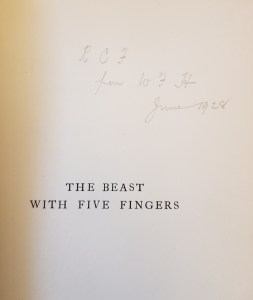
William Fryer Harvey, The Beast with five fingers (1928)

William Fryer Harvey, The Beast with five fingers (1928). Copy with author’s MS dedication

Two of the most interesting authors in our collection had served in the Friends Ambulance Unit. William Fryer Harvey, author of well-regarded ghost stories, and Olaf Stapledon, philosopher and science fiction writer. Harvey’s most famous work, The Beast with the Five Fingers, was made into a film starring Peter Lorre. Stapledon invented the concept of the Dyson sphere, an idea that has inspired many other science fiction writers.

This blogpost has only scratched the surface of the Library’s fiction collection. Try searching the online catalogue (www.quaker.org.uk/cat) if you want to find out what books the Library holds by a particular author, or browse novels in general, or see a full list of books with Quaker characters in particular. (Hint: if these links don’t work in your browser, copy and paste them into the address bar)

We’re planning a companion blogpost on Quakers in drama later this autumn: watch this space!

Further reading

Anna Breiner Caulfield, Quakers in Fiction: An Annotated Bibliography (Northampton: Pittenbruach Press, 1993).

Nancy Jiwon Cho, “Literature”, in The Cambridge Companion to Quakerism, ed. Stephen Angell and Pink Dandelion (Cambridge: Cambridge University Press, 2018) pp. 69-87.

James W. Hood, “’Novel Reading and Insanity’: Nineteenth-Century Quaker Fiction Reading Practices”, in Quaker Studies 23(1) pp. 3-24. Available online here: https://online.liverpooluniversitypress.co.uk/toc/quaker/23/1

Posted in Highlights | Tagged , , | 5 Comments

Creating A World Without War: new project to open up World War Two research materials

LSF FRS stationery Help War Victims

Friends Relief Service letterhead

In the week that many have been commemorating the start of World War II 80 years ago, we have some news to share about an exciting new project to open access to some of our key collections from that period.

The Wellcome Trust have given us funding for a new project: Creating a world without war: pacifist approaches to humanitarian relief in World War II and after. The project aims to catalogue, preserve, and promote the papers of the Friends Ambulance Unit (1939-1946) and the Friends Relief Service (1943-1948). The project will involve recruiting a dedicated Project Archivist who will not only do the hard work of cataloguing and repacking the collections so that they are accessible to researchers, but will also be able to devote time to promoting the collections widely and creating related resources such as subject guides, exhibition materials, and more.

Working with the Wellcome Trust involves a focus on promotion of these collections to the academic community, and particularly to academics researching health and the history of medicine. This work has already started, with a successful working group on emotional responses of relief workers, led by Dr Suzan Meryem Kalayci, held at Oxford University in March. Several of the academics present offered their support for this project: some who had worked with these collections in some way before, and some who were excited to hear about them for the first time. Dr Toby Kelly (University of Edinburgh), who worked with us on the Conscience Matters exhibition at National Museums Scotland, wrote the following about these two archive collections:

 The archives are an invaluable source for all people interested in the history of medical humanitarianism. They are globally significant…I can think of few sources, anywhere in the world, that provide such a nuanced, complex and personal record of what it is like to work in the medical humanitarian field in periods of war and conflict.

We were incredibly grateful for, and definitely buoyed up by, the strength of support we received from researchers, and from groups such as Quaker Memorial Service Trust. We hope that by opening up access to these collections and promoting them widely, exciting new possibilities for research will emerge.

FRS Team 2

A Friends Relief Service team set sail for Europe


Friends Relief Workers pinning on badges at Friends House

The ‘Quaker Grey’ uniform set Quaker relief workers apart from other relief agencies who agreed to wear khaki uniforms. This was one distinctive feature Quakers insisted upon in line with their testimony to Peace.

We will also be looking to engage Quaker communities, Britain Yearly Meeting staff and other public user groups to use the collections in creative and innovative ways.

We learned a lot during the World War I centenary about the wide variety of people who are interested in pacifist responses to war, medical work in conflict zones, historical treatment of refugees, and the many other topics that relief records can illustrate. We want to build on the success of our World War I digitisation project, which made the Friends Ambulance Unit World War I personnel cards freely available online, and part of this project will involve identifying new avenues for digitisation.

FAUCAB1945

Many associate the Friends Ambulance Unit with overseas work in conflict zones, and tales of derring-do in far flung places such as China and the Middle East, however many FAU members carried out more prosaic, but no less needed work in Britain. This was quite wide ranging, from hospital work, setting up rest centres for evacuees and those who lost their homes through bombing, to manning Citizens Advice Bureaus to help people with wartime regulations, and gaining access to provisions.

We hope to start recruitment for the Project Archivist soon, and we will no doubt be introducing them on the blog shortly after – watch this space!

Posted in News | Tagged , , , , | 3 Comments