Milan to Madagascar: a best seller’s back story

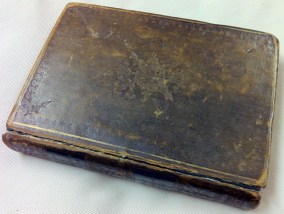
In 2003 the Library received a gift of a copy of De imitatione Christi (The Imitation of Christ) by Thomas à Kempis, published at Milan in 1488. We were a little awed at first. Described within the world of Quakerism (Friends Quarterly, vol. 7, no. 1, 1953 p.48) as a work with “…a circulation second only to that of the Bible”, publicity for a recent Paris exhibition on the Imitation described it as the shining light of late mediaeval devotional literature. Though over 2,000 editions of the work were published up to the early 19th century, our edition is an extremely early one – published only 15 years after the Latin editio princeps of 1473.

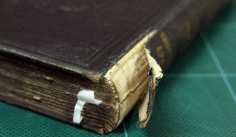
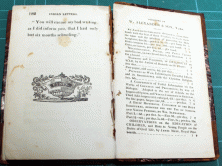
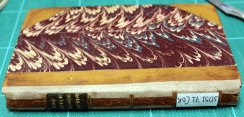
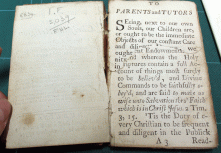
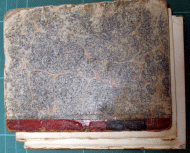
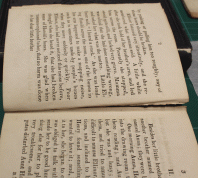
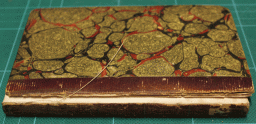
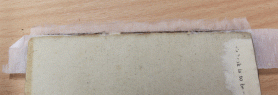
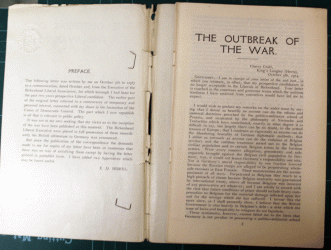
De Imitatione Christi by Thomas à Kempis, Milan, 1488 (TEMP MSS 988/1)

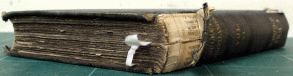
‘De Imitatione Christi’ by Thomas à Kempis, Milan, 1488 (TEMP MSS 988/1)

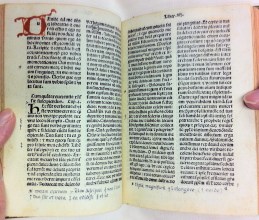
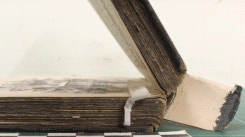
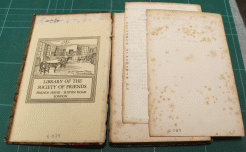
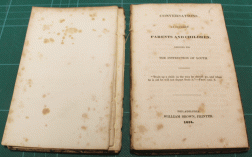
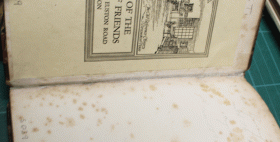
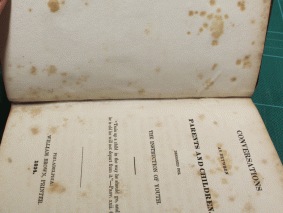
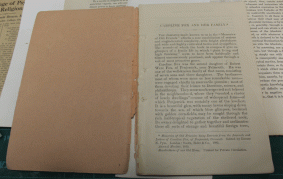
Pages from De Imitatione Christi by Thomas à Kempis, Milan, 1488

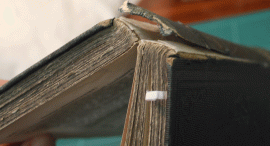
Pages from ‘De Imitatione Christi’ by Thomas à Kempis, Milan, 1488 (TEMP MSS 988/1)

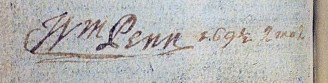
The book was William Penn’s copy. On the final page is his signature – “W[illia]m Penn 1691/2…”:

William Penn's signature

William Penn’s signature from ‘De Imitatione Christi’ by Thomas à Kempis, Milan, 1488
(TEMP MSS 988/1)

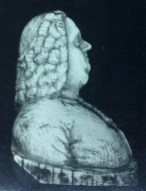
Photograph of ivory portrait bust of William Penn made by Silvanus Bevan (1691-1765)
(MSS ACC 11109)

We know that in 1693 Penn recommended the work to Sir John Rodes, of Derbyshire, as part of a Christian’s necessary learning. Our volume also has the signature of Penn’s great grandson, Granville Penn (1761–1844), who inherited most of the family property. Most of the Penn family library was sold in 1872: we have a copy of the sale catalogue (Puttick & Simpson, Catalogue of … of books, manuscripts… from the libraries of William Penn and his descendants, London, 1872; Library reference Box 193/2), listing a number of copies of the Imitation, including this very Milan edition of 1488.

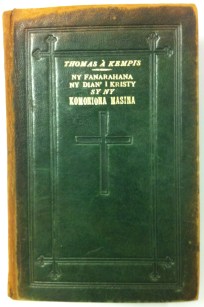
Documents accompanying the gift helped us to verify the book’s ownership and travels. There is an 1877 letter referring to its purchase by Joseph Radley (1835–1903), then teaching at Friends School, Wigton, Cumbria.  His son Joseph F. Radley (1864–1935) later owned it. After teaching at Wigton, like his father, Joseph (the younger) worked for seven years in Madagascar for the Friends Foreign Mission Association (FFMA).  Then, in 1895, he resigned from the FFMA and from the Society of Friends, joined the Anglican Church and was ordained as a priest.  He returned to Madagascar, serving the Society for the Propagation of the Gospel there for over 30 years. While serving both missionary societies over a lifetime in Madagascar, he had Penn’s copy of the Imitation by him, along with a 19th century facsimile edition.  Using these, in collaboration with Rabary (a notable Malagasy Quaker), he produced the first translation of the Imitation into Malagasy, printed by the Quaker-founded FFMA Press at Antananarivo in 1928. A copy of this Malagasy edition was included in the gift to us.

‘Ny Fanarahana ny dian’i Kristy’ translated by Joseph F. Radley, Antananarivo, 1928.
Malagasy edition of ‘De Imitatione Christi’ by Thomas à Kempis, Milan, 1488. (TEMP MSS 988/3)

A few years after we received Penn’s copy of the Imitation, it became apparent that there were more Quaker connections. In 1990 we had been loaned a seemingly unrelated collection –  trade records and account books of the Quaker book and antiquities dealer Henry Thomas Wake (1831–1914), of Derbyshire (TEMP MSS 995). They were not scheduled for listing as a priority, until some descendants undertaking biographical and genealogical work requested digital copies. To accompany the copies, a handlist had to be written, and in the process the story of the purchase and resale of the à Kempis volume became clear.

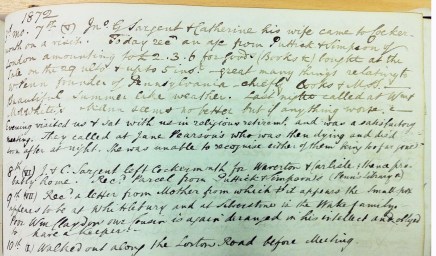
In 1872 Wake recorded his purchase of “… from Puttick and Simpson … many things relating to W. Penn – chiefly books and MSS…”, exactly corresponding to the printed Puttick & Simpson Penn sale of 1872 (above). Wake’s trade books also record the later sale of the volume to Joseph Radley in 1874-1875.

Henry Thomas Wake trade book, 7 March 1872 (TEMP MSS 995/6)

Henry Thomas Wake trade book, 7 March 1872 (TEMP MSS 995/6)

The Library holds several other editions of, and commentaries on, the Imitation, including various 18th century editions translated by John Payne and works by the American Quaker and spiritual writer, Douglas Steere (1901–1995).

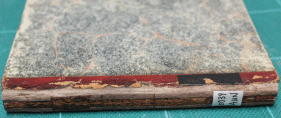
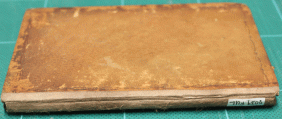
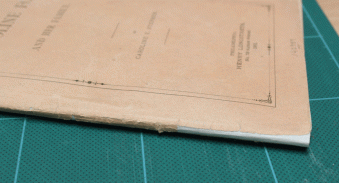
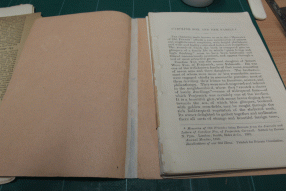
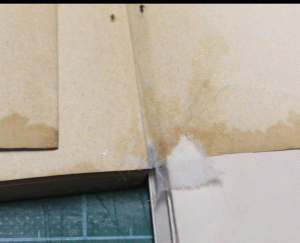
Understandably, the precious 1488 volume is fragile. The binding is damaged, but, provided our handling instructions are complied with, it can be made available for inspection by readers, by arrangement.

Posted in Highlights | Tagged , , , | 4 Comments

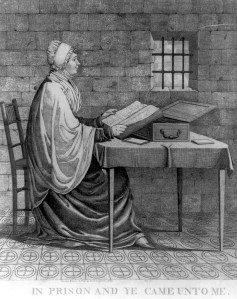
Conservation of Elizabeth Fry’s diaries

One of the most well-known Quakers is the 19th century philanthropist and friend of prisoners, Elizabeth Fry (1780–1845). Nearly all her diaries, covering most of her extremely busy life (spanning the years 1797 to 1845) are held by the Library.

Elizabeth Fry

Elizabeth Fry, print of a watercolour by R. Dighton, ca. 1820 (88/AXL 58)

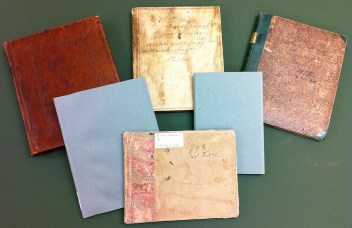
The diaries consist of many small volumes, in a variety of sizes and formats – paper covered booklets, bound stationery volumes with marbled boards, and some with large folded inserts.

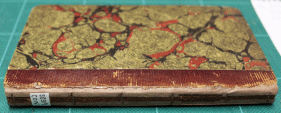
Selection of Elizabeth Fry diaries.

Selection of Elizabeth Fry’s diaries showing the variety of formats.

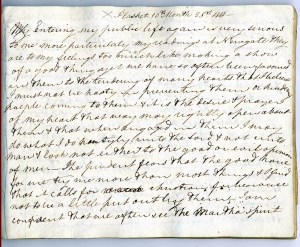
Elizabeth Fry's diary (1815-1821), entry of 28 October 1818

Extract from Elizabeth Fry’s diary (1815-1821), dated 28 October 1818. Entry concerns her return to public life and Newgate Prison. Click to enlarge. (MS VOL S 264)

Fragile, with paper tears, dog ears, loose leaves and other damage, the diaries were in need of expert repair by a professional conservator. An on-going conservation project to restore them to a better condition is in progress. The diaries are sent, one batch at a time, to the conservation studio to be repaired, dry cleaned and consolidated, as appropriate to each piece’s individual structure and condition. The latest volumes to be treated are MS Vol. S 263/1, 1b, 2-3 (diary entries from July 1811 to August 1815) and MS Vol. S 264/1–4 (September 1815 to December 1821). This conservation has been paid for by supporters of the Library’s BeFriend a Book scheme.

Besides repair and conservation of each volume, consideration has been given to the storage and future handling of the diaries. The original covers are now protected with new paper wrappers: the volumes and notebooks will be housed in purpose-made boxes.

Posted in Collection care | Tagged , , , , | 1 Comment

Readers’ stories: researching Quaker missionaries in China

So far on the blog we’ve focused on what’s in the Library’s collections and work that’s being done to make them available.  There’s another story to tell – who uses the Library and why.

Here’s a guest post from one reader about her experience. Polly Ashmore is a recent history graduate from Oxford, now studying Chinese at Beijing University. She did research in the Library for her undergraduate thesis, and now plans to continue researching modern Chinese history.

Late in 2010 I embarked on an undergraduate thesis about Quaker missionaries in China during the early years of Mao’s regime. I had been given the instructions to ‘find something interesting’. Wondering just how that might be possible (I was used to large, plain rooms packed with bored or terrified students), I marched off to the Library at Friends House, Euston, to see what I could find. I walked in, pen in hand (yes, ink! – but I soon learnt better), with little idea of what one really did with archives…stalk the shelves hoping for luck? Read everything I could on Quakers in China and go from there? Rely on a librarian whose patience might match my ignorance?

I opted for the latter. It was even offered to me, joy of all joys, when a librarian asked what I was looking for and whether they could help? My desperation must have been palpable, for no sooner had I begun to mumble something about ‘missionaries in China’ than a long list of records was produced, full of potential leads: minutes from meetings, personal correspondence, letters to and from the mission secretary back at Friends House – this was, for a history student, a real gold mine.

As I got down to combing through these documents over the next two weeks, I began to appreciate not only the remarkable degree of information and advice willingly given by the librarians but their easiness and good humour too. There was always a friendly face waiting at the desk when I arrived each day, and always a cheerful ‘goodbye’ when I left; what I had dreaded for months actually became a fascinating investigation set in a pleasant atmosphere.

I began to see the Library in Friends House as a refuge: quiet, relaxed, bursting with new stories of men and women living through enormous historical change. It was different from the libraries at university and our public library at home; there was something altogether more interesting about this one.

Polly would love to hear from any Friends who had links with communist China in the past. You can contact her via the Library.

Posted in Readers' stories | Tagged , , , | 1 Comment

Catherine Impey of Street, Somerset, and her radical anti-racist newspaper

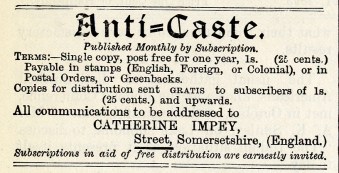
Between 1888 and 1895, Catherine Impey (1847–1923) of Street, Somerset, wrote and published what is credited as being Britain’s first anti-racist periodical. Anti-Caste, as it was called, is one of the most remarkable serials in our collection: the Library holds the only complete set known to have survived in this country. It includes reports on visits to Britain by prominent African American campaigners such as Ida B. Wells and Frederick Douglass, and anti-lynching campaigns in the southern states of America, as well as looking at issues of racism within the British Empire.
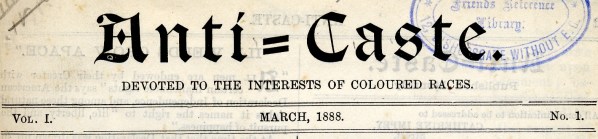
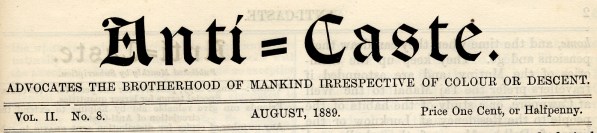
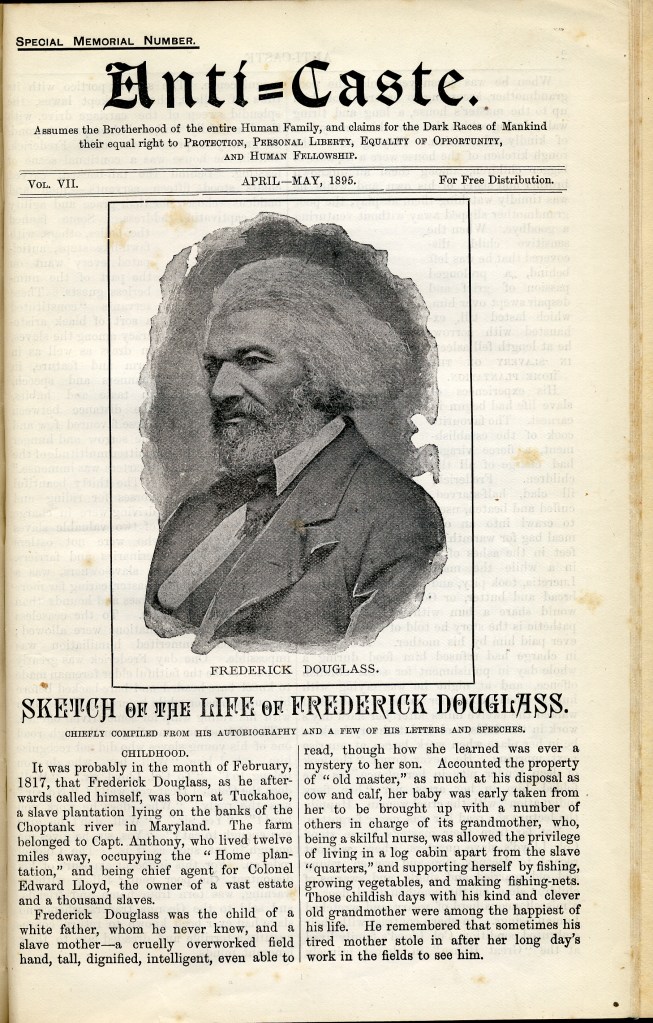
Catherine Impey edited the newsletter with her sister, Ellen, and mother, Mary Hannah Impey.  She sold it for the nominal sum of a halfpenny (to cover postage) to aid circulation, bearing the main production costs herself.

While Anti-Caste had only 300 subscribers (mainly within the Society of Friends) it had a circulation of 1900 copies each month, as many subscribers would distribute free copies of the journal amongst their associates. For instance, 500 copies were distributed amongst the YMCA in the USA and 100 copies taken by a Reverend Foster in South Carolina.

In the first issue of Anti-Caste, Impey declared that it should be a platform for black writers to “present their case before white races”. Its moral stance was one of racial equality, not protective philanthropy, as the change of masthead wording after 18 months seems to suggest (from “Devoted to the interests of coloured races” to “Advocates the brotherhood of mankind irrespective of colour or descent”).

Impey became interested in the topic of race relations and racism in the USA after visiting the country several times in the 1870s. She was friends with several prominent African American campaigners, most notably Frederick Douglass.

Article, ‘Sketch of the Life of Frederick Douglass’, Anti-Caste, April-May 1895.
(click on image to enlarge)

The most controversial issue of Anti-Caste was that of January 1893 (volume VI, no. 1), which included on its cover a photograph of a lynched African American man with children posing beside his body.

Catherine Impey arranged for Ida B. Wells (who had been introduced to her by Frederick Douglass) to go on a lecture tour of Britain in 1893 on the issue of lynching. This tour led to the formation of two societies – the British Anti-Lynching Society and the Society for the Recognition of the Brotherhood of Man.

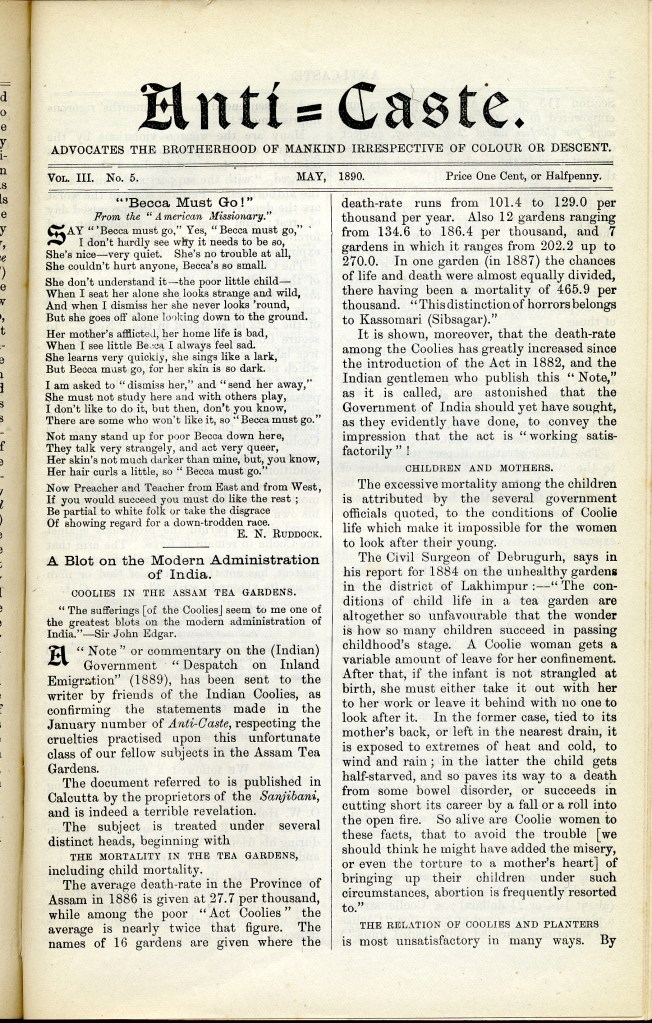
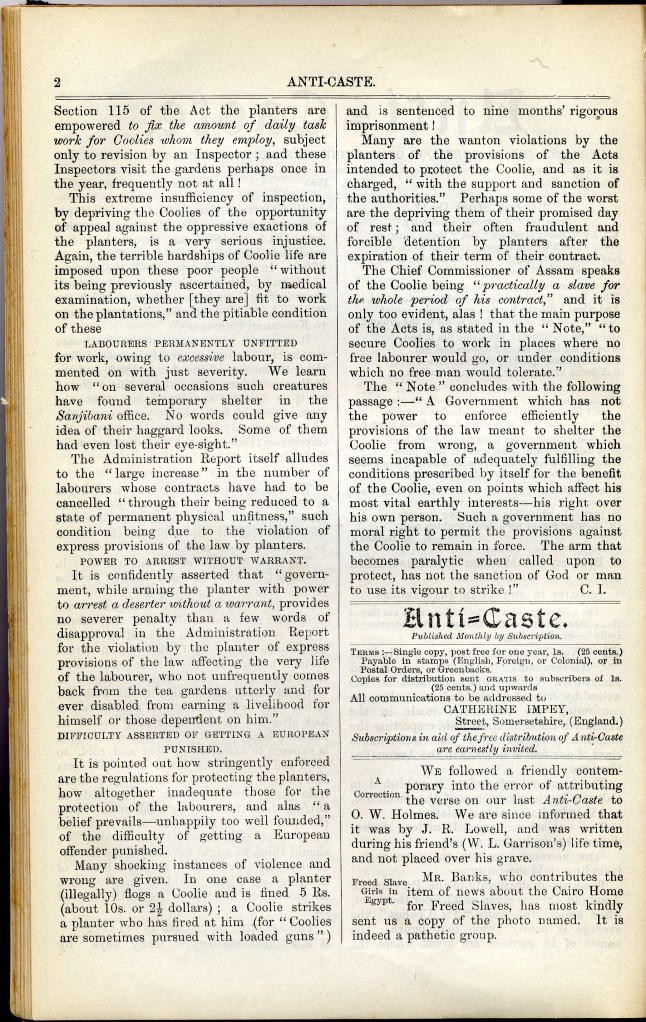
Anti-Caste also covered questions of racism within the British Empire, particularly India. An example of this is the May 1890 issue, where Impey denounced the conditions for workers on Assam tea estates.

Article, ‘A Blot on the Modern Administration of India’, Anti-Caste, May 1890.
(click on images to enlarge)

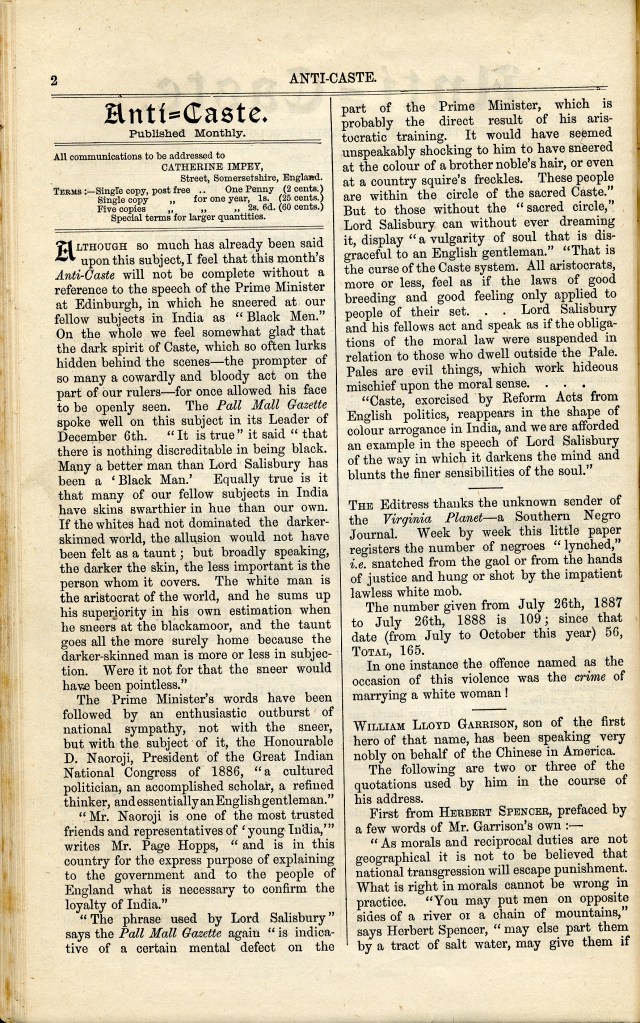
When a controversy arose over the British Prime Minister Lord Salisbury referring to Indians as “black men”, Impey used the January 1889 issue of Anti-Caste to condemn the racist philosophy underpinning British Imperialism.

Article concerning British Prime Minister Lord Salisbury’s speech, Anti-Caste, January 1889.
(click on image to enlarge)

Sadly, apart from Anti-Caste, little survives of Catherine Impey’s writing. Much of what we know about her comes from Ida B. Wells’ autobiography Crusade for justice and from Anti-Caste itself.

We know that as well as anti-racism, Impey was interested in temperance, anti-militarism and animal rights (she was a committed vegetarian). She also wrote an article for the Street Village Album in 1887 arguing for women’s right to vote.

Catherine Impey died in 1923. Her obituary in the Quaker newspaper The Friend mentioned her work against racism, but focused more on her interest in temperance. Her pioneering work was all but forgotten. Today there is growing recognition and interest in Catherine Impey and her periodical Anti-Caste.

References / Further reading

Bressey, Caroline. “Catherine Impey and the Anti-Caste movement: part 1”. BASA Newsletter, no. 52 (2008), p.12-15.

Ware, Vron. Beyond the pale: white women, racism and history. London: Verso, 1992.

UCL Equiano Centre. Anti-Caste gallery [website]. Accessed 1 September 2012.
Posted in Highlights | Tagged , , , | 13 Comments

Rusty staples and red rot: a student conservator reports. Part 2

Sibel Ergener, of West Dean College, continues her guest blogpost on voluntary conservation work she undertook at the Library this summer.

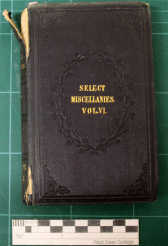
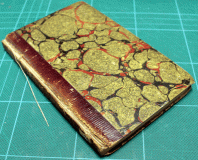
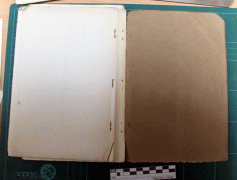
The Library of the Society of Friends is a working library with researchers making heavy use of its collections. Over the years handling inevitably results in some wear and tear, including, in some cases, books with detached boards from extensive use. Despite the conservation programme funded by the BeFriend a Book scheme, not all of these books can immediately be repaired, so they are carefully secured with unbleached linen tape and re-shelved. I wanted to be able to help make as many of these volumes as possible fully functional in the short time I was at the Library, so my goal was to find books that needed less extensive repairs. With David Irwin, the project cataloguer, I went through a part of the stacks and picked out several books that could have their boards reattached using Japanese tissue hinges. Here are examples of some common damage.
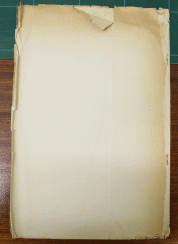
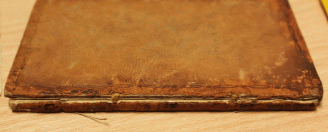
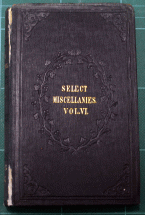
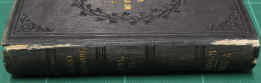
The first book I worked on had both boards attached, but part of the hollow tearing away from the spine and a split forming down the spine.

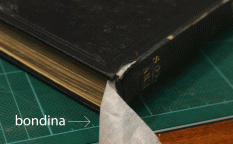
It took a bit of messing around with how best to hold the book and hollow open enough, but I managed to get a piece of heavy Japanese tissue and wheat starch paste into the hollow to create a new spine lining and help prevent further cracking, keeping a bit of Bondina inside the hollow to prevent it from sticking to the hollow.

I then used the 12 gsm Japanese tissue to reattach the torn bit of the hollow, and reattached the hollow to the spine using the heavier weight Japanese tissue.

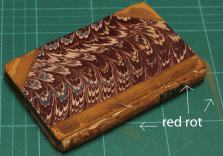
Some books were suffering from red rot, or acid deterioration. Red rot is caused by a variety of factors but is particularly related to changes in leather production in the 19th century, and is acerbated by environmental factors such as pollution. Since the Library has always been located in London, several of the books are at some stage of acid deterioration.

This book was almost unusable because of its red rot, which weakens leather and leaves powdery red residue wherever it touches. It was hard to handle without becoming covered in red powder. Both boards were also coming detached.

I consolidated the leather with Klucel G and then used tinted heavy Japanese tissue hinges to reattach the boards. Klucel G doesn’t fix red rot, but it does hold together damage and prevent the leather from deteriorating under the tissue repair or leaving powder residue on reader’s hands.

I used Klucel G to consolidate red rot and mechanical damage that I had to work around on several books at once.

These books all had one or both boards detached, but several also needed interior paper repair on tears, or had pages detached altogether, that I needed to complete before reattaching the boards.

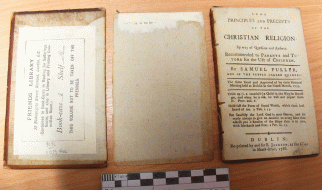
This book had the flyleaf and first page detached.

I reattached them using lens tissue before reattaching the board.

When I finished with the paper repair, I tinted heavier Japanese tissue for board reattachment with burnt umber acrylic paint and reattached the boards. When the leather was in good enough condition, I lifted it and attached the repair underneath to make the repair more unobtrusive and also, since it is sandwiched between the board and leather, to hold it better.

In the end, the books were all returned to their shelves in much more stable and usable condition.

Posted in Collection care, Guest posts | Tagged , , , | 6 Comments

Rusty staples and red rot: a student conservator reports. Part 1

We’re pleased to present the first of two guest blog posts from Sibel Ergener, a conservation student at West Dean, who recently spent a short but productive fortnight in the Library as a volunteer. Working on-site, with basic equipment, Sibel applied her careful expertise to the repair of a batch of 20th century pamphlets and several 19th century books.

For two weeks in July, I volunteered at the Library of the Religious Society of Friends, at Friends House, London.

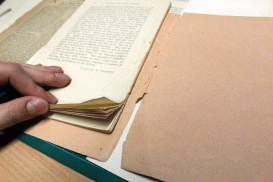
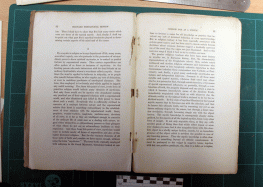
The Library has a large quantity of pamphlets that its team of NADFAS volunteers is systematically working through in order to remove staples and re-sew. Some of these pamphlets have additional need of paper repair, or have staples that are difficult to remove, either because paper covers are glued over them or they have rusted very badly. These pamphlets were passed on to me.

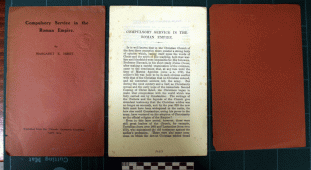
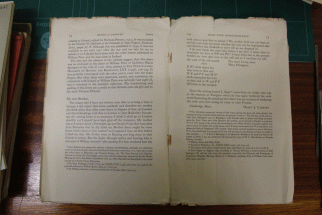
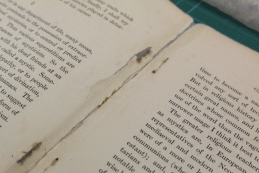
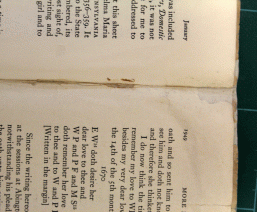
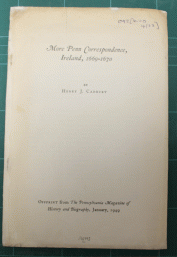
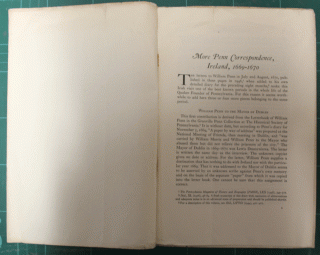
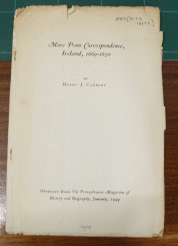
More Penn correspondence, Ireland, 1669-1670 by Henry J. Cadbury (an offprint from the Pennsylvania magazine of history and biography, Vol. 73, No. 1 January, 1949) is a typical example of one of the pamphlets I worked on. It had rusted, covered staples, paper tears throughout the pages, and some brittle areas of the paper that needed guarding.

I used 12 gsm Japanese tissue and wheatstarch paste to do paper repairs after removing the staples. The fills were completed using a 32 gsm Japanese tissue.

In the end, looking much less fragile!

I did some more simple repairs like this to other pamphlets so they could be sent back to the NADFAS volunteers to re-sew.

Some staples glued under a cover:

Removing staples:

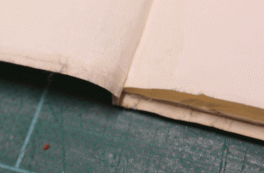
Repairing covers:

and some more fills and paper repair:

Overall, this kind of conservation work is simple but necessary to preserving the material for future use in a functioning library. It’s not the most exciting work to be given, but these pamphlets are pulled out for research and the nature of how they are made leaves them more susceptible to damage compared to a more robust book. Removing staples before they rust or cause damage to the paper is important to maintaining their longevity, but due to the huge quantity of pamphlets in the collections, the damage is sometimes only detected when the pamphlets are requested for research. Hence the value of the systematic NADFAS project to prevent the problem developing in existing and newly received collection items.

A slightly different version of this post is on the Current Projects blog published by conservation students at West Dean College.

NEXT! My experience of book conservation at the Library of the Society of Friends.

Posted in Collection care, Guest posts | Tagged , , , | 4 Comments

A controversial cabinet

Braithwaite Cabinet

Braithwaite Cabinet – access by special order

Sitting in the corner of the strongrooms is a wooden cabinet containing a collection of printed works known as as the “Braithwaite Collection”, gifted to the Library in 1907 under certain conditions.

In his will Joseph Bevan Braithwaite (1818—1905) wrote: “… and having regard to the special character of many of the said books and pamphlets, it is my desire that no person shall have access… without a special order…given…either by the Clerk [of Meeting for Sufferings] or…by the Recording Clerk”.

Why was it so important to restrict access? Was this the Quaker equivalent of the Vatican’s Index Librorum Prohibitorum, protecting the faith and morals of members of the Society of Friends?

This collection does indeed contain over 300 works of a controversial nature, springing from the Hicksite/Orthodox Controversy and “Great Separation”  of 1827—1828, which had such a long-lasting legacy among North American Quakers, and the Beacon Controversy in London Yearly Meeting (1835—1840).

Mixed up in the Hicksite/Orthodox division were the arguments for and against the leadings of the Holy Spirit over Scripture, intermingled with deep-seated prejudices (the urban wealthy and worldly Quaker vs. the rural), misunderstandings and misrepresentations, and personality clashes, set down in print for all to read. Philadelphia Yearly Meeting split into Hicksite and Orthodox groups, and others were to follow.

When Isaac Crewdson (1780—1844) of Manchester penned his Beacon to the Society of Friends early in January 1835, ostensibly as a refutation of the writings of Elias Hicks,  it “marked an important step in the process of opening up Quakerism from its traditional closed sectarian position” (J. Hall, 1968). But like the Hicksite Schism this too was accompanied by an often acrimonious exchange of publications, both within and beyond the Society of Friends, including tracts, articles and letters to periodicals such as the Christian inquirer and the Berean, (the monthly British Friend had not yet been established).

Joseph Bevan Braithwaite

Joseph Bevan Braithwaite (1818—1905)
Library ref. 85 N2

Joseph Bevan Braithwaite must have thought hard about what was to become of his collection of controversial writings when he drew up his will, as the bitter repercussions of these controversies rumbled on and London Yearly Meeting still refused to recognise the separated American Hicksite meetings (“the other branch”) until it included them in its General Epistle of 1912.

Inside the Braithwaite Cabinet

Inside the Braithwaite Cabinet

A century on, access is a much more straightforward business.

All these works have recently been added to the Library’s online catalogue, as part of our on-going retrospective cataloguing project. Controversial works from the Joseph Bevan Braithwaite cabinet, and from other parts of the Library’s collection, can now be searched for and consulted — without seeking the permission of the Clerk of Meeting for Sufferings.

References

Bronner, Edwin H. “The other branch”: London Yearly Meeting and the Hicksites, 18271912. London: Friends Historical Society, 1975 (Journal of the Friends’ Historical Society. Supplement 34)

Hall, Jolyon. The Beacon Controversy in the Society of Friends, 18351840: a bibliography. Diploma in Librarianship, Part II University of London, 1968

Ingle, Larry. Quakers in conflict: the Hicksite reformation. 2nd ed. Wallingford, Pa.: Pendle Hill Publications, 1998

Mingins, Rosemary. The Beacon controversy and challenges to British Quaker tradition in the early nineteenth century: some responses to the evangelical revival by Friends in Manchester and Kendal. Lewiston; Lampeter: Edwin Mellen Press, 2004

Wilson, Roger C. Manchester, Manchester and Manchester again : from “sound doctrine” to a “free ministry”: the theological travail of London Yearly Meeting throughout the nineteenth century. London: Friends Historical Society, 1990

Posted in Highlights | Tagged , , , | Leave a comment

Testing convictions: Harold Wild, a Manchester conscientious objector

What might a 19 year old pacifist think and feel under the threat of imminent military conscription? The papers of Harold Wild (1896-1979), recently received by the Library (MSS Acc. 11791), give us an insight into one young man’s experience.

Why I am a conscientious objector

Why I am a conscientious objector: being answers to the Tribunal catechism (a No-Conscription Fellowship publication of 1916)

Harold Wild attended the Rusholme Wesleyan Methodist Church, Manchester. He objected to military service on religious grounds, believing, after reading the Bible from cover to cover, that it was against God’s will to fight and that war was contrary to the teachings of Jesus. But there was opposition from some members of his congregation, and Harold began worshipping with Quakers, joined the Fellowship of Reconciliation and attended meetings of the No-Conscription Fellowship.

His diary entry for 12 January 1916 expresses his determination not to fight or support the war in any way:

I came to the conclusion now that instead of doing as I started – revising all my matric. subjects with the hope of starting definite study again, at the end of March I must face conscription. The Government Bill is apparently going to swim through the House and I must be true to my conscience. I am determined to be imprisoned or shot before I will take up Munition Work or Mine Sweeping or any work distinctly Military under the Military Authorities. Meanwhile I study, German, French, Latin, History and Literature.

Under the Military Service Act, on 26 February 1916 Harold was called up for service in the army and told to present himself at Manchester Town Hall. He ignored the papers. On 11 May he was brought before the Appeals Court which granted him exemption from military service on health grounds, but not from non-combatant service. This he could not accept: he wanted total exemption from military service on grounds of conscience, and he was determined to say his piece, despite interruptions from the impatient Appeals Court Chairman. Asked what he was prepared to do for his country, he told the court he would continue to distribute peace literature. Clearly there was no sympathy lost between this young pacifist and his audience:

In leaving my chair I protested to the Chairman that non-combatant work was of no use to me, they might as well order me to combatant service. He replied something about the cocksureness of boys of 20.

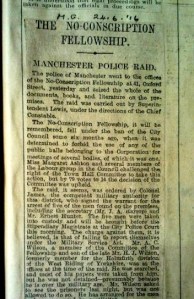
Manchester police raid

Manchester police raid. Cutting from the Manchester Guardian, 24 June 1916. Papers of Harold Wild, Album of press cuttings March—July 1916 (Library ref. MSS Acc. 11791

The following month Harold was caught up in a police raid on the No-Conscription Fellowship premises at 41 Oxford Street, Manchester. He and four others were arrested and taken to Ashton Barracks where they were detained and charged with being absentees from the army, before finally being released three days later.

Towards the end of his life, Harold wrote to his daughter, Dorothy Spence (17 November 1974):

Looking back over the years I do not feel that I could have taken any other stand than I did, involving one night in the Town Hall’s Police Cells, a ride in the ‘Black Maria’ to Minshull St. Police Station & a night in the ‘Guard-room’ of Ashton Barracks, followed by an interview before the Officer in charge (without any clothing on me).

Besides a transcript of Harold Wild’s diary (March 1915–April 1919) by his daughter Dorothy Spence (also available online as part of the Echoes of the Great War project) the collection includes four albums of newspaper cuttings compiled between November 1915 and September 1917. These albums provide gripping documentation of the opposition to the War on the home front, with press reports on conscription, conscientious objection, erosion of civil liberties and censorship.

Harold Wild press cuttings album

Album of press cuttings. Papers of Harold Wild (Library ref. MSS Acc. 11791)

The papers of Harold Wild are a welcome addition to the Library’s existing holdings of First World War conscientious objection materials, which include diaries, official records and photographs. See our library guide Conscientious objectors and the peace movement in Britain 1914–1945 for further details.

Posted in New accessions | Tagged , , , | 2 Comments

Woodbridge Friends visit the Library

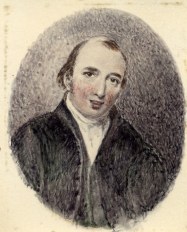
Portrait of Bernard Barton of Woodbridge (1784-1849) (Lib. Ref. 89/A237)

Miniature portrait of Bernard Barton (1784-1849) of Woodbridge, Suffolk, no date (Lib. Ref. PIC 89/A237)

Anyone can access Quaker Strongrooms, the blog, but not everyone has access to the strongrooms at Friends House. However, from time to time, groups of Quakers from meetings around the country make their way to Friends House, London, for a meeting visit. They gather in the Quaker Centre for coffee, learn about the central work of Britain Yearly Meeting, have a guided tour of the building and end in the Library, where they listen to a couple of short talks, spend some time looking at a display and are taken down to the strongrooms.

Last week a party of eight Friends from Woodbridge in Suffolk travelled to Friends House. By chance the previous meeting visit was from Bury St Edmunds, also in Suffolk, but further west. Over the past year groups have come from Kingston & Wandsworth, Ludlow, Lymington, Bournemouth, Farnham, York, Bedford, Nottingham, Coventry and Worthing. All seem to have been amazed by the breadth of our collections. The Great Books of Sufferings (described a few weeks ago on this blog), Elizabeth Fry’s diaries, photographs of Friends Ambulance Unit members in China during World War II, early Yearly Meeting minutes, a photograph album of Friends House shortly after it was opened in 1926 and the Nobel Peace Prize medal awarded jointly to Friends Service Council and American Friends Service Committee in 1947 for their post-war relief activities are just some of the items which were laid out for our visitors to see.

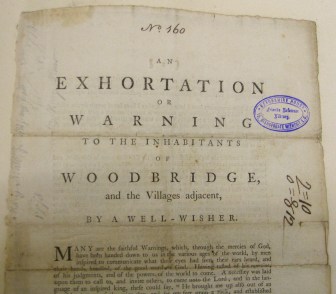
Mary Maw, Exhortation or warning to the inhabitants of Woodbridge..., published 1778 (Lib. Ref. Vol C/160)

Mary Maw, Exhortation or warning to the inhabitants of Woodbridge…, published 1778 (Lib. Ref. Vol C/160)

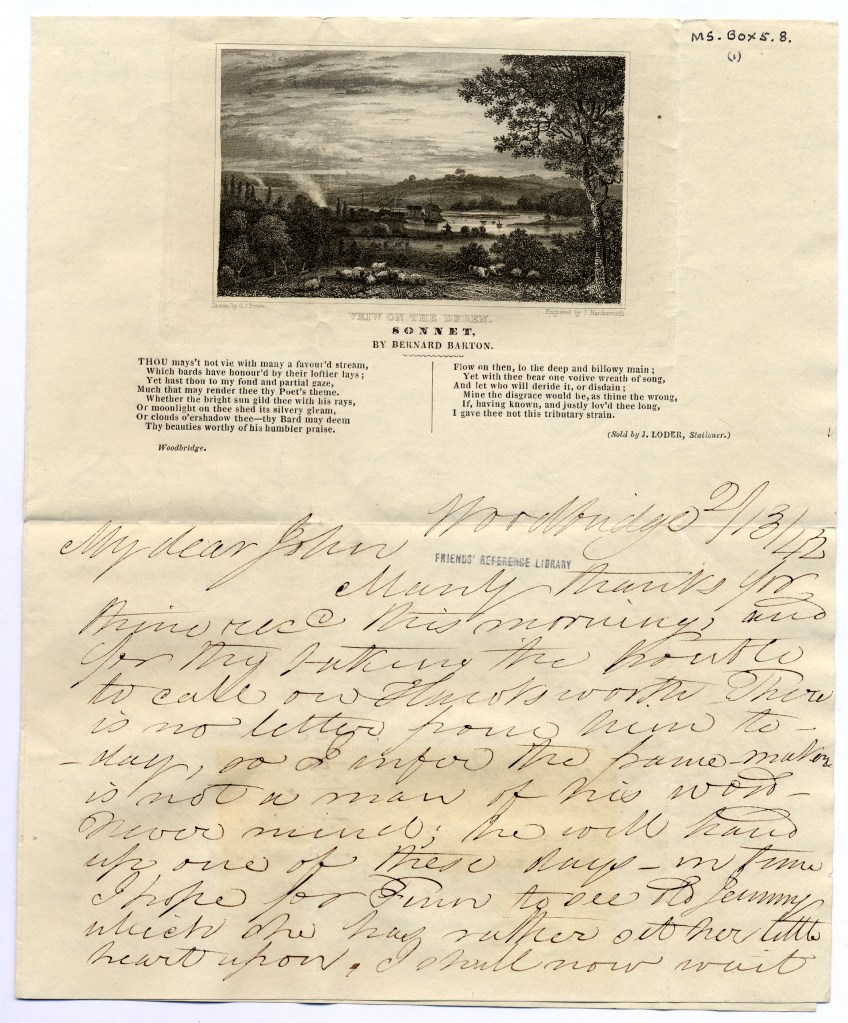
We always bring out material of local interest too. For Woodbridge Friends, the display included the estate agent’s brochure on the sale of their former meeting house in 1974 (Box 449/42),  Mary Maw’s  Exhortation or warning to the inhabitants of Woodbridge, and the villages adjacent, by a well-wisher, published in 1778 (Vol C/160), and the account by James Jenkins of his early years as apprentice to Hannah Jesup, grocer of Woodbridge, in the first volume of his Records and recollections (MS VOL S 196). Bernard Barton, the Quaker poet of Woodbridge, was also represented, with books of his poetry, articles about him from the Friends Quarterly Examiner and an article from The East Anglian concerning his grave in the Quaker burial ground.

Letter from Bernard Barton to John W. Candler, 13.ii.1842 (Lib. Ref. MS BOX 5/8/1)

Letter from Bernard Barton to John W. Candler, 13.ii.1842, on his own headed stationery (Lib. Ref. MS BOX 5/8/1)

Any Friends who would like to arrange a meeting visit to Friends House should contact Claire Martin in the Quaker Centre by email at clairem@quaker.org.uk.

Posted in News, Visits | Tagged , , | Leave a comment

World War I and its aftermath: cataloguing the papers of Hilda Clark (1881-1955)

We’re pleased to present a guest blog post from Emma Hancox, who recently spent two weeks at the Library as part of her archives and records management training.

As a student on the M.A. course in Archives and Records Management at University College London, I was fortunate to have the opportunity of a two week cataloguing placement at the Library of the Society of Friends. I had expressed a wish for a placement there because I knew that the Quakers had a reputation for being heavily involved in social justice, a subject in which I am particularly interested, and felt that the archives would be a rich record of this work. The collection I was given to catalogue did not disappoint. The personal papers of Hilda Clark (1881-1955), humanitarian aid worker and physician, brought to life Quaker relief work in war-torn Europe during and after World War I.

Hilda Clark

Hilda Clark (1881-1955)
(Lib. Ref. TEMP MSS 301/PH/1)

Hilda Clark, daughter of the well-known shoe manufacturer, William Stephens Clark (1839-1925), of Street, Somerset, trained as a physician in 1901. Her papers are a testament to her dedication to helping those in desperate need because of war and social and political turmoil. At the outbreak of World War I in 1914 Hilda Clark and others presented a concern to Meeting for Sufferings (the Society of Friends’ representative committee) that the Society of Friends should provide relief to French refugees. Having gained support she left for France on 5 November 1915 with a group of pacifist workers, mainly Quakers.

Hilda Clark wearing the Quaker star

Hilda Clark (1881-1955), wearing the Quaker star armband. ca. 1915
(Lib. Ref. PIC 89/A 217)

Letters to her close lifelong friend, Edith M. Pye (1875-1965), and sister, Alice Clark (1874-1934), provide moving accounts of conditions in the maternity hospital in Châlons-sur-Marne (now Châlons-en-Champagne) that Hilda helped to establish and later supervise. The papers also describe life in the convalescent home which she helped to set up for refugees in Samoëns in Haute Savoie, and her work with refugees in Paris.

The archive includes a photograph, mounted and signed by the team at the hospital, to be presented to Hilda Clark. Alongside the team, it shows a group of mothers proudly holding their new-born babies: it conveys the loving and attentive atmosphere created by Hilda Clark in an area torn apart by war. Postcards, also in this collection, show the aftermath of bombardments in Reims and evidence of the extent of the destruction in France.

Ward scene, Châlons-sur-Marne Maternity Hospital

Photograph of ward scene, Châlons-sur-Marne Maternity Hospital, ca. 1915. Signed by colleagues on the reverse, “With love from the Chalons equipe to Dr. Clark”
(Lib. Ref. TEMP MSS 301/PH/1)

Once the War was over Hilda Clark’s attentions turned to Austria and specifically to those affected by the blockade induced famine there. She spent time in Vienna administering aid and reported on conditions to the Friends War Victims Relief Committee. This period in her life is covered by correspondence to friends and family and through her collection of reports on Austria, which form part of the collection.

Hilda Clark’s involvement in the League of Nations, the Women’s Peace Crusade, and the Women’s International League for Peace and Freedom as well as her numerous fact-finding visits to countries such as Greece are also reflected in her papers, her peace work through letters, and her visit to Greece in 1923 through lantern slides which accompanied her talks. In the 1930s, Hilda Clark worked as a public speaker and broadcaster on international issues. She worked for the relief of child refugees from the Spanish Civil War and aided refugees from Nazi Germany and from Austria. In 1940, when her home in London was bombed, she moved to Kent. In 1952 she returned to Street, where she died on 24 February 1955.

The papers of Hilda Clark (TEMP MSS 301) provide an insight into a remarkable woman who gave up her own safety and comfort in order to help those affected by war, famine and racial discrimination: something we can all admire and learn from today.

Posted in Guest posts | Tagged , , , , , | 6 Comments