Football with the Foxes

Mention ‘Quakers’ to the average football fan and the response is likely to be something to do with Darlington. Darlington FC, founded in 1883, received its nickname because of the importance of Quakerism in the town, and its crest includes a stylised Quaker hat

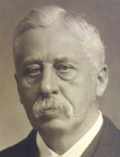
Joseph Whitwell Pease (1828-1903) (Wikimedia Commons)

However, it wasn’t the only football club with Quaker associations. Two years earlier, in March 1881, the Foxes Football Club was founded at the Friends Institute in Bishopsgate. Although based in London,  it too had a Darlington connection: its President for many years was Joseph Whitwell Pease (1828-1903), MP for South Darlington (left).

The Library has two volumes of the Club’s minute books (1881-1908 and 1919-1927. MS VOLS. 276-277), which provide a fascinating insight into the social and sporting life of Friends at the time. The Club didn’t function from 1915 to 1919 because of the First World War.

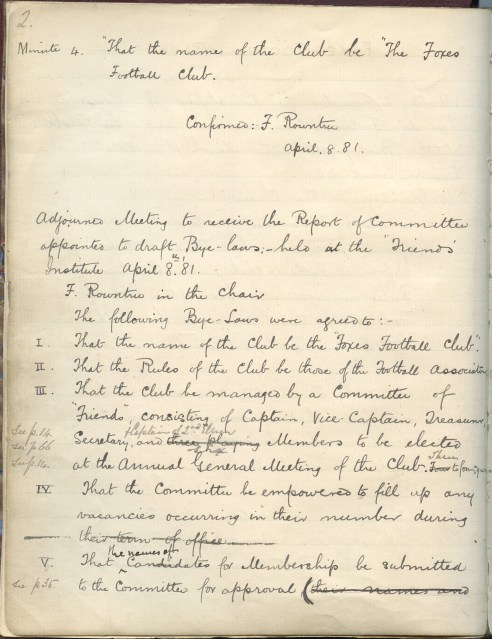
Foxes Football Club Minute Book 1881-1908

Foxes Football Club Minute Book 1881-1908 (MS VOL 276)

At first members of the Club had to be members of the Society of Friends or connected in some way with it. The 14 byelaws agreed in 1881 included rule 12, “that any member making himself obnoxious or refusing to conform to the rules of the club be liable to expulsion”, and rule 14, which decreed that “the Club provide no intoxicants”. Any member who was selected and then didn’t play was fined a shilling. The kit was white flannel shirts and trousers with a red band on each arm between the shoulder and elbow.

Foxes Football Club Byelaws

Foxes Football Club Byelaws, 8 April 1881
(MS VOL 276)

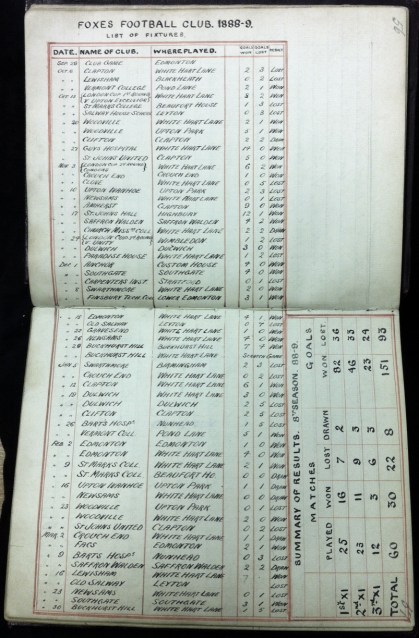
To the best of our knowledge, no history of the Club exists. The minute books give a vivid picture of its activities, including details of new members, officers and finances, and fixture lists. From them we learn that in October 1889 the Foxes beat Tottenham at West Green 15-0 (just plain Tottenham, not Tottenham Hotspur although they did play against the latter on several occasions). That year they also beat Kensington Rangers 10-2 in the first round of the London Cup held at Acton and in the previous year they were victorious against Guys Hospital 15-0 at White Hart Lane.

Foxes Football Club List of Fixtures

Foxes Football Club List of Fixtures, 1888-1889
(MS VOL 276)

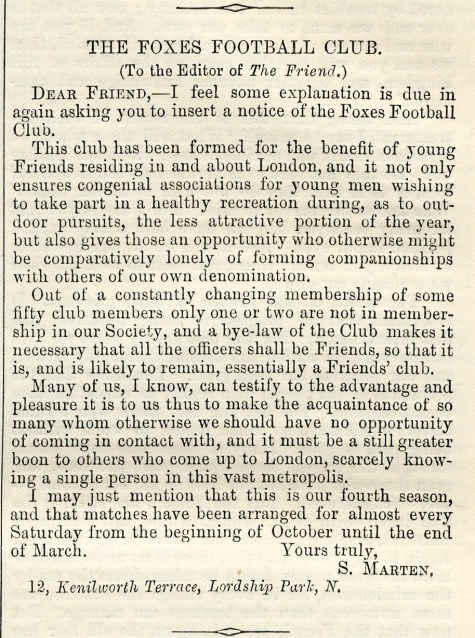
The Club was clearly seen as an important social meeting place for many young Friends. Its captain in the early days, Septimus Marten, wrote to the Quaker newspaper, The Friend, to encourage young Quakers to become members, and the minute books are dotted with details of social events.

The Foxes Football Club from 'The Friend'

‘The Foxes Football Club’, The Friend, volume XXIV,
number 288 (1 October 1884) p. 259

In 1888 there were long drawn–­out plans to hold a soirée “which should consist in the main of a farce and a comedy”. The event was to be held at either the Friends Institute or the Devonshire Hotel, with “a considerable interval for social intercourse and the inspection of interesting objects”. The event was postponed for lack of a suitable venue, and debate about what form it should take continued, with one group wanting “a play in two or three acts interspersed with songs etc., if possible preceded by a tea” and another preferring “more of a social opportunity … [consisting of] a conversazione etc”. In October 1893 the Club planned to entertain the Swarthmore team at the Small Hall of the Highbury Athenaeum, but this was too costly and they instead approached the Institute Committee for permission to hold the event at Devonshire House “with a view of putting the Club to as little expense as possible.” One year the minutes record a simple decision not to admit women to the Club, and on another occasion a proposal that ”female talent be admitted” [their underlining] was lost by 12 votes to 14. The Swarthmore team were not the Club’s only Quaker opponents. They also played against many of the Quaker schools, including Ackworth, Bootham, Saffron Walden and Sibford.

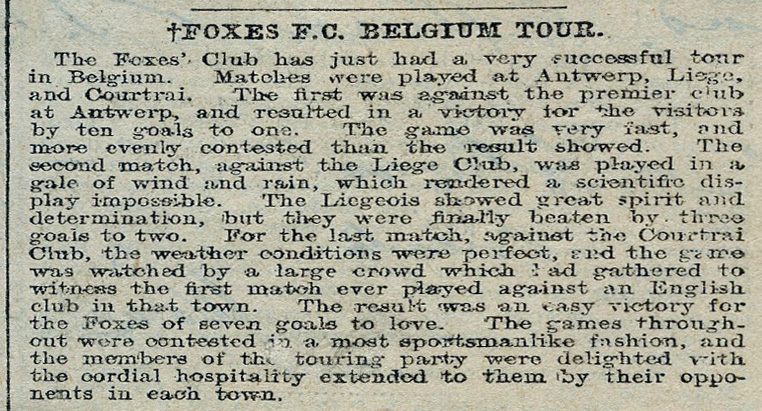
The Club featured in the wider press, particularly in London, as well as the pages of The Friend. The Sportsman records their 1901 tour of Belgium, where they played against Liège, Antwerp and Courtrai.

'Foxes F. C. Belgium Tour'

‘Foxes F. C. Belgium Tour’, The Sportsman, 11 April 1901 (MS VOL 276)

And in 1892 the Evening News and Post reported a fascinating encounter between the Quaker Foxes and the Scots Guards football team:

“The tie between the 1st Scots Guards and the Foxes ended in a victory for the soldiers by 5-2. This may be a bit of a surprise, but I am told that the Foxes for a number of reasons had to play no less than five of their reserves. In spite of this the score was two all at half time. Then the three half backs of the Foxes were all crippled and the referee allowed a palpably offside goal. I regret to say that the Guards played anything but a gentlemanly match. One of their players who was twice cautioned by the referee for tripping should have been ordered off the field. The referee seems hardly to have known his business. He acknowledged he had made a mistake about allowing one goal. And infringed rule 11 by not appointing neutral linesman in the face of a protest. The Foxes have good grounds for a protest, but as I have had occasion to remark before, they are too good sportsmen for that kind of thing.”

Posted in Highlights | Tagged , , , | 4 Comments

The Ploughshare, voice of Quaker Socialism

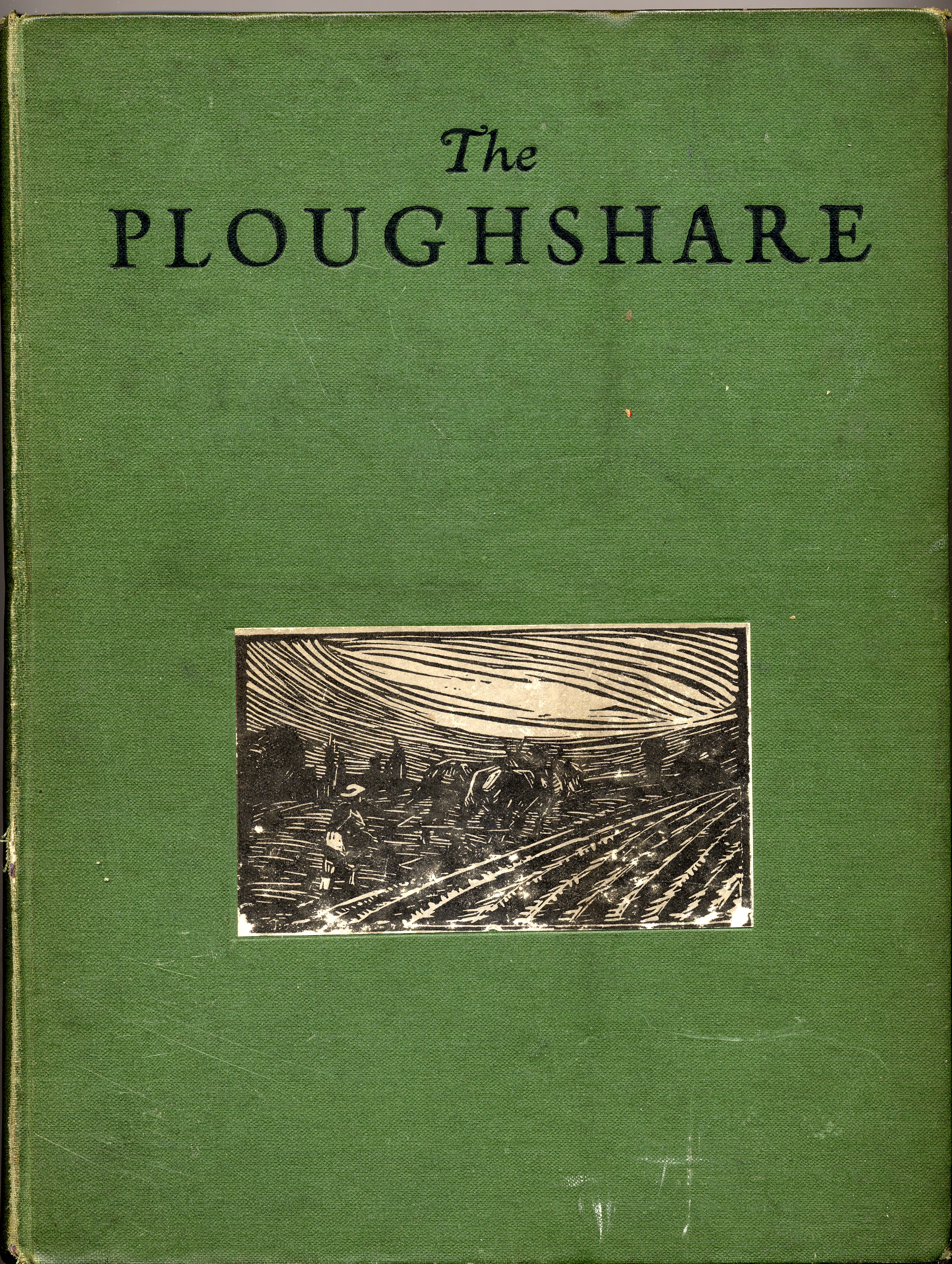
Bound volume of The Ploughshare

Bound volume II of The Ploughshare (1917)

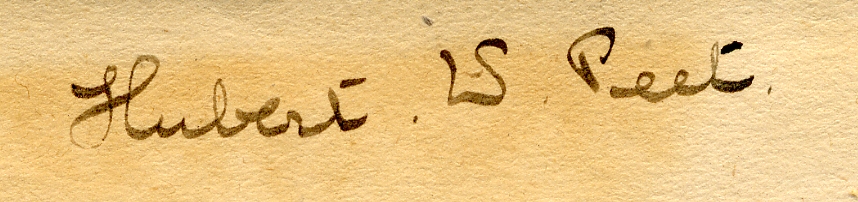
The Ploughshare was a quarterly, later monthly, journal published by the Socialist Quaker Society (SQS) between 1912 and 1919. It was edited by William Loftus Hare (1868–1943) and Hubert W. Peet, (1886–1951), who was so committed to the journal and its cause that he continued to be involved in its production even when he was imprisoned as a conscientious objector during the First World War from 1916 to 1919.

Signature of Hubert W. Peet

Signature of Hubert W. Peet from The Ploughshare, volume II (1916)

In the later 19th and early 20th century, Friends became ever more concerned with issues of social inequality and militarism. It was against this background that the Socialist Quaker Society (SQS) was founded on 2 April 1898 when Mary O’Brien, James Theodore Harris, Thomas Dent (1867–1943), H. G. Dalton and five other Friends met at 27 Yonge Park, London.  The SQS aimed to educate Friends about socialism and promote it as a solution to the problems of the day.

The Ploughshare, as well as being the official journal of the SQS, played an important role as a platform for anti-war sentiments during the First World War. Floyd Dell (1887–1969), editor of the New York Marxist paper Masses, wrote to The Ploughshare describing it as “a beautifully printed, admirably written [and] very impressive paper” (Three Letters. The Ploughshare, volume I, number 6 (1916) p. 196).

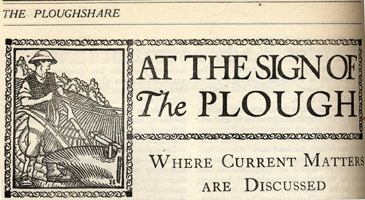
At the sign of the Plough

‘At the Sign of the Plough : where current matters are discussed’ section title, The Ploughshare, volume II, number 8 (September 1917), p. 251

The history of The Ploughshare can be divided into three distinct periods. Issues 1 to 12 (1912–1915) were published quarterly with the subtitle, “Organ of the Quaker Socialist Society”. From 1916 it started a new series, published monthly in a larger format, with the subtitle, “A Quaker Organ of Social Reconstruction”. Finally, after the SQS ended its association with The Ploughshare in 1919, it would continue for one more volume as an independent publication (this volume is not held at the Library).

As well as publishing articles by the likes of Stephen Hobhouse, peace activist, prison reformer and religious writer (1881–1961), Alfred Salter, medical practitioner and Labour Party politician (1873–1945), and Horace Bertram Pointing, artist and playwright (1891–1976), The Ploughshare counted Dorothy Richardson, writer (1873–1957), Bertrand Russell, philosopher (1872–1970), and Fenner Brockway, anti–war activist and politician (1888–1988) among its contributors.

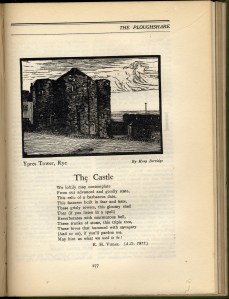
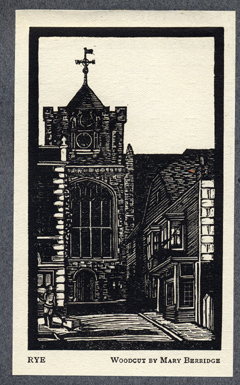
The Castle, a poem by E. H. Visiak, 1917

The Castle, a poem by E. H. Visiak, 1917, with woodcut of Ypres Tower, Rye, by Mary Berridge. The Ploughshare, volume II, number 9 (October 1917), p. 255

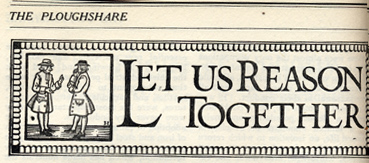
The journal also included poetry, book reviews, news of other “progressive movements” and lively correspondence under the heading “Let Us Reason Together”. It regularly ran essays on mysticism and religious thought, and Quaker pacifist principles. This perhaps placed it in a unique position among anti–war publications.

Let Us Reason Together, 1917

‘Let Us Reason Together’. The Ploughshare, volume II, number 2 (March 1917), p. 33

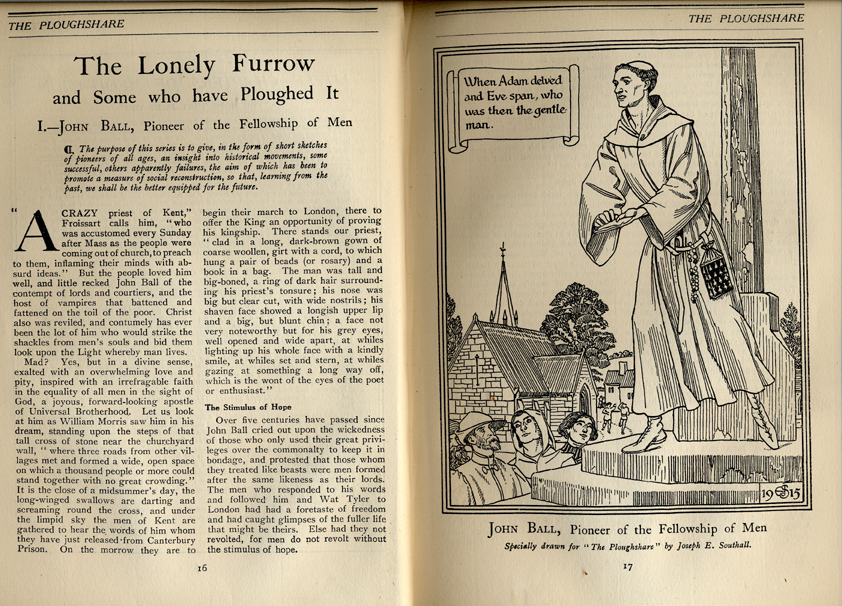
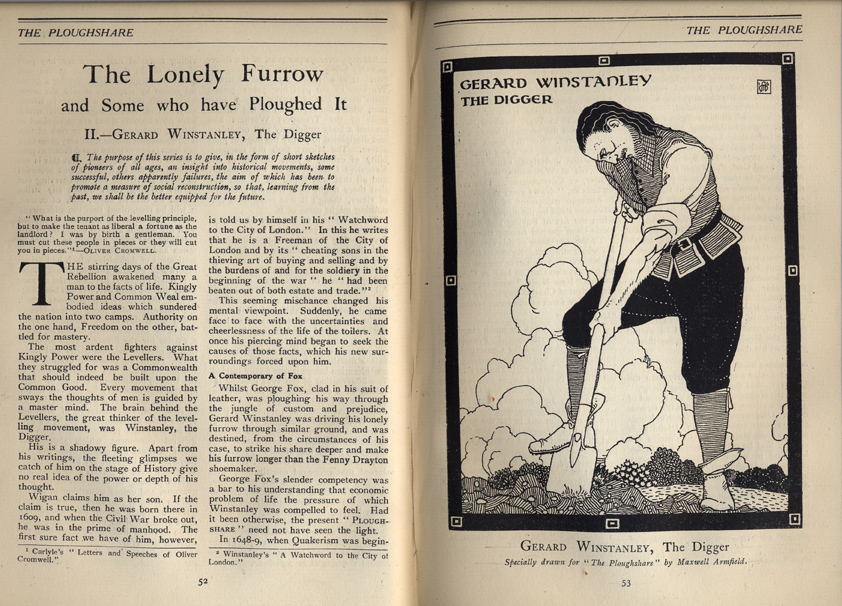
The series, “The lonely furrow and some who have ploughed” not only includes biographical overviews of prominent Friends such as George Fox (1624–1691), William Penn (1644–1718) and John Woolman (1720–1772), but also  thinkers such as Socrates, Confucius and Erasmus, recent pacifists such as Francis Sheehy Skeffington (1878–1916) and Clifford Allen (1889–1939), and historical figures such as John Ball, the 14th century Lollard priest, and Gerrard Winstanley, Digger (1609–1676). These articles included beautiful illustrations by the likes of Joseph Southall (1861–1944). The journal frequently carried both commissioned and reproduced artwork (particularly woodcuts) from 1916 onwards.

John Ball, Pioneer of the Fellowship of Men, February 1916

William J. Holland. John Ball, Pioneer of the Fellowship of Men. The Ploughshare, volume I, number 1 (February 1916), p. 16-17

Gerard Winstanley, the Digger, March 1916

L. H. Wedmore. Gerard Winstanley, the Digger. The Ploughshare, volume I, number 2 (March 1916), p. 52-53

The Ploughshare had several women on its advisory council and regularly ran articles on women’s rights (using the term “feminism” in the title of articles on at least two occasions) and had a large number of female contributors. Dorothy M. Richardson, The Reality of Feminism (The Ploughshare, volume II, number 8 (September 1917), pp. 241-246) and Emily Hobhouse, Comforting the Enemy and Coals of Fire (The Ploughshare, volume I, number 11 (December 1916), pp. 339-341) being just two examples.

Woodcut of Ypres Tower, Rye, by Mary Berridge, September 1917

Woodcut of Ypres Tower, Rye, by Mary Berridge. The Ploughshare, volume II, number 8 (September 1917), opposite p. 223

The paper addressed issues of the day, such as Irish nationalism. It was sympathetic to the subject of Indian home rule and generally took an internationalist stance. An article from October 1919 took a critical line on the behaviour of Britain and other “great powers” in Iran.

The Ploughshare is a fascinating periodical for those interested in early 20th century Quakerism, Christian socialism and the development of the British socialist and anti-war movements in general.

Posted in Highlights | Tagged , , , | 5 Comments

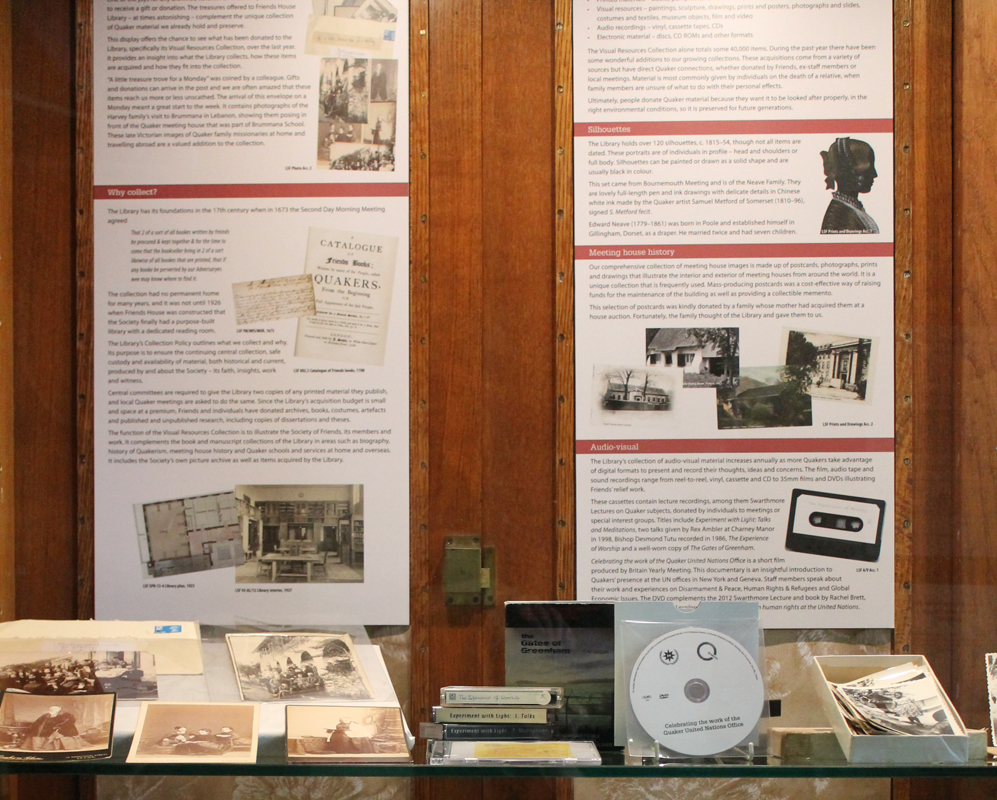
A little treasure trove for a Monday: some highlights from our latest display

detail of display panel and photosOur latest display in the reading room is something of a salmagundi. We decided to pick out a selection of the items donated to the Library’s visual resources collection over the past twelve months, just to demonstrate the wide range of the collection. We chose the title “A little treasure trove for a Monday” to capture the excitement of unpacking a new accession for the first time – often an unexpected delight. You can see the display until Friday 17 May during Library opening hours, but if you can’t make it, here are some highlights.
The visual resources collection (photographs, including a substantial collection of lantern slides, paintings, drawings, prints, posters, costumes and three dimensional artefacts) complements the Library’s printed and manuscript collections for all sorts of Quaker biographical, historical, local, and architectural research, and for research on Quaker work in Britain and overseas. It includes the Society’s own picture archive as well as items acquired by the Library – altogether a total of roughly 40,000 items.

During the past year there have been some wonderful additions to this growing collection. These acquisitions come from a variety of sources but most have direct Quaker connections, whether Friends, ex-staff members or local meetings. Material is sometimes received as a bequest after the owner’s death or from families sorting out a relative’s personal effects.

Ultimately, people donate Quaker material because they want it to be accessible, and looked after properly, in the right environmental conditions, so it is preserved for future generations.

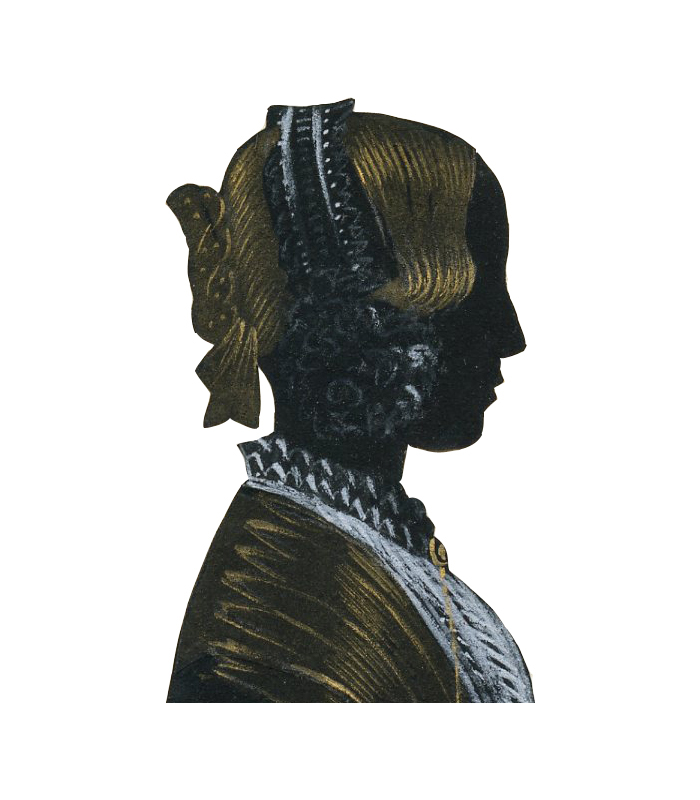
Silhouettes of the Neave family

The Library holds over 120 silhouettes, dating mainly from the first half of the 19th century. These portraits are of individuals in profile – head and shoulders or full body. Silhouettes can be painted or drawn as a solid shape and are usually black in colour. The Library holds several books about Quaker silhouettes – you can find out more by searching for the subject “silhouettes” on our online catalogue.
This set came from Bournemouth Meeting and is of the Neave Family. They are lovely full-length pen and ink drawings with delicate details in Chinese white ink made by the Quaker artist Samuel Metford of Somerset (1810–1896), signed S. Metford fecit.
Edward Neave (1779–1861) was born in Poole and established himself in Gillingham, Dorset, as a draper. He married twice and had seven children.

Silhouette of Mary Neave

Silhouette of Mary Neave (born Hunt), 1814 (Lib. Ref. LSF Prints and Drawings Acc. 1)

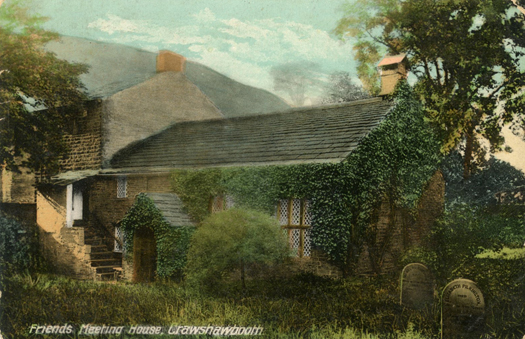
Meeting house postcards

Our comprehensive collection of meeting house images is made up of paintings, drawings, photographs, prints and postcards illustrating the interior and exterior of meeting houses from around the world. It is a unique and frequently used collection. Mass-producing postcards were a cost–effective way of raising funds for building maintenance as well as providing a collectible memento.

This selection of postcards was kindly donated by a family whose mother had acquired them at a house auction.

Crawshawbooth Meeting House

Crawshawbooth Meeting House (Lib. Ref. LSF MH)

Dolls and textiles

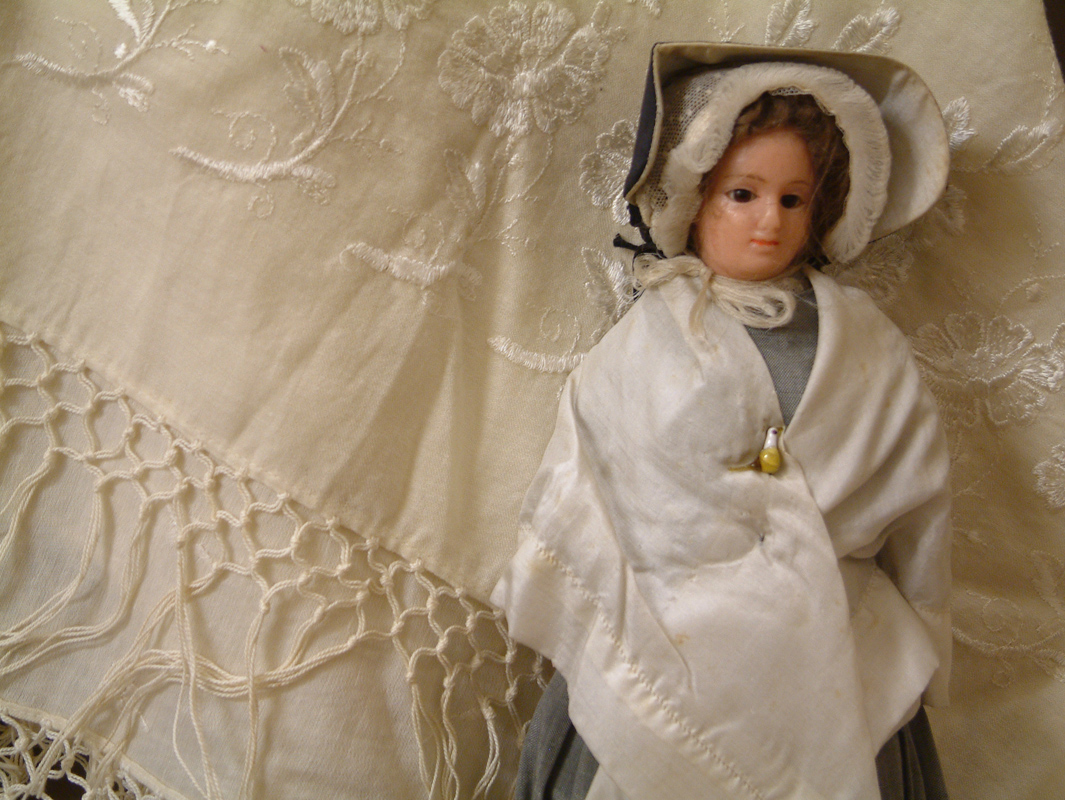
With 50 dolls and 54 shawls already held by the Library, this gift of a shawl and doll fits perfectly. The doll’s bonnet and shawl are pinned with a delicate glass bird, and her wax head, glass eyes and bisque body indicate she is from the late 19th century. Our dolls range from traditional 19th-century examples to wood carvings made by prisoners of war on the Isle of Man during World War I.

Quaker doll and shawl

Quaker doll and shawl (Lib. Ref. LSR MO 729)

Plain dress was one of the distinguishing features of Quakers in the past – and quite a struggle for some to adhere to. While a distinctive form of dress has long gone, simplicity is still an important part of Quakerism. According to Quaker faith & practice, “The heart of Quaker ethics is summed up in the word ‘simplicity’ … Outwardly, simplicity is shunning super­fluities of dress, speech, behaviour and possessions, which tend to obscure our vision of reality” (Quaker faith and practice, 4th edition, 2009, 20.27).

Most Quaker women dressed in monotone colours without adornment. The shawls in our collection are an assortment of fabrics and colours (white, cream, grey, brown, blue and black). They feature simple designs and date from 1815 to the 20th century. This cream shawl is from the early 20th century and is embroidered with white silk thread flowers.

Photographs and slides dominate the visual resources collection, with at least 25,000 photographic prints individually catalogued and in albums, 9,000 35mm slides and 2,000 glass plate lantern slides.

Olive Prescott collection of slides and photographs

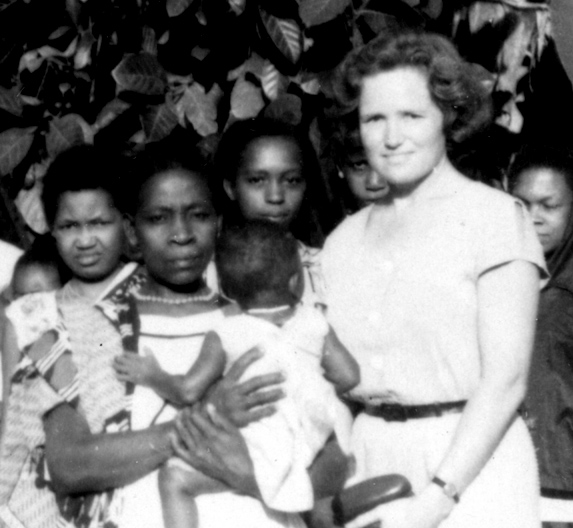
The Olive Prescott collection is a personal archive of slides and photographs from her time in Africa working for Friends Service Council (FSC) from 1963 to 1969. Olive Prescott (1931–2011) was a Quaker with a background in social work and publishing. She travelled to Kenya in March 1963 to assist Walter Martin, the FSC representative in Nairobi. As well as helping to run classes at the Mucii Wa Urata rural training centre and the Ofafa community centre, she was involved in the administration of work camps and committees for the Christian Council of Kenya, particularly in relief and refugee work. After several years of political unrest, Kenya and Zanzibar gained independence from colonial rule in December 1963. FSC’s Nairobi office closed in 1965.

Olive Prescott in Africa

Olive Prescott (Lib. Ref. LSF Photo Acc 1)

Olive was then seconded to East Africa Yearly Meeting of the Society of Friends, moving to Kaimosi in 1967 to serve as Literature Secretary. She worked in the bookshop and on the Mufrenzi magazine. She also researched a series of biographies of early African Friends and, before leaving FSC in 1969, wrote a book for people preparing for Quaker membership.

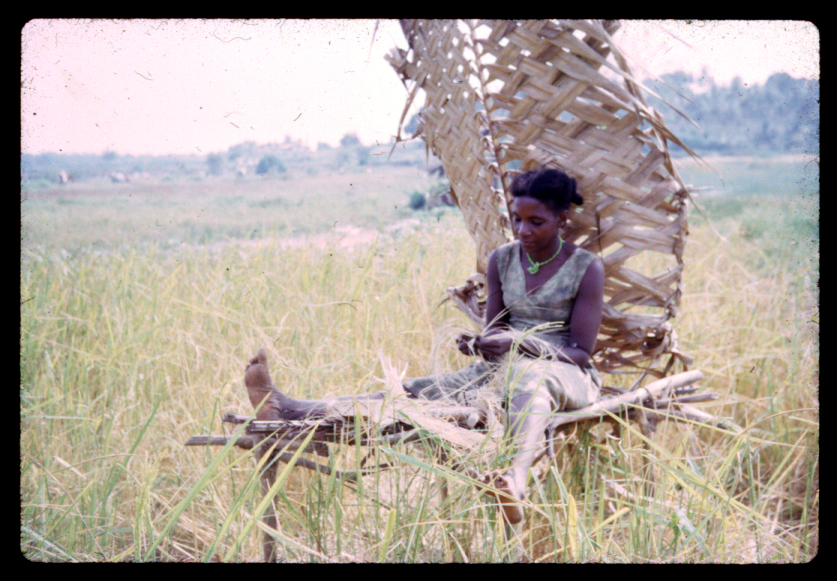
Woman plaiting mats

Woman basketweaving

If you want to find out more about the visual resources collection, or are considering donating visual material, please contact the Library, using the link on the right hand side of this blog page.

Posted in Exhibitions, New accessions | Tagged , , , , | Leave a comment

Goodbye to Volume H!

Some of the Library’s rarest printed items are ephemeral publications, pamphlets, broadsides and single sheet circulars, ranging from the 17th century to the present day. Their survival is unusual, and owes much to the way they have been stored, often bound together into guard books or tract volumes. These bindings keep the contents relatively flat, clean and dry, but present their own problems. A variety of differently sized items bound together, sometimes folded up to fit within the volume, can be vulnerable to dust, damage to protruding pages and tearing at folded edges when they are opened out for use.

One of these tract volumes is – no, was – volume H, a four inch thick binding of 225 mainly late 18th to 19th century items.

Tract vol H uncased

Tract vol. H, uncased. Photograph from the conservator.

The volume was bound in 1951 to accommodate 225 separate publications – reports, posters, newspaper cuttings – of different sizes.  Very large sheets had been slit in two and each leaf pasted to a guard. Some items were directly sewn into the binding, others folded and sewn. With regular use by readers, new folds had been made and new sequences of folds attempted. Unfolding had become like solving a puzzle in an effort to prevent further tears along the weakened folds and crossings. Although the volume had a protective slip-case,  London’s sooty dust could be seen not only on the irregular top edges but drifting down between the individual sheets too.

What kept researchers coming back to this volume was its contents. The spine read: “Tracts H – On slavery. The War Victims &c.”, and these miscellaneous contents included reports of the Friends War Victims Fund on the Franco-Prussian War of 1870/1, reports of the relief work Quakers carried out in Nantes, appeals for funds for child war victims in Eastern Europe (1876), and a tri-lingual poster for the Quaker Relief Fund for Distressed Peasantry.

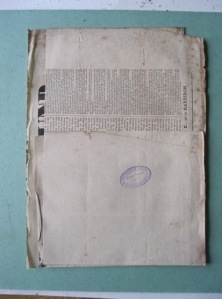
War Victims Fund poster, Vol. H/38

War Victims Fund poster. Photograph from the conservator after disbinding and before unfolding and conservation
Ref.: Vol. H/38

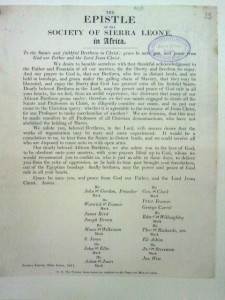
Among the slavery related publications were multiple issues of the British and Foreign Anti-Slavery Reporter of 1844, and surviving circulars from a wide range of anti-slavery organisations – local anti-slavery committees in Nottingham, Bradford, and Settle, the Society of Sierra Leone and the Quaker inspired Society for the Abolition of the Slave Trade, the first such committee.

Epistle of the Society of Sierra Leone (1811)

The epistle of the Society of Sierra Leone, in Africa : to the saints and faithful brethren in Christ [etc.] (1811)
Ref. Vol. H/75

Besides these, there were news clippings from the 1780–90s and appeals to boycott slave produced sugar.

East India Sugar Basins

East India sugar basins. B Henderson, china-warehouse, Rye-Lane, Peckham. – [London] Printed at the Camberwell Press, by J.B.G. Vogel [ca. 1828]
Ref.: Vol. H/22

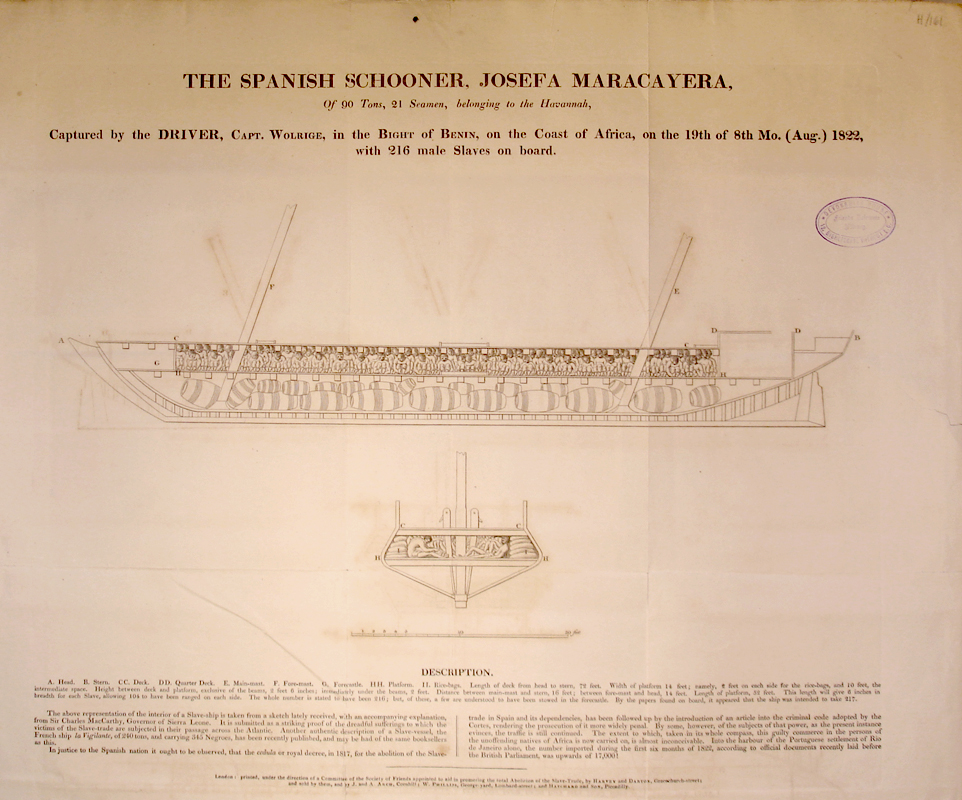
No less interesting were the publications showing diagrams of the lower decks of slave ships – vivid pictorial representations of the suffering conditions endured by the victims of the slave trade.

Plymouth Society for the Abolition of Slavery slave ship plan

Plymouth Society for the Abolition of Slavery. Plan of an African slave ship’s lower deck
(Plymouth : Trewman and Haydon, printers, [1789?])
Ref.: Vol. H/85

So what has become of Volume H?

Using funds from the BeFriend a Book appeal fund, this tired volume was finally dispatched to a conservator for full dis-binding and repair of the contents. After separation of each component item, the surface dirt was carefully removed, the dog-ears and creases eased away, and the tears and small paper losses made good with Japanese papers and wheat starch paste. Items which had been tipped, or glued together were separated, and the folded items flattened.

The separate items previously bound together are now individually stored in protective transparent sleeves and securely housed in appropriate sized boxes. Researchers can now examine the extraordinary slave ship plan published by the Plymouth Society for the Abolition of Slavery, or the plan of the Spanish schooner Josefa Maracayera, without dread of tearing – cleaned, repaired and far easier to handle.

Josefa Maracayera slave ship plan 1822

Cross section plan of a slave ship
[Plan of] the Spanish schooner, Josefa Maracayera of 90 tons, 21 seamen, belonging to the Havannah, captured by the Driver, Capt. Wolrige, in the Bight of Benin, on the coast of Africa, on the 19th of 8th mo. (Aug.) 1822 with 216 male slaves on board (London : printed under the direction of a Committee of the Society of Friends appointed to aid in promoting the total abolition of the slave-trade, 1822)
Ref.: Vol. H/161

Posted in Collection care | Tagged , , , , , , | 6 Comments

Readers’ stories: the Elbow Lane Scandal, chit chat and serious stuff

The second in our series of readers’ stories is from Bill Chadkirk, a former member of Friends House staff. Once we’d stopped blushing at the compliments we realised we had to blog Bill’s light hearted account of doing research in the Library: otherwise he might stop sharing his bottomless fund of jokes.

Bill is currently researching Quaker membership and theology over the 19th and 20th centuries for an MPhil at Birmingham University. His interests also include the work of the Friends Ambulance Unit and Friends Emergency & War Victims Relief Committee during World War One and Quaker relief in Russia 1916–1923


I can’t speak for other Library users but I know that once I’ve negotiated the rather aggressive automatic doors and entered the Reading Room, I relax. It looks like a library, book lined from floor almost to ceiling; it sounds like a library, quiet and studious; and it smells like a library, the peculiar odour of old leather, paper and polish that all serious libraries have.

Did I say serious libraries? Only serious in the sense that it is an important, purposeful library. The staff are far from serious. They are a friendly and open bunch, always willing to share a joke, some titbit of Quaker arcanery, a comment about the weather or some of their extraordinary expertise and knowledge. I sometimes wonder if there was ever a Quaker whose life story is not known to one member of staff or another, or whether there is a book, file or archive that one or the other has not pored over and committed to memory. I suppose there must be, but in years of using the library I haven’t experienced a single failed request for information. Well, there was one, but I was directed to a retired librarian who answered by return of post!

And the richness of the Quaker stories locked away in the basement stacks!  There are enough to keep the idly curious and the serious scholar engrossed for many a long session. Among my favourites are the Elbow Lane Scandal in which a respectable Friend attending London Yearly Meeting was imprisoned by the madam of a brothel on, yes, Elbow Lane, until he paid a ransom. Then there was John Tawell, a Quaker who slew his mistress in Slough and was caught by means of the newly invented electric telegraph. And then in the 1980s I came in on the tail end of Quaker work in the Soviet Union. Realising I lacked a historical background, I embarked on a history degree and when it came time to write a final year dissertation I asked the then Librarian, Malcolm Thomas, for suggestions. He offered Quaker work in Russia during the 1917 revolution or Quaker diplomacy around the building of the Berlin Wall. I chose the former and ended up writing a dissertation, The Imperial eagle and the Quaker dove, on Quaker contact with both the Czarist and Communist authorities from Peter the Great onward. I have rarely had so much sheer fun in an academic task! The story of Quakers and the Berlin Wall remains to be written…

I’m still using the Library. I’m going there as soon as I put the final full stop to this. All I’m currently doing is checking my transcription of hundreds of figures from the Tabular Statement (the annual statement of membership of the Society of Friends in Britain)  into a spreadsheet, but I’m really looking forward (as I always do) to using the Library of the Society of Friends.

If you’d like to be in touch with Bill about his current research into membership of the Society of Friends, you can contact him care of the Library. He’d be particularly interested to hear from anyone who has kept records of attendance at their Quaker meetings over any period of time.

Posted in Readers' stories | Tagged , | 3 Comments

Charles Holden, London Underground architect: a passion for beauty and for service

For Londoners and visitors alike navigating our great metropolis is likely to involve a descent into the earth, a tremendous gust of whistling wind and a warm, rattling rush beneath the familiar streets of this city. Our experiences of life in London are shaped by those journeys – by the trains, the passenger information systems and the design of the stations and interchanges.

This year sees the 150th anniversary of the London tube: the world’s very first underground train made its first passenger journey from Paddington to Farringdon on 9 January 1863. The anniversary will be marked by all sorts of celebrations, including heritage outings and events organised by the London Transport Museum (Tube150) and a conference at the Centre for Metropolitan History at London University  (Going Underground, 17-18 January, Institute of Historical Research).

Arnos Grove Underground Station

Arnos Grove Underground Station. Photograph by jelm6 on Flickr

One name which will come up again and again during the anniversary year is that of the architect Charles Holden (1875-1960), who designed numerous tube stations during the 1920s and 30s, commissioned by Frank Pick, general manager of the Underground Electrical Railways Company of London.  Holden was the architect of the remarkable London Underground headquarters at 55 Broadway, SW1 (the tallest steel framed office building in London when it opened in 1929, and later listed as one of “Pevsner’s Fifty”), as well as tube stations from Cockfosters to Morden, Sudbury Town to Wanstead. In addition to his stations he also designed equipment and furniture, and made a great contribution towards a coherent visual identity for the underground system.

While many of Holden’s stations have been completely remodelled in the intervening decades, most visitors to London will have passed through some of them. Who has been to London and not wandered around the underground booking hall and circulating area at  Piccadilly Circus, designed by Charles Holden (completed in 1928 at a cost of over half a million pounds)?

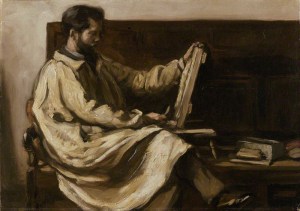
Charles Holden by Benjamin Nelson

Charles Holden, by Benjamin Nelson. Oil on canvas, 1910. National Portrait Gallery NPG 6808
© National Portrait Gallery, London
(CC BY-NC-ND 3.0)

Charles Holden and his partner Margaret Macdonald (who wrote books and articles on country life as Margaret Holden) lived at Harmer Green, Hertfordshire, from 1907 until the end of their lives, and attended Hertford Quaker Meeting, although neither were formal members of the Society of Friends.  Margaret served with the Friends Emergency Committee for the Assistance of Germans, Austrians and Hungarians in Distress during World War One. Holden described himself as “nine-tenths Quaker”, and after his death in 1960, his ashes were scattered in the garden at Hertford Friends’ Meeting House

Apart from his work for the London Underground, Holden’s architectural legacy includes the former British Medical Association Headquarters on the Strand (now Zimbabwe House), notorious at the time for the sculptures of nude figures by Jacob Epstein representing the development of science and the ages of man (Epstein’s first major commission). The public uproar against nudity in Epstein’s sculptures did nothing to discourage Holden from commissioning him for the London Underground headquarters at 55 Broadway (besides sculptures by Eric Gill, Henry Moore and Samuel Rabinovitch, among others), and he wished he could have used his work again in the design of London University’s iconic and controversial Senate House.

Jacob Epstein Day and Night

Jacob Epstein’s Day and Night (1928) Portland Stone, carved for London Underground Headquarters at 55 Broadway.
Photograph © Andrew Dunn, 29 September 2004, from Wikimedia Commons
(CC BY-SA 2.0)

Which leads one to wonder – how different might Friends House have looked, had the architect been Charles Holden instead of Hubert Lidbetter?

Charles Holden’s style changed over his career, but was distinguished by simplicity and modernity. Nikolas Pevsner credits his underground stations with helping to “pave the way for the twentieth-century style in England” (An outline of European architecture, 7th ed., Pelican, 1963). To quote himself, Holden had a “passion for building and for service … [and] an invincible belief in the power of the human soul, the God in man, to rise above and master ugliness and desolating conditions.” (Adams, Holden and Pearson archive, RIBA BAL, AHP/28/23/1)

Further reading

In the Library:

Christian Barman, The man who built London Transport: a biography of Frank Pick. Newton Abbott: David & Charles, 1979

Eitan Karol, Charles Holden, architect. Donington: Shaun Tyas, 2007

David Lawrence, Bright underground spaces: the railway stations of Charles Holden. Harrow Weald: Capital Transport Publishing, 2008

Edward H. Milligan, Quakers and railways. York: Sessions, 1992

Charles Holden, Letter from Charles Holden, London, to Samuel Graveson (11 December 1932) Samuel Graveson Papers.  Temp MSS 58/3/6  (“Dear Mr Graveson, You can ask me to design anything from a railway station to a university and I might be able to make somewhat of a charitable[?] job of it – but please oh! Please don’t  make me talk about it!”)

Online:

Charles Hutton, ‘Holden, Charles Henry (1875-1960)’, revised by Alan Crawford. In Oxford Dictionary of national biography. Oxford: OUP, 2004. Online edition Oct. 2007. http://www.oxforddnb.com/view/article/33927 (accessed January 2013)

David Burnell, A Quaker and the underground. London Historians, 2011. Online document. http://www.londonhistorians.org/index.php?s=file_download&id=27 (accessed January 2013)

‘Charles Holden’. In Wikipedia. http://en.wikipedia.org/wiki/Charles_Holden (accessed January 2013)

Posted in News | Tagged , , , | 7 Comments

Christmas pudding: a strange disorderly jumble and mishmash

For what excess of Riot, Uncleanness, Prophaneness, Intemperancies in Meat and Drinks, Words and Works, with all kinds of Superfluity of Naughtiness do the greatest number of People not commit in these days (which yet they call Holy) … Entertaining our selves … with Tables not only full spread, but over-charg’d with heaps of high rich-Compounded Foods, and a variety of strong Cordial drinks

Christmas contemplations (1688)

Not long ago an American bookseller offered the Library a copy of a rare 17th century pamphlet, entitled Christmas contemplations or, Some considerations touching the due keeping of that solemn festival, as likewise of several irregularities therein, too frequently practiced (London: Printed by George Larkin, at the Two Swans without Bishopsgate, 1688). Just one copy of this tirade against Christmas excess is recorded on the English Short Title Catalogue, and the bookseller had become rather excited. Its only indication of authorship was a printed signature at the end – “Your well-wishing Friend, T.T.” – from which he rashly concluded that the author must be a Quaker, most probably Theophila Townsend, author of An epistle of love to Friends in the women’s meetings in London (ca. 1680) and three other short works.

The attribution of authorship seemed unlikely. Not only was Christmas Contemplations absent from Joseph Smith’s magnificent Descriptive catalogue of Friends’ books (1867), but the entry for Theophila Townsend in the Oxford dictionary of national biography (by our reader Catie Gill) made no mention of it, nor any reason to suppose her to be the previously unidentified author.

After looking into the matter, we thought it much more likely that “T.T.” was actually Thomas Tryon (1634–1703) the vegetarian. The case was clinched when we found that Tryon’s collected Miscellania (London, 1696) included the work. We informed the bookseller, the editors of the English Short Title Catalogue and the owners of the only other known copy (St. John’s College, Cambridge), and their records were duly altered. Bibliographic satisfaction achieved.

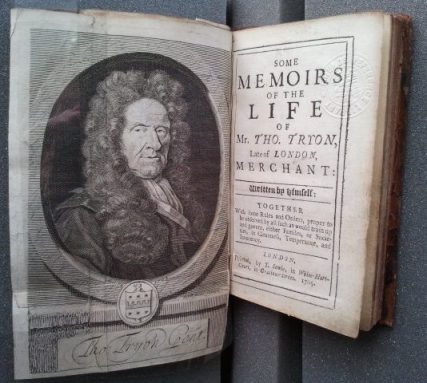
Tryon, Some memoirs

Some memoirs of the life of Mr. Tho. Tryon, late of London, merchant (London: printed, and sold by T. Sowle, 1705)

That wasn’t the end of it, though. As far as we knew, Thomas Tryon wasn’t a Quaker. Yet in our collection there were already two other works by him. Should Christmas contemplations have a place here too? If not a Quaker, what, if any, was the connection between Thomas Tryon and the Society of Friends?

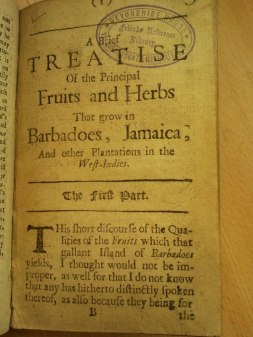
One of the books we held was a treatise on plants of the Indies and ill usage of slaves, bound into a volume of pamphlets: it might have been acquired by virtue of its companion pamphlets or because it was printed by a Quaker, or perhaps because of its views on slavery (Friendly advice to the gentlemen-planters of the East and West Indies, by Philotheos Physiologus. – [London]: Printed by Andrew Sowle, in the year 1684).

Friendly advice. Part 1

Part 1 of Thomas Tryon, Friendly advice to the gentlemen-planters of the East and West Indies (1684)

The other, however, was a copy of Tryon’s autobiography, Some memoirs of the life of Mr. Tho. Tryon, late of London, merchant: written by himself: together with some rules and orders, proper to be observed by all such as would train up and govern, either familes [sic], or societies, in cleanness, temperance, and innocency (London: printed, and sold by T. Sowle, 1705).

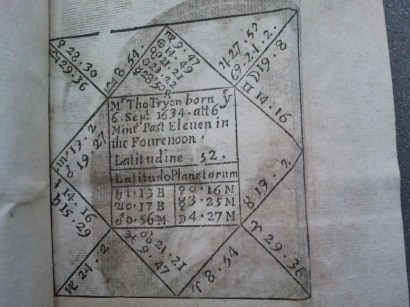
Thomas Tryon's birth chart

Thomas Tryon’s astrological birth chart from Some memoirs of the life of Mr. Tho. Tryon, late of London, merchant (1705). Folded frontispiece verso

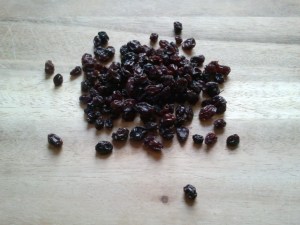
Tryon was a man of many parts – an extraordinary self-taught polymath and mystical vegetarian, who wrote advice books on health, household management, brewing, animal husbandry and cookery, education and manners. He was a hatter from Gloucestershire who lived most of his life in Islington, but spent some years in Barbados; a keen amateur musician (he studied the bass viol); and a proponent of strict and idiosyncratic views on temperance, fasting and vegetarianism. He advocated a simple diet, avoiding certain mixtures of foods, “strong” foods and spices as well as meat, which he condemned as the cause of all sorts of ailments, including gout, dropsy, fever, wind and insomnia. Puddings (“such as are enricht with various sorts of Spanish Fruits and Indian Spices” … “a strange disorderly jumble and mishmash”)  were a particular bug-bear, and currants were “most excellently fit to be thrown away to the Dunghil”.

Currants

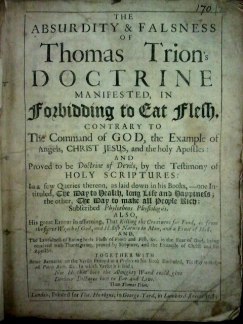
Although not a Quaker, he evidently engaged with Quakers at some level: possibly some were sympathetic to his views, others certainly hostile. Many of Tryon’s works were printed by Andrew Sowle, the official printer to the Quakers, including his enticingly titled and several times reissued Way to health, long life and happiness (1683) and The way to make all people rich (1685), and the posthumous Memoirs (1705) were printed by Tace Sowle, Andrew’s daughter and successor. The Sowles didn’t only print for the Quakers; their output included works by other non-conformist and radical writers. It’s noteworthy though that the Quaker John Field (1648?-1724), although not personally acquainted with Tryon, published a theological rebuttal of his vegetarian arguments – The absurdity & falsness of Thomas Trion’s doctrine manifested, in forbidding to eat flesh (London: Thomas Howkins, 1685).

John Field Absurdity & falsness

John Field’s refutation of Tryon’s vegetarian arguments, The absurdity & falsness of Thomas Trion’s doctrine manifested (1685)

Whether or not the friends who arranged the publication of Tryon’s Memoirs after his death included any Quakers, there was certainly some intersection between Tryon and the Quakers. Did any of them, we wondered, subscribed to his views on diet and fasting? In the end we didn’t buy Christmas considerations from the American bookseller, but we enjoyed the closer acquaintance with Thomas Tryon, gent., that ensued from his offer.

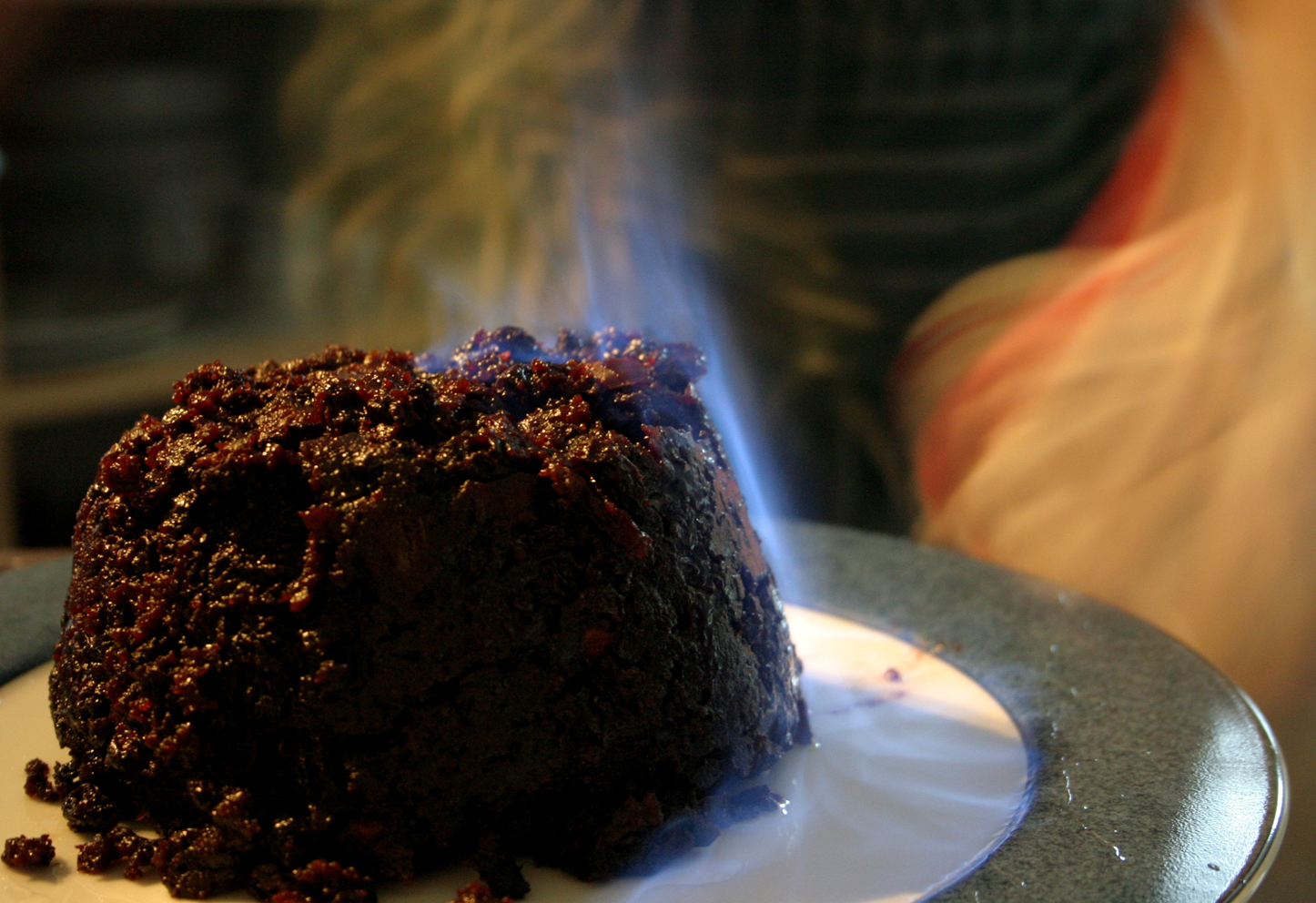
Those of us who are vegetarians may well relish Tryon’s impassioned invective against the flesh-eating habit. His esoteric views on the dangers of mixing food ingredients might have fewer adherents though. We fully intend to enjoy our Christmas Pudding, and we hope you do too.

Merry Christmas!

By Matt Riggott from Edinburgh, Scotland (Christmas Pudding Uploaded by fluteflute) [CC-BY-SA-2.0 (http://creativecommons.org/licenses/by-sa/2.0) ], via Wikimedia Commons

Posted in Highlights | Tagged , , , | 7 Comments

Cleanliness is a fine life-preserver: a strongroom is cleaned

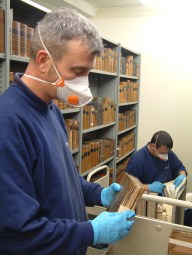
Harwell cleaners at work.

On venturing into one of our strongrooms on the 19th November you would have been forgiven for thinking you had walked onto the set of a sci-fi film, with men in masks, plastic sheeting and strange equipment.

For the last three weeks, Harwell Document Restoration Services, a specialist company with experience of handling archive and library collections, has been cleaning one of our strongrooms; walls, floors, ceilings, shelving, cupboards, light fittings and collections.

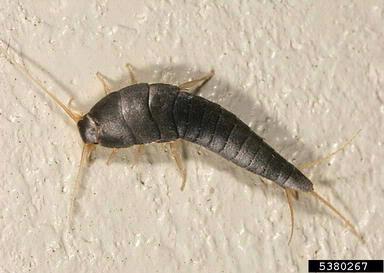
Dust found in libraries and archives is likely to contain mould spores, pest detritus, skin cells, textile fibres, degraded leather and other matter. It enters strongrooms though doors and by people, or was already present on material when it was donated. The Library, therefore, has a regular cleaning programme to prevent the build up of dust to levels that may cause a nuisance to users and damage to our collections. Handling dirty items is not only unpleasant, but can be a health risk, allergies can be triggered. Dust also attracts pests such as moths, booklice, silverfish and carpet beetles which can destroy text blocks and bindings.

Silverfish

Silverfish (from Bugwood.org. Creative Commons licence)

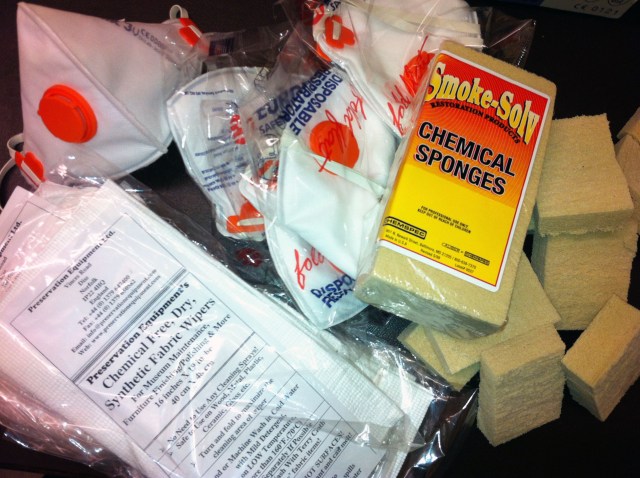
Harwell used dry cleaning methods and avoided cleaning agents and liquids, which cause often irreparable damage to collections. For each type of material, be it a volume, box or unbound papers, there is a different way of cleaning. “Dust bunnies” (soft cloths) were used for cleaning most bindings, and soft natural bristle brushes used for leather, bookcloth, paper, suede, parchment and vellum bindings, where cloths can be abrasive. Smoke sponges and low suction vacuum cleaners were used to clean text blocks in good condition and where possible, dusting trays and boxes were employed to reduce the amount of dirt spread around during cleaning.

Cleaning equipment

Some examples of special cleaning equipment used.

Throughout the cleaning, collections were kept in sequence; they were removed shelf at a time, placed in shelf order on a trolley, cleaned and replaced. Special care was taken over items that are particularly fragile or damaged.

The old proverb “Cleanliness is a fine life-preserver” is indeed true; by keeping our collections clean we are extending their usable life.

Posted in Collection care, News | Tagged , | Leave a comment

A stitch in time

Earlier this year the blog carried a report from a student conservator about some simple repairs she did while on placement in the Library. There was such a warm response, we thought you might be interested to learn more about the work our NADFAS volunteers do to help preserve some of the Library’s modern pamphlets.

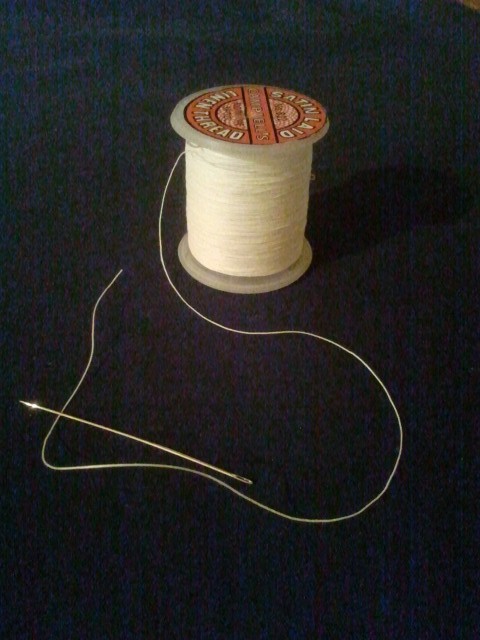
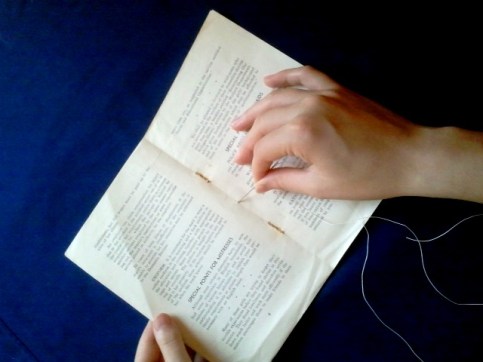
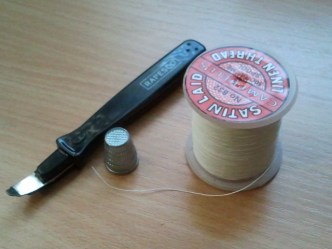
Needle and thread

As our retrospective cataloguing project progresses, and more and more nineteenth and twentieth century publications are added to the online catalogue, the relative fragility of modern printed items is amply demonstrated. Not only are the papers used since the early nineteenth century less stable and durable than the rag paper of earlier years, but bindings are often weaker and the leather prone to degradation.

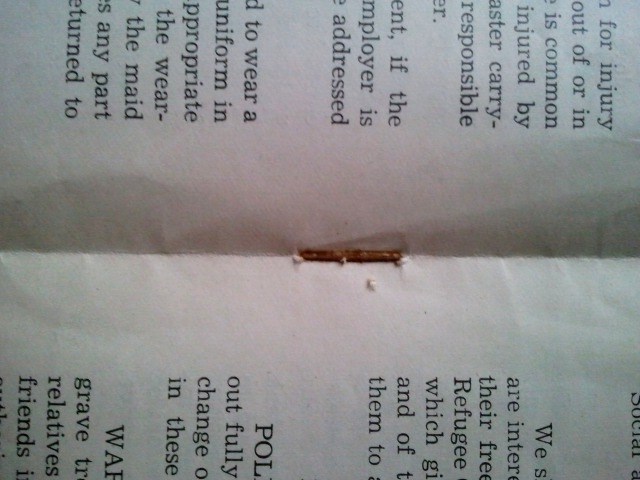
The Library holds a vast quantity of pamphlet material from this period, including tracts, campaigning material, ephemera, and a wide range of cheaply produced modern publications. A typical pamphlet consists of a few sheets folded in a single section, held together by staples down the fold – and there’s the rub. Over time the metal of the staples rusts (rapidly, if they have been stored in damp conditions). The rust damages the paper, and use hastens the damage.

The Library’s stalwart team of NADFAS volunteers are working in tandem with the retrospective cataloguer to tackle the problem of rusty staples.

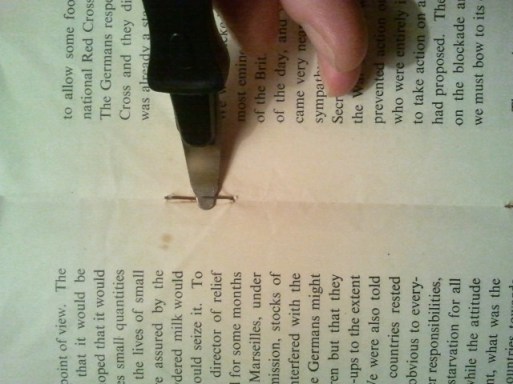
Each boxful of pamphlets added to the catalogue is methodically examined, de-stapled and single section pamphlets re-sewn using a simple, safe and easily reversible technique. This is how they do it.

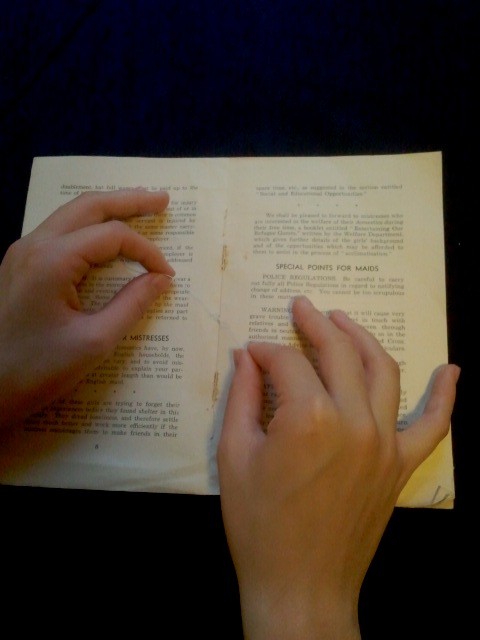
Step 1: Carefully remove the staples using special gadget.

Step 2: Brush out any fragments of rust onto a tray to be discarded.

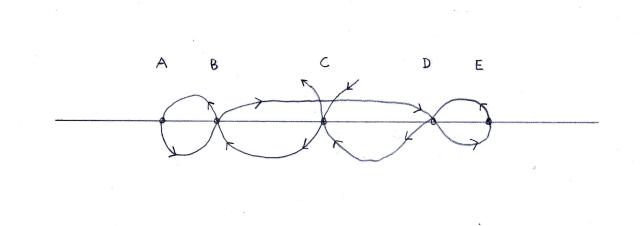
Step 3: Stitch along the fold, using existing perforations (if sound) and new ones, following this pattern (C – B – A –B – D – E – D – C):

The thread should start and end at the mid-point inside the fold (C)

Step 4:  Tighten the thread gently and tie both ends across the long central thread going from B to D.

tying thread ends

Step 5: Trim the ends to 1 cm each and fray them with the needle to flatten the thread

The end product is attractive, free from sharp or rusty metal, and safe to handle. This simple measure has prolonged the life of countless pamphlets in our collection. Finally, as they examine every item in the boxes that pass through their hands, the NADFAS volunteers are also able to provide a survey of conservation needs, noting any damaged items needing professional conservation work.

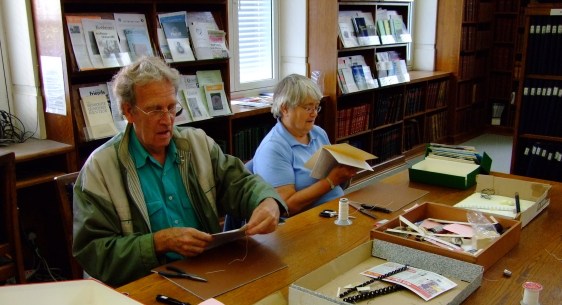
NADFAS volunteers at work

Some of the NADFAS volunteers at work

Hurrah for the NADFAS volunteers!

NADFAS tools

Posted in Collection care | Tagged , , | 12 Comments

What could you borrow from an 18th-century Quaker meeting library?

“The perusal of valuable books, besides enlarging the mind, and promoting our temporal comfort and advantage, may be the means of spreading before us a pleasing view of the beauty and excellence of religion”

A catalogue of the books, belonging to the Friends of Leeds Particular Meeting
(Leeds: Printed by J. Binns, 1794)

A catalogue of the books, belonging to the Friends of Leeds Particular Meeting (Leeds: Printed by J. Binns, 1794)As part of our ongoing project to convert the card catalogues, all the Library’s pre-1801 published English stock was added to the online catalogue by 2009.  Or was it? Despite meticulous planning, organisation and checking, one item at least appears to have slipped through the net. A serendipitous find, while searching the main card catalogue, has brought to light a rare late 18th-century work published for Friends in Leeds – A catalogue of the books, belonging to the Friends of Leeds Particular Meeting (Leeds: Printed by J. Binns, 1794) (Shelf reference: Vol. 337/7).

To cap this discovery, it turned out that the publication was not – until now – recorded on the English Short Title Catalogue (ESTC), the online database of items published between 1473 and 1800, to which we have contributed our holdings.

It was hardly surprising the ESTC didn’t have this title until we added it. This was a provincial publication, with a small print run: perhaps a few dozen copies were run off for the use of members of Leeds Quaker Meeting. It does appear, however, in Joseph Smith’s  Descriptive catalogue of Friends’ books (1867). Our copy is bound in a tract volume with over twenty other Quaker meeting library catalogues.

Catalogue bound with over 20 other Quaker meeting library catalogues

Leeds Particular Meeting catalogue bound with over 20 other Quaker meeting library catalogues

The Leeds Friends’ library catalogue is divided into five sections according to the size of the books:  “folio”, “quarto”, “octavo”, “duodecimo & infra”, and “pamphlets”, with blank pages for new books to be added to the library – or perhaps for pithy comments once read.  The titles are numbered and the contents of bound volumes listed. The compiler gave no publication details, and not always the author, although in our copy an author’s name has sometimes been added in manuscript. The owner has also made a small pencil line by most of the titles, indicating that this copy was used for checking, but whether this was made as part of a stock check by Friends in Leeds, by a bibliographer comparing the Leeds Friends’ library with another collection, or as a record of reading, we can only guess.

Pages from the Leeds Particular Meeting catalogue

Pages from the Leeds Particular Meeting catalogue showing annotations and pencil lines next to publication titles

Other manuscript annotations include careful corrections (one title described as quarto has been corrected to “8vo”), notes (“Dup” for duplicate title, or “not a fd.” to indicate that the author of the title was not a Friend, i.e. not a Quaker), and additions (five new titles have been added in ink in another hand).

The library books listed were bought by Leeds Meeting for members to read. Should an 18th-century Leeds Friend have wished to borrow one, size mattered: eight weeks were to be allowed for reading a folio, six for a quarto, four for an octavo, three for a duodecimo and just one for a pamphlet.

The printer of the catalogue, John Binns senior, had taken over the business of J. Wilson in 1769. At the time this work was published, he was trading in Briggate, Leeds as a bookseller and binder, printer, music seller, and sometime author. This Library holds six other works in which his name appears in the imprint, mainly as a bookseller. This work features some rather lovely printer’s devices, and even a manicule:

Posted in Highlights | Tagged , , , , | Leave a comment