Guest blogpost by Simon Lam, University of Oxford
The Chinese Revolution led by the Chinese Communist Party (CCP) evoked both hope and anxiety from Quaker communities in China. The experiences of Li Zhaohuan (Juwan Usang Ly, 黎照寰) are illustrative of the choices faced by many Chinese Friends in this turbulent period. In contemporary China, Li is famed for his stewardship of Shanghai Jiaotong University (1929-1942) and Hangchow University (1950-1952). He would also acquire a reputation as a ‘patriotic Christian’ through his public denunciations of foreign missionary involvement in Chinese education after the establishment of the People’s Republic of China (PRC) in 1949. However, materials from the Library of Society of Friends and other Quaker archives reveal Li’s continued interest in engaging with Friends abroad after 1949, uncovering a more complicated picture of how Chinese Friends sought to reconcile their connections with the worldwide Quaker community with their newfound status as citizens of a revolutionary state.[1]
[1] For other perspectives of Chinese Quakers in the Republican period, see Andrew S. Taylor, “Toward a Postcolonial Revaluation of Liberal Quaker Missions in China”, in Global Quakerism, 1938-2018, ed. S.W. Angell, P. Dandelion and D.H. Watt (University Park: Penn State University Press, 2026), 17-31.
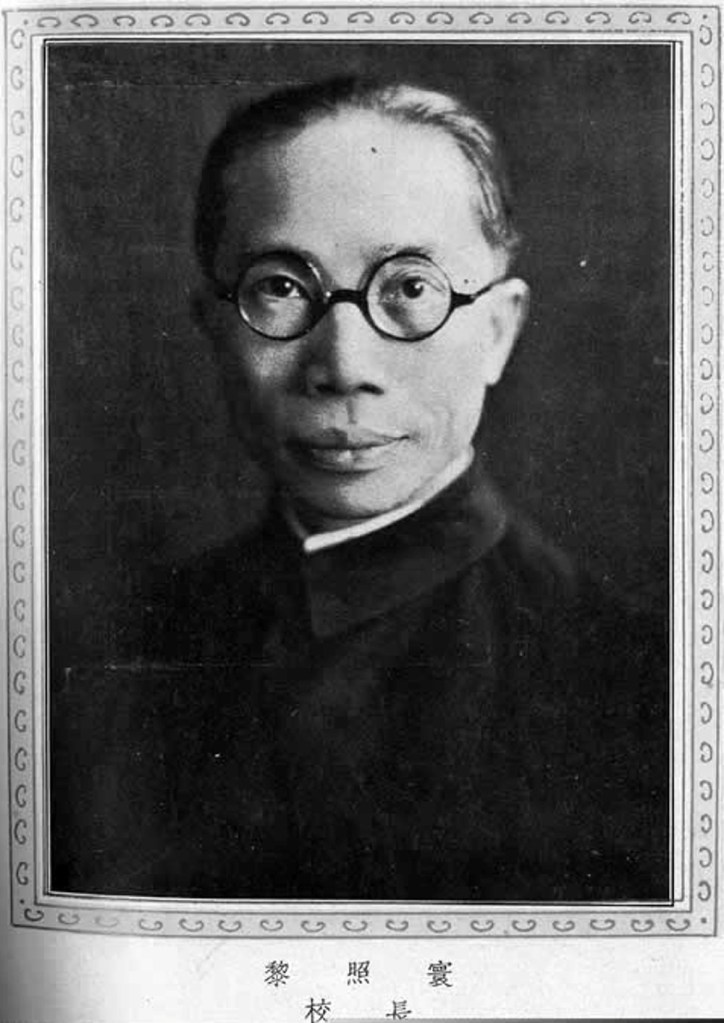
Born in 1888, Li Zhaohuan became a convinced Quaker while studying at Haverford College in 1916. Writing to Haverford News in 1942, Li emphasised the impact of Quakerism on his work, which he approached with “…a Chinese point of view, a Christian spirit implanted in one at Haverford, and a social philosophy which I strive to see applied.”[1] Serving in various positions within the Republican government following his return to China in 1919, Li’s relocation to Shanghai in 1929 to take up the presidency of Shanghai Jiaotong University allowed him to attend the Shanghai Meeting on a more permanent basis. He played a central role in establishing an International Friends Centre in Shanghai in 1939, and in arranging the Shanghai Meeting’s eventual affiliation with the Pacific Yearly Meeting.[2] Li was similarly active in the Young Men’s Christian Association (YMCA), rising to become the Chairman of the National Committee of YMCA in China from 1934 onwards. A proponent of Christian Internationalism, he would represent both religious bodies at the World Committee of the Alliance of YMCAs and the Friends World Committee for Consultation on a round-the-world trip from July to September 1947.[3]
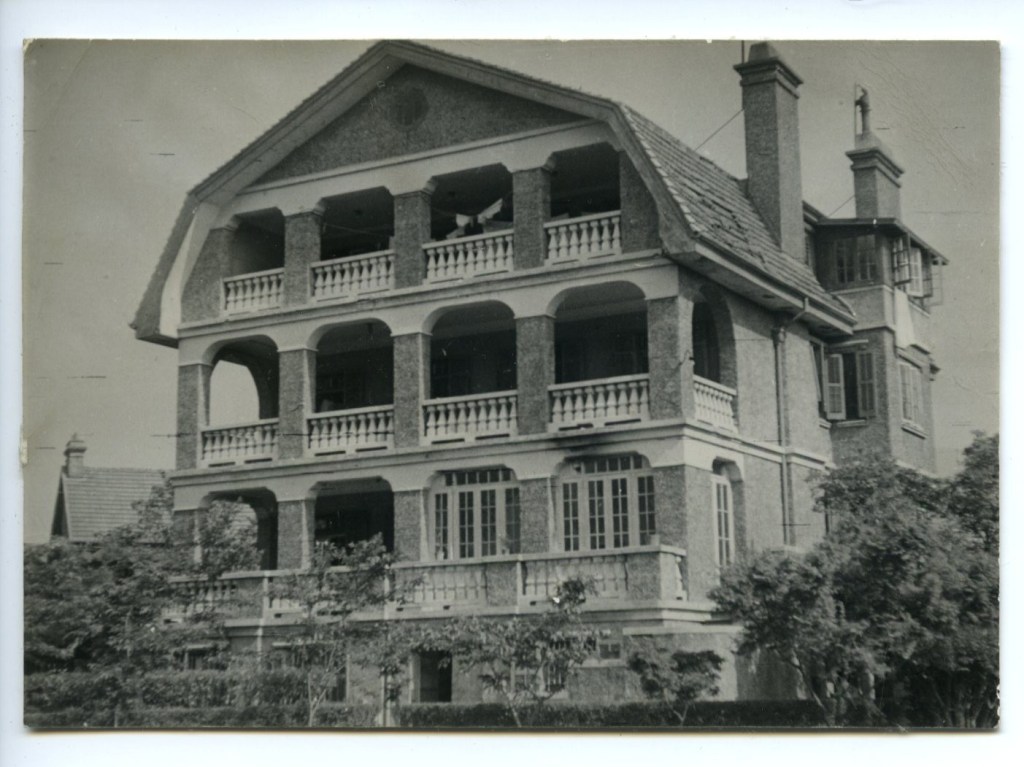
Returning to Shanghai, Li Zhaohuan was involved in a pivotal two-week weekend retreat in early 1948 where the role of Quakers in the Chinese Civil War was discussed. After much debate, it was decided “direct action or mediation” was needed to generate conditions for peace. The remit of the Friends Service Unit (FSU), a Quaker relief organisation operating in postwar China, was expanded to include the facilitation of peace talks between the CCP and the Kuomintang, along with lobbying efforts against American involvement in the civil war. There was considerable hesitancy expressed by Li and other Chinese Quakers regarding what they saw as an explicitly political intervention into the ongoing conflict. To them, the Quaker commitment to peace was better demonstrated by continuing the FSU’s focus on relief and reconstruction efforts in the territories of both combatants.[1] Li would put his opposition to paper in a letter to the American Friends Service Committee (AFSC), the organising body of the FSU: “Personally I cannot understand why the [Friends Service] Unit as a whole…is inclined to adopt a political line of approach to our situation. I do not see how the Unit can be neutral as it professes.”[2]
Many in the AFSC attributed Li Zhaohuan’s opposition to his continued association with the Kuomintang. Although Li was a member of the Legislative Yuan within the Republican state in the postwar years, he had long lost his influence within the party. Together with his close friend Song Qingling (宋慶齡), the widow of the former party leader Sun Yat-sen, Li was part of a loose group dismayed with the right-wing drift of the Kuomintang. His frustration was further magnified in the wartime years by the party’s refusal to continue funding Shanghai Jiaotong University, which had become isolated from the rest of ‘Free China’ in the Shanghai International Settlement since 1937. Having resigned from his post in 1942, further Kuomintang attempts to persuade Li to resume his presidency in June 1948 to placate a growing anti-war student moment was met with firm rejection.[1] Li’s discomfort with Quaker political advocacy in China was therefore not due to a strong pro-Kuomintang stance, but rather a general disillusionment with Chinese politics.
Despite his internationalist leanings, Li Zhaohuan would position himself as a critic of foreign imperialism within Christian contexts after his decision to remain in the People’s Republic of China. As clerk of Shanghai Meeting, Li was one of the first signatories of the Three-Self Manifesto in July 1950, a statement by Chinese church leaders which critiqued foreign missionary activity as a form of imperialism. Protestants should instead follow the principles of ‘self-government, self-support, and self-propagation’, the manifesto argued, in establishing indigenous Chinese church communities and organisations willing to work together with the new communist government. Li would put these principles in action as the new president of Hangchow University, a Christian institution established and staffed by foreigners. Denouncing their former benefactors as imperialists, Li announced the cessation of all funding from American church bodies and would later assist in the nationalisation and eventual closure of the university in 1952.[2]
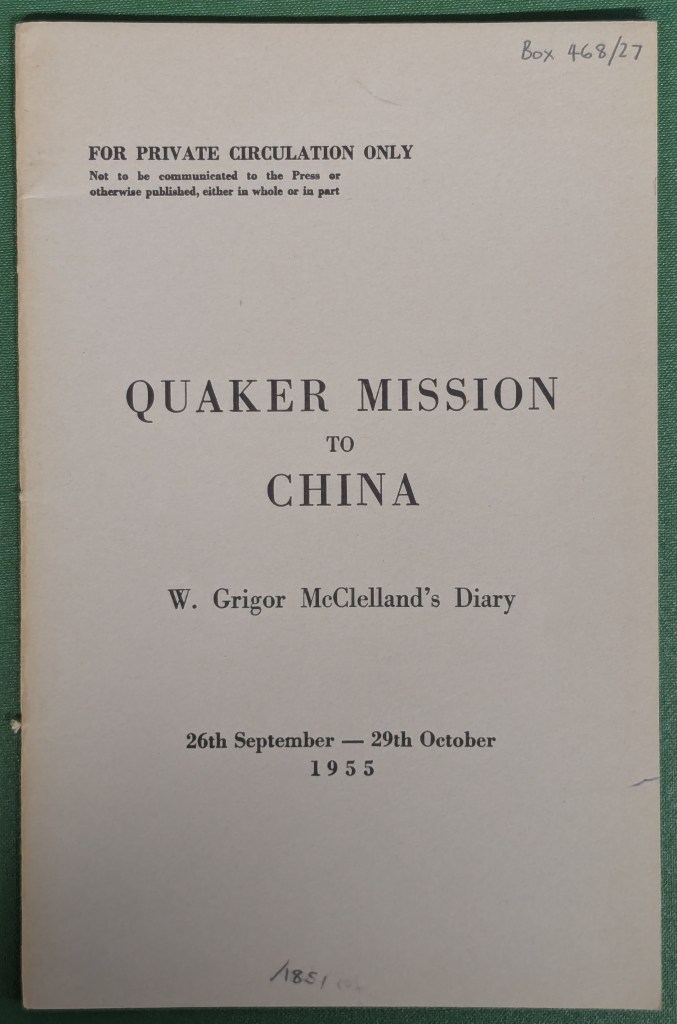
However, materials from the Library of the Society of Friends reveal Li Zhaohuan’s continued interest in facilitating international dialogue through his prior ties to Friends abroad. In October 1955, he met with a British Quaker mission to China, bringing them to the Shanghai Meeting which had persisted into the 1950s. W. Grigor McClelland, a member of the delegation, described their worship:
The Meeting – which we joined before it closed – was about 15 strong. At the beginning Dr. Ly [Li] had spoken about the delegation and explained the plans for the morning. He then read several selected verses from St. John’s Gospel which provided the basis for a good Meeting for Worship in which ministry was divided between hosts and visitors. We went on to Dr. Ly’s house for lunch and a brief discussion afterwards in which Dr. Ly added to what had been said at the earlier meeting on the position of the Church in a secular society.[3]
Li’s reception of the British Quakers was most likely organised and approved by the China Peace Committee, which had extended the invitation to visit China to London Yearly Meeting. The China Peace Committee was a United Front organisation formed to resist “wars of aggression”. To promote the CCP’s worldview on an international stage, the Committee was active in facilitating exchange with overseas peace organisations and groups.[4] As such, Li’s reunion with foreign Friends was presumably on a semi-official basis.
Besides official engagements, it was equally apparent Li Zhaohuan retained a personal interest in promoting international exchange. In October 1958, Li wrote to Haverford News, reminiscing about his studies at Haverford College. Bringing up his membership in the Board of Directors in the Society for the Advancement of Study in English Literature in Shanghai, Li was interested in recent developments in English and American literature in the 1950s and encouraged Haverfordians to write to him on this topic. He ended his dispatch by emphasising a shared appreciation of English literature across political divides: “Socialism goes on with us very successfully and we are always eager to learn, and determined to promote democracy. I hope no prejudice may prevail to bar our mutual admiration and respect in the wide world of creative literary endeavour.”[1] Unfortunately, Li was later prosecuted during the Cultural Revolution, most likely due to his foreign connections, and would later die of sickness in 1968.
Many Chinese Quakers had to make compromises with regards to their faith and interpersonal relationships in face of the Chinese Revolution. In Li Zhaohuan’s case, he was quick to denounce foreign influence and funds within faith-based institutions as a form of western imperialism in the early years of the PRC. However, his post-1949 engagement with Quakers abroad through both official and unofficial channels demonstrate his continued conviction in internationalism and the value of international exchange. His story thus serves as an important reminder that even in societies with limited self-expression, internationalism and peace activism can be driven not only by political imperatives, but also by genuine belief in common cultures, experiences and faiths across geopolitical borders.[2]
[1] “Usang Ly Writes of His Activities”, Haverford News 50, no. 5, 27 October 1958.
[2] See also the forthcoming work of Jennifer Bond on Deng Yuzhi and the YWCA.
[1] “Jiaoda xin xiaozhang Li Zhaohuan jianci bujiu 交大新校長 黎照寰堅辭不就 (New President of Shanghai Jiaotong University Li Zhaohuan Firmly Refuses Appointment),” Xinwen bao (Shanghai), 9 July 1948.
[2] Shen Liang 沈亮, “Aiguo minzhu renshi Li Zhaohuan yanjiu 愛國民主人士黎照寰研究 (A Study on the Patriotic Democratic Figure Li Zhaohuan),” PhD diss., (Shanghai Normal University, 2016), 167-181.
[3] W. Grigor McClelland, Quaker mission to China: W. Grigor McClelland’s diary, 26th September – 29th October 1955, n.d., Library of Society of Friends, London.
[4] Elisabeth Forster, “Bellicose peace: China’s peace signature campaign and discourses about “peace” in the early 1950s,” Modern China 46, no. 3 (2020): 250-264.
[1] “Notes and Conclusions on Friends’ Weekend Retreat to Consider What We Might Do in the Present Situation in China”, 3 March 1948, Country: China, Mediation (Confidential), 1948, American Friends Service Committee Archives, Philadelphia.
[2] R. Stanley, ‘Dr J. Usang Ly’, 6 September 1948, Country: China, Personnel: Dr. J. Usang Ly & Ind., 1947-1948, American Friends Service Committee Archives, Philadelphia.
[1] “Dr. J. Usang Ly Sends Greetings to Class of ’17”, Haverford News 35, no. 6, 29 September 1943.
[2] Juivan Usang Ly, Letter from J. Usang Ly to Benjamin A. Darling, 3 June 1948, Country: China, Personnel: Dr. J. Usang Ly & Ind., 1947-1948, American Friends Service Committee Archives, Philadelphia.
[3] Newsletter for Friends in China, December 1947, China: Centers, Newsletter for Friends in China, 1947, American Friends Service Committee Archives, Philadelphia.


