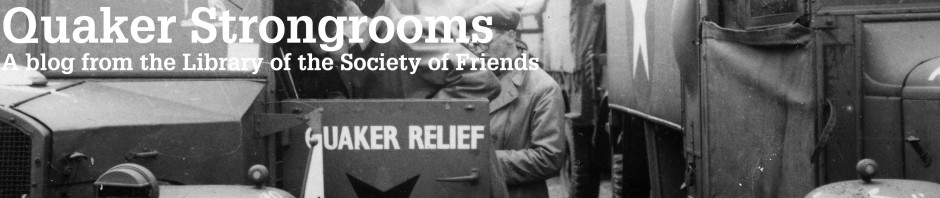
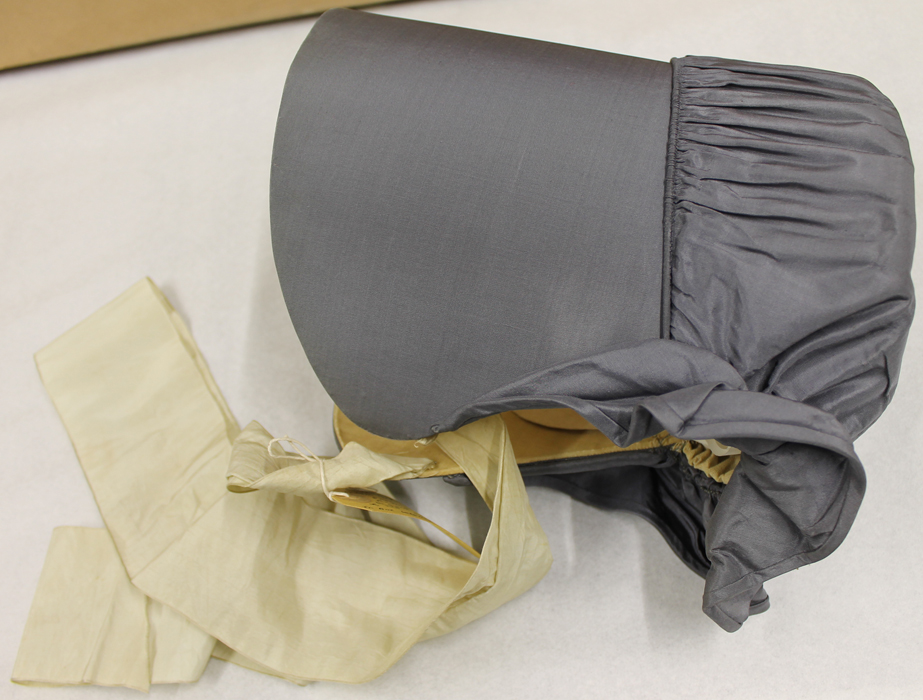
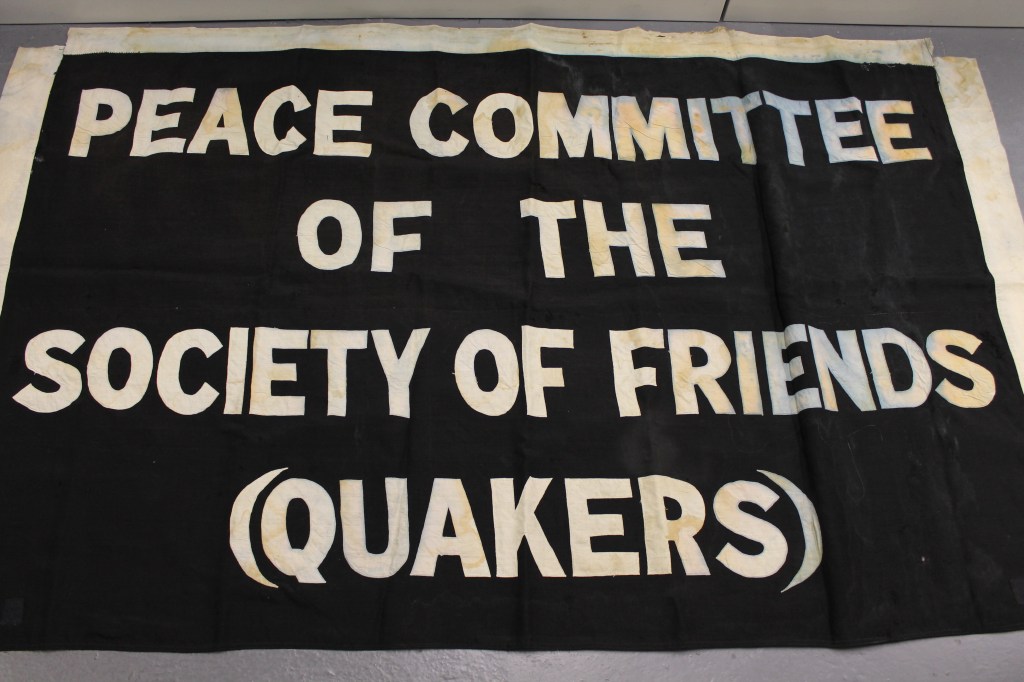
At the Library of the Society of Friends we use the term “special collections” to refer to objects and framed art that are not held within an archive collection. This includes roughly 1,400 items and covers a wide range of material, including a 115 year-old bread roll, artistic representations of Quaker meetings, banners carried at marches and protests, board games, shoes and, of course, a substantial selection of Quaker bonnets. This year, we are conducting a review of this collection.
The Library’s purpose is to collect, preserve and provide access to the story of Quakers in Britain, through records, publications and material culture. What we collect is defined by our collections development policy. We work with limited resources within a finite space and do our best to work simply and sustainably to make the best use of what we have.
As is the case with most archives, libraries and museums, we have historically accepted items that don’t fit with our collecting goals as well as items that we don’t have the space or resources to care for properly. Our strongrooms are full, and we aren’t able to offer access to objects in the way that we would like. If we will never be able to offer access to something, should we have it?
“If museums are to be financially and environmentally sustainable, and relevant to the communities we serve in the 21st century, we must take an immediate and proactive approach to collections management and review.” – ‘Off the Shelf: A Toolkit for Ethical Transfer, Reuse and Disposal’ published by the Museums Association
Collections reviews are a regular part of managing historical collections and have been carried out in institutions across the country. The aim is to understand what we have and why we have it, how our items are currently stored and what condition they are in. We will be assessing each object or group of objects on the following areas:
- Condition – Assessing whether objects are in good enough condition for use, whether any urgent conservation work is required and if we can care for them.
- Storage – Reviewing whether objects are stored in a way that preserves them for the future, and if we are capable of storing them properly.
- Ownership – Ensuring we have the legal and moral right to keep objects.
- Engagement potential – Investigating the storytelling and educational potential of an object and whether it is likely to be of interest to our audiences.
- Distinctively Quaker – Judging how closely the object fits with our current collection development policy, whether it was used or created by the work of British Quakers or expresses an aspect of British Quaker life, history or culture.
- Significance – Investigating the overall cultural value of an object, independent of its Quaker context.
In November we will be producing a report for the trustees of Quakers in Britain, which will outline our findings so far, suggest what steps might be taken next and how we can best use our resources.
This report will flag up items that either don’t fit within our collection or that we cannot responsibly take care of. These might include objects that have little to no relevance to British Quaker life, history or culture, objects that don’t actually belong to us or objects that need specialist storage that we can’t provide. We will suggest finding more suitable homes for these items, ideally in places that will be able to offer better access and collections care.
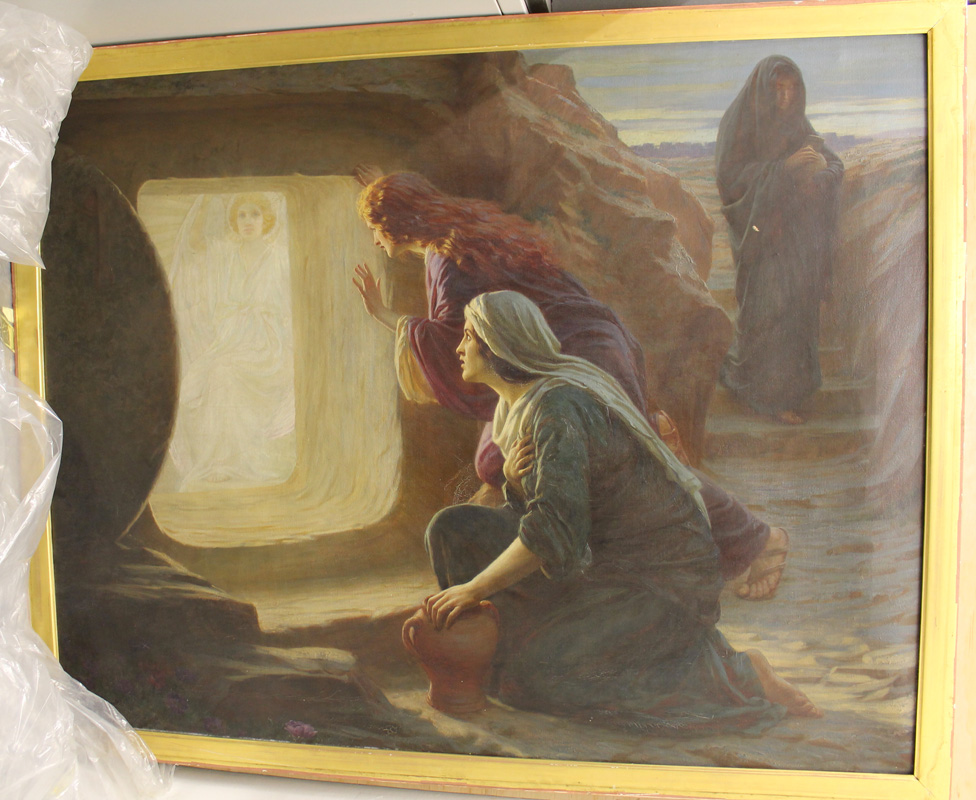
We will also be suggesting ways in which we might offer more access to the objects and paintings that we maintain within our collection, such as open storage (see the new V&A East Storehouse for the ultimate example), long term loans to institutions that display objects and online solutions.

We want to take a participatory approach to this work – meaning that we want to hear from British Quakers and other interested communities about what they think should be in the collection. This will be an ongoing process that will continue after the curatorial work that happens this year.
Part of our report will focus on this, particularly considering the items in our collection that come from missionary work overseas. We will make recommendations about how we can work alongside experts from the relevant cultures to manage these items respectfully, in ways that support the decolonisation of our archive and may form part of reparations work.
Keep an eye on this blog and our Facebook page to get further updates and see more of the objects and paintings we have in our strongroom and please get in touch with your views and any personal experiences with the items we share.
Further reading:
Studying the collection – Science Museum Group Blog
Manchester Art Gallery Collection Review – Manchester Art Gallery
 Quaker Strongrooms
Dear Sir or Madam, Your e-mail contains an image of a printed yellow duster for Quaker Peace and Service. The resolution is low, so I cannot read the small print in the lower right-hand corner; however, I am confident it is the following: PRINTED BY GEO. O’BRIEN BAKERBARNET HERTS. 01-449-2424 Geo. O’Brien Baker was our (Quaker) family business. I look forward to your confirmation. Yours sincerely, Thomas O’Brien BakerLondon
The printed yellow duster for Quaker Peace & Service was produced by our (Quaker) family business: Geo. O’Brien Baker Ltd., Barnet, Hertfordshire.