“Discernment and decision-making are crucial aspects of our life as a Quaker community, not least in relation to the work carried out centrally by Britain Yearly Meeting through its committees and staff. All our committees act as gathered meetings for worship, a discipline which continues throughout the governance and management of the work.”
“Oversight of the centrally managed work of Britain Yearly Meeting is in large part entrusted to committees”. Quaker Faith and Practice, chapter 8.01, 8.02
The archives held at the Library of the Society of Friends reflect the important role of committees in both Quaker history and the ongoing work of Quakers. In our strong rooms we have twenty-four large cupboards containing Quaker committee minutes between the 1660s and 2022. The cupboards contain minutes relating to Quaker committees still meeting and those which have been laid down. Committees with minutes in the archive include Yearly Meeting, Friends Emergency and War Victims Relief, Friends Foreign Mission Association, Quaker Life, Quaker Peace and Social Witness and the Library Committee (just to name a few)!
The minutes of Quaker committees have been arranged physically in the archive to sit within one alphabetical sequence. The related committee papers largely sit elsewhere in the archive. On our online catalogue these committee records sit under a Yearly Meeting Committees and Departments Fonds. This encompasses committees appointed by both Yearly Meeting and Meeting for Sufferings. Committee records are routinely accessed by both external researchers and internal staff.
Between October 2024 and March 2025 an inventory of paper committee minutes and related papers took place in the archive of the Library of the Society of Friends. The inventory was completed to support the work to audit Britain Yearly Meeting’s digital committee minutes as we move towards using Office 365. The inventory also aimed to confirm the locations of all committee minutes and identify uncatalogued minutes.
The scope of the project included delving into all 24 committee cupboards in our strong rooms along with an extra five bays of committee boxes. A rough extent of the records inventoried is 120 boxes, 1500 volumes and 500 folders/other units of extent.
The inventory process sought to capture the location, name, description, covering dates and extent of all committee minutes and related papers contained in both volumes and boxes in our strong rooms. This information will be cross referenced with digital minutes to identify gaps in committee record keeping across Britain Yearly Meeting.

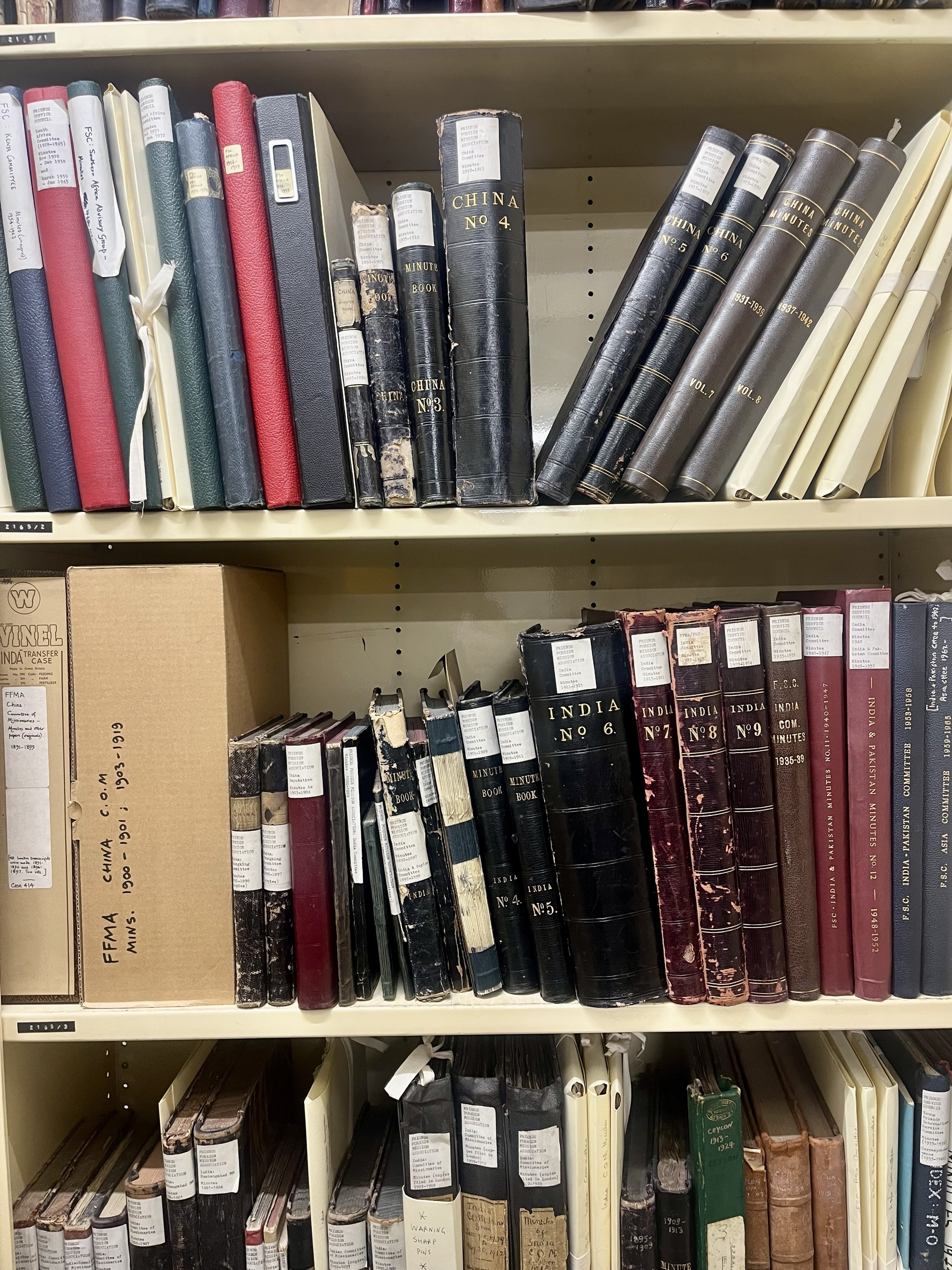
To celebrate the end of this inventory, we wanted to share some highlights from our journey through the committee cupboards…
Industrial Crisis Committee, Coalfields Distress Committee, Allotments Committee
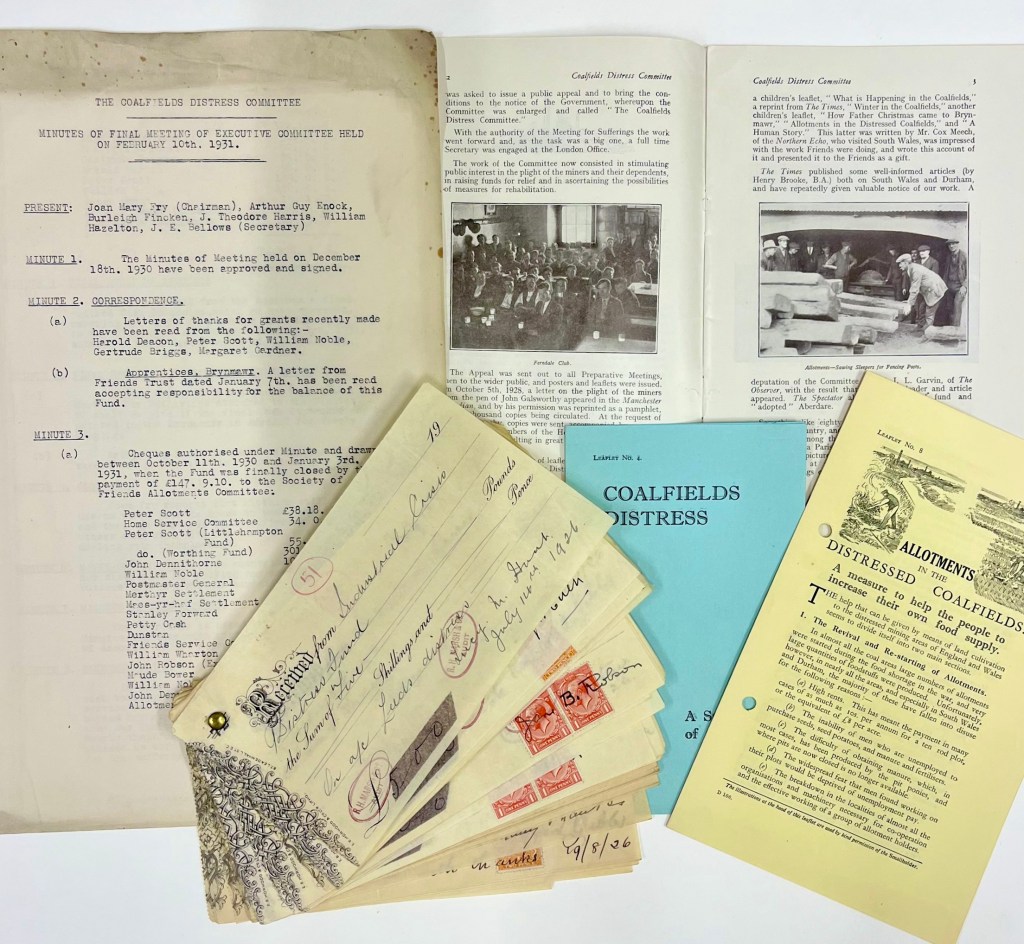
While most of the records listed in the inventory were volumes of minutes, there were instances where additional record types feature alongside volumes of committee minutes in the cupboards. One example of this was the Industrial Crisis Committee, Coalfields Distress Committee and Allotments Committee papers.
These successive committees were first appointed in 1926 when General Strikes were called by the Trade Union Congress in response to the poor working conditions and lessening of pay for working (largely in coal mining communities). Quakers set up the Industrial Crisis Committee to provide relief to these committees (largely in South Wales). The Committee received gifts of money and clothing for distribution and local quaker meetings undertook the collections of clothing and money to help the situation. Receipts for these gifts of money feature in the committee minutes sequence.
By 1928, the Coalfields Distress Committee was set up to increase public interest in the case to raise funds for relief. The leaflets created and distributed by the committee to help their appeal feature alongside the minutes of the coalfields distress committee in our archive. By 1930 the Allotments Central Committee (also known as Allotment Gardens for the Unemployed Central Committee) was set up as a scheme to help those unemployed grow their own food. The committee was laid down in 1951 whereby some of the remaining funds were transferred to the National Allotments and Gardens Society.
These receipts, leaflets, and other committee records can provide additional context to the structured records of minutes, which bring the work of this committee to life. We will endeavour to repackage these records appropriately as well as enhance the catalogue descriptions for the above committees in due course.
Special Premises Committee
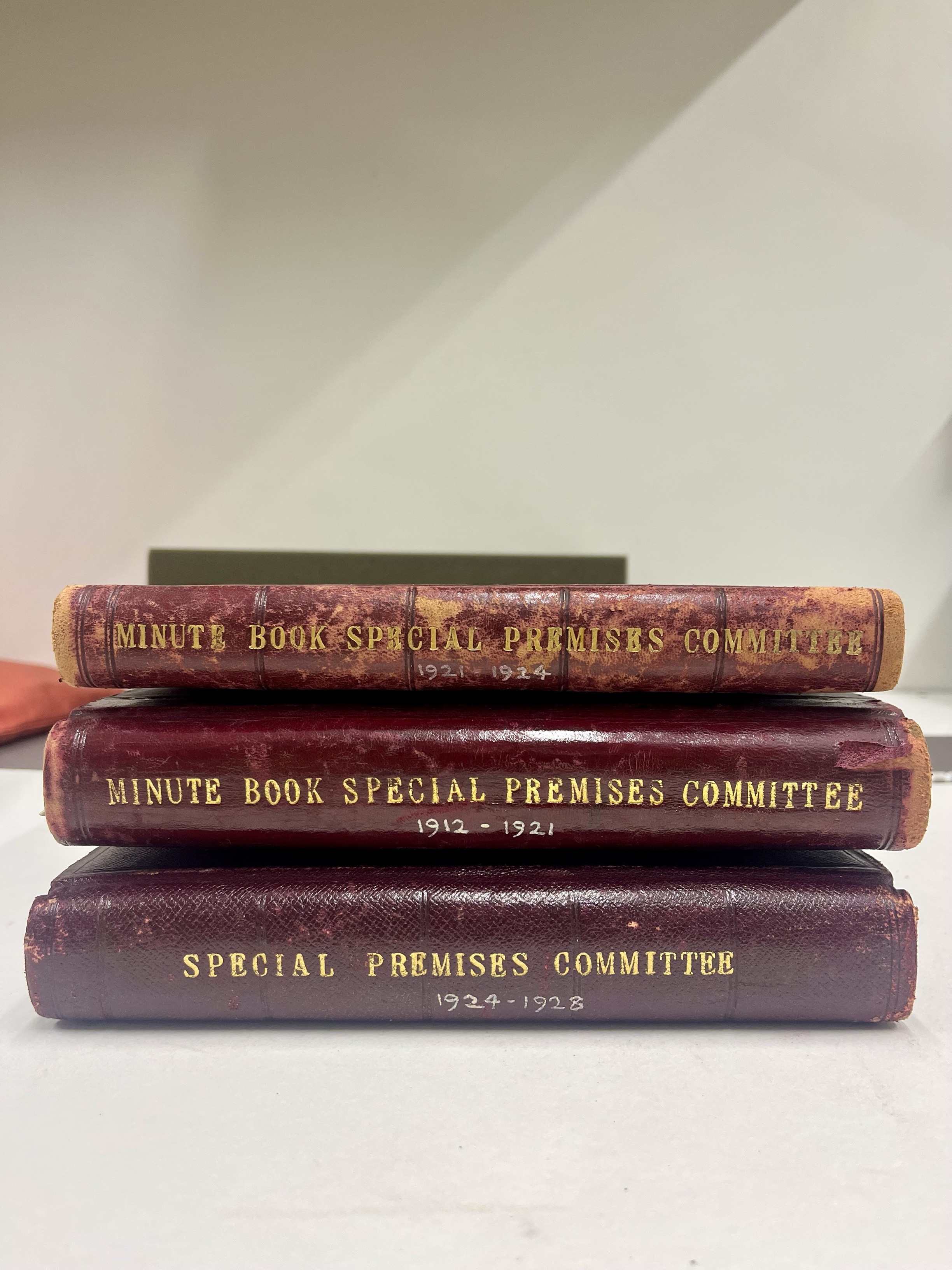
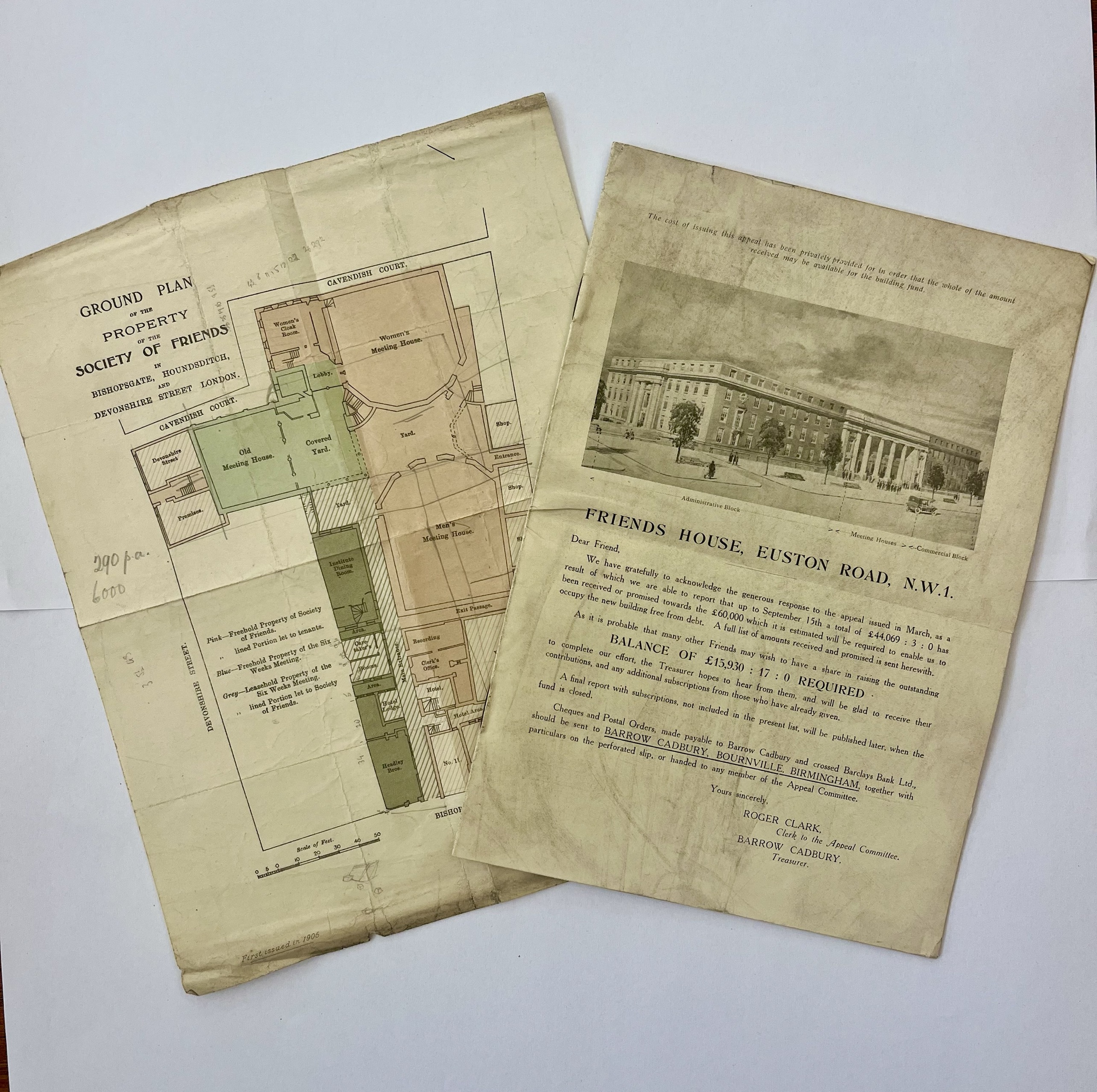
Another committee where the volumes of minutes also include additional records types is the Special Premises Committee. The Committee was set up in 1911 to consider the management of Devonshire House, the potential to rebuild on the Devonshire House site, the sale of Devonshire house and the acquisition of the site on Endsleigh Gardens, Euston Road to build Friends House (which was purchased for £45,000)!
One of the most interesting records attached in the volumes of minutes is a record created by the appeal committee which lists the Friends who contributed funds to the Friends House building project. The record also describes the new premises and updates Friends on the building works. An article states “a word as to the appearance of the building. The general effect is a massive but not clumsy front of a pinkish purple brick with dressed stone facings, cornice and columns.”
As we come up to the centenary of the building of Friends House, I am sure we will look back at the minutes and papers of the special premises committee as well as the Premises Committee to reflect on the history of Friends House.
“West India Property” Committee
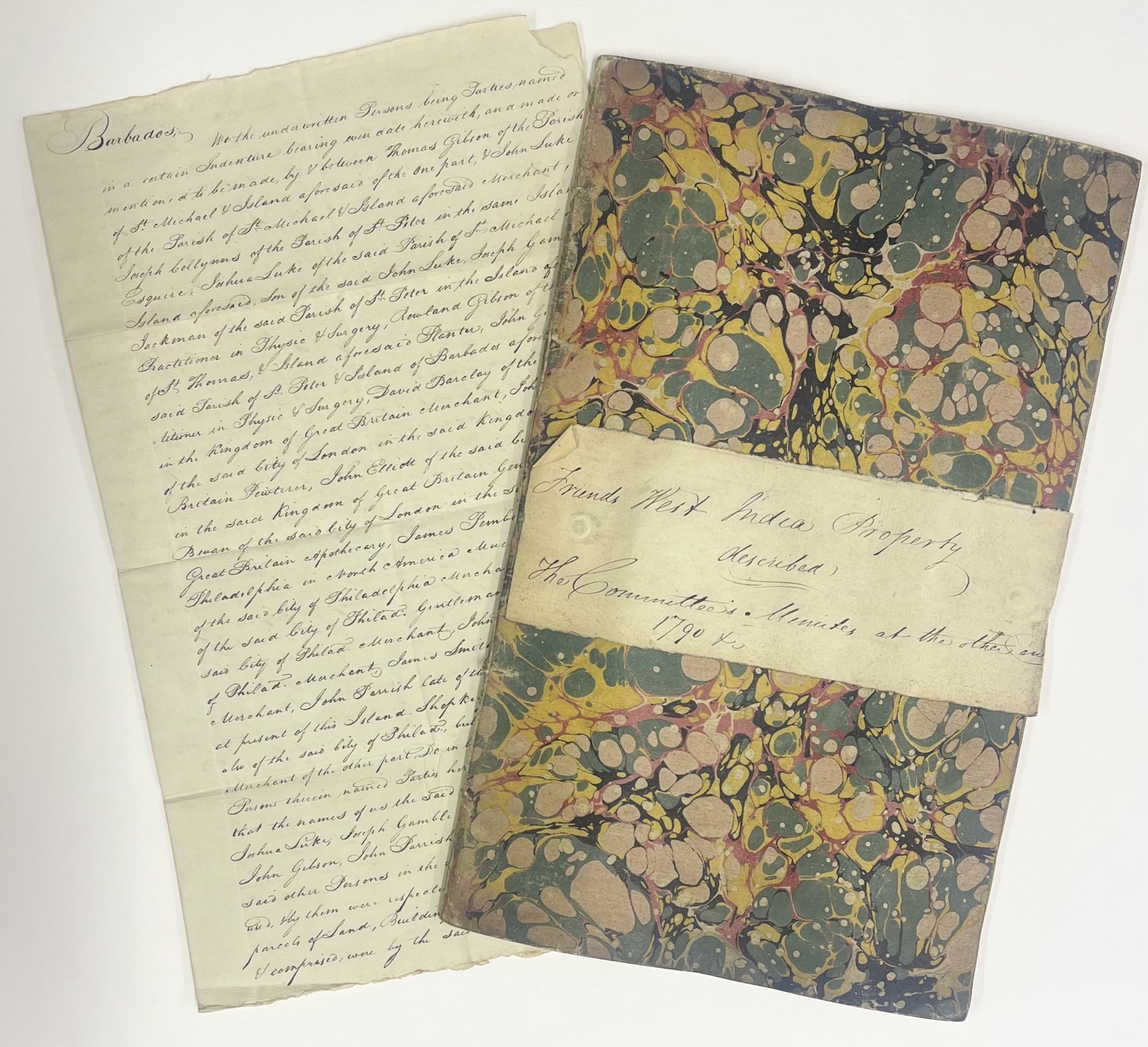
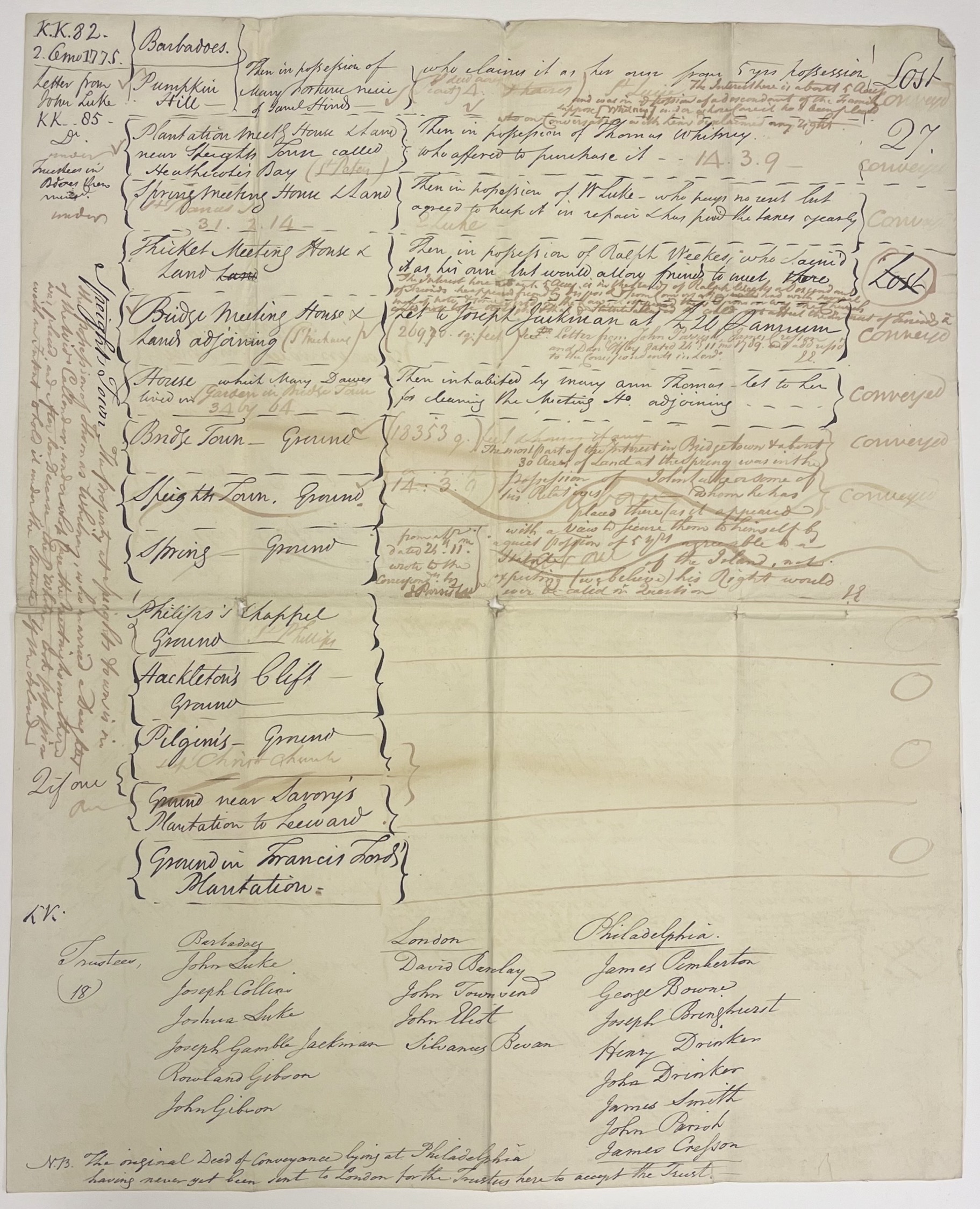
In the last stages of the committee inventory, we came across a folder containing deeds, letters and minutes relating to the “West India Property” Committee, 1774-1800. The committee was appointed by Meeting for Sufferings to record the property owned by the Society of Friends in Barbados, Antigua, Jamacia, Tortola and other Caribbean countries.
A large quantity of the papers relates to property in Barbados and the signing over of land and property from Thomas Gibson to Trustees in Barbados, England and Philadelphia including John Luke, Rowland Gibson, David Barclay, John Townsend, 1785.
Whilst the committee records feature on our online catalogue, the context of these records has been brought into perspective by the current work of the Britain Yearly Meeting Reparations Working Group and the Quaker commitment in making practical reparations for the transatlantic slave trade, colonialism and economic exploitation. To support any future research, we have repackaged the records, and we have enhanced the catalogue description, subject terms and location to more accurately describe the contents and signpost the records. It would be beneficial to create a more detailed catalogue description in the future.
To access the committee records mentioned in the above blog, search the catalogue, make an enquiry or make a research appointment via our bookings page. Please note not all central organisation committees are catalogued and open for research.
 Quaker Strongrooms
Just to say how interesting this is, such a valuable source for Q historians.
Janie Cottis, Faringdon LM